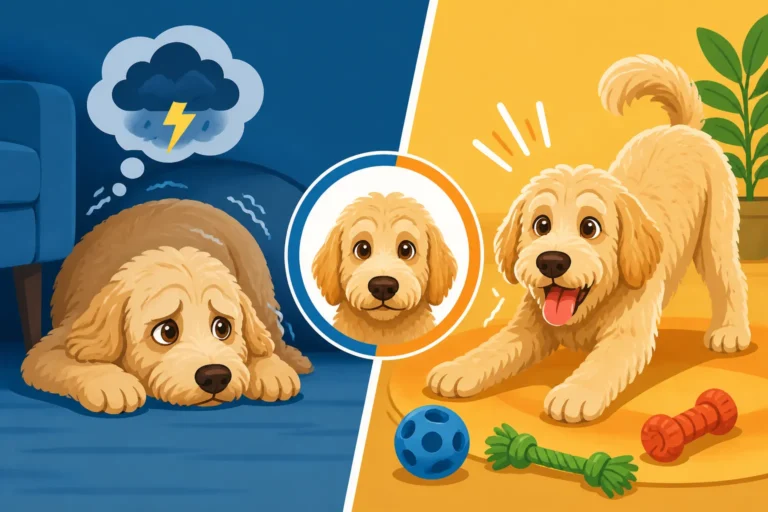
Whether a Labradoodle Guards From the Poodle or Labrador Side
It's completely understandable to wonder about the deeper personality traits of your Labradoodle, especially when it comes to behaviors like guarding. Many prospective and current owners worry about where certain instincts come from – is it the Poodle's alertness or the Labrador's friendly nature? This guide will dive deep into the genetic predispositions of both parent breeds to help you understand whether your Labradoodle's guarding tendencies might stem from one side more than the other, and what you can do to manage these behaviors effectively.
Understanding Guarding Behavior in Dogs
When we talk about guarding in dogs, it’s often a really broad term that can mean different things to different people. For some, it might conjure images of a stoic German Shepherd protecting a property. For others, it’s simply a dog barking at the mailman. Getting to the root of what specific "guarding" behavior you're seeing or worried about is the first step to understanding and addressing it. It's a behavior driven by instinct, but profoundly shaped by environment and training.
What "Guarding" Really Means
Let's be clear about what guarding usually entails in the canine world. It's typically categorized into a few types. There’s territorial guarding, which is when a dog protects its home or yard from perceived intruders, like that delivery driver who dares to approach your front door. Then there's resource guarding, which is all about possessions – food bowls, toys, even a favorite sleeping spot. This might look like your dog hovering over their bone, growling when another pet or even you get too close. And finally, there's people guarding, where a dog becomes overly protective of its owner or a specific family member, perhaps barking at strangers who get too close on a walk.
It's not always about aggression. Sometimes, guarding is expressed through more subtle signals: a stiffening of the body, a low growl, a focused stare, or even just repositioning themselves between you and the perceived threat. These are all attempts to communicate, "Hey, this is mine," or "Back off!" The key is recognizing these signals early on, especially in a breed like the Labradoodle, where you might expect a more universally friendly demeanor. The blend of the two breeds means you could see a mix of these behaviors, or something entirely unexpected.
Common Triggers for Guarding Behavior
Understanding the triggers is half the battle when dealing with any dog behavior. For territorial guarding, the classic triggers are new people, other animals, or even strange sounds approaching what the dog considers its domain. That might be the mail carrier, a neighbor walking past, or even another dog barking from a distance. A Labradoodle, with its keen senses, can easily pick up on these things.
Resource guarding often rears its head when there's something high-value involved. Think about that delicious chew stick you just gave your pup, or their absolute favorite squeaky toy. If another dog or person approaches that prized item, even with innocent intentions, it can trigger a defensive reaction. Food bowls are another huge one; some dogs become very possessive around meal times. It's an instinct that goes back to their ancestors needing to protect vital resources for survival.
People guarding, or protective behavior towards family members, can be triggered by new people entering the home, unfamiliar situations in public, or even boisterous interactions between family members that the dog misinterprets as a threat. A dog might place itself between you and a stranger, or bark at someone who approaches you too quickly. It’s important to distinguish this from true aggression; often, it’s a form of anxiety or a misguided attempt to "help" its beloved humans. For new Labradoodle owners, particularly those who haven't had a dog before, recognizing these triggers can feel like navigating a minefield, but it's crucial for effective management.
The Labrador Retriever's Contribution to Labradoodle Temperament
The Labrador Retriever is widely celebrated for its gentle, outgoing, and friendly nature. They are often the poster children for family dogs, eager to please and generally well-adjusted. But even within this famously amiable breed, there are certain tendencies and instincts that, when combined with another breed, can manifest in unexpected ways.
Labrador's Nature: Friendly, Not Guardy
Generally speaking, purebred Labradors are not known for being guard dogs. Their default setting is usually "friend," not "foe." They're more likely to greet a stranger with a wagging tail and an offer of a slobbery kiss than a warning growl. This innate friendliness is one of the reasons they've been so popular as family pets, therapy dogs, and assistance dogs. They tend to be highly sociable and thrive on interaction, often preferring to make new friends rather than keep a watchful distance.
However, this doesn't mean a Labrador is completely devoid of protective instincts. They are large, powerful dogs, and they do have a sense of loyalty to their families. If a truly threatening situation arose, a Labrador might react to protect its loved ones, but it’s rarely their first inclination or a consistent, patterned behavior. Their barks are more often an enthusiastic announcement of someone's arrival or an invitation to play, rather than a territorial warning. This means that a Labradoodle inheriting a strong Labrador influence might be less prone to overt guarding behavior, leaning more towards social engagement. It's part of What a Labradoodle Owes to Its Labrador Side.
Resource Guarding in Labs (and Why It's Not About Territory)
While Labs aren't typically territorial, they can exhibit resource guarding. This isn't about protecting the house from intruders, but about protecting their highly valued possessions. Think of a Lab with a prized chew toy or a bowl full of their favorite kibble. Their strong retrieving drive, combined with a natural desire for high-value items, can sometimes lead to possessiveness. This is often more prevalent in their puppyhood and can sometimes persist into adulthood if not managed properly.
A Labrador might growl or snap if another dog or even a person tries to take away their food or a special toy. This isn't necessarily a sign of aggression towards people, but rather an instinctive need to keep what they perceive as theirs. It's less about a threat to their territory and more about a threat to their immediate resources. Proper training from a young age, including teaching "leave it" and practicing polite food manners, is crucial here. Programs like BAXTER & Bella often cover these foundational skills, helping owners teach their pups appropriate behavior around resources. Understanding this distinction is key for Labradoodle owners because while your dog might not be a "guard dog" in the traditional sense, they could still show resource guarding if that strong Labrador drive for objects comes through.
The Standard Poodle's Influence on Labradoodle Temperament
On the other side of the genetic coin, we have the Standard Poodle. Often misunderstood as purely aristocratic show dogs, Poodles are incredibly intelligent, active, and, yes, can possess a surprisingly protective streak. Their temperament is a complex blend that can certainly contribute to a Labradoodle's guarding tendencies.
Poodle's Protective Instincts and Alertness
Standard Poodles were originally bred as water retrievers, a working background that requires intelligence, athleticism, and a degree of independence. Over time, they also became favored companions for nobility, and their alertness made them excellent watchdogs. They are highly intelligent and keenly observant, often noticing changes in their environment or the approach of strangers long before other dogs. This inherent watchfulness can easily translate into alerting their owners to anything unusual.
While not typically aggressive guard dogs, Poodles are known for being vocal. They will often bark to announce visitors, unfamiliar sounds, or anything they perceive as out of the ordinary. This alerting behavior can sometimes be mistaken for territorial guarding, especially if the barking is persistent. Their loyalty to their family is strong, and some Poodles can be reserved or even wary of strangers, especially if not well-socialized from a young age. This reserved nature, combined with their intelligence, means they assess situations carefully. If a Labradoodle inherits a strong Poodle influence, they might be more inclined to be vigilant, alert barkers, and potentially more cautious around new people or situations, leaning into Which Labradoodle Traits Come From the Poodle. This isn't necessarily a bad thing, but it's important for owners to guide this natural alertness positively.
Poodle's Sensitivity and How It Manifests
Poodles are also known for their sensitivity and close bond with their families. They are often described as "Velcro dogs" who love to be near their people. This deep attachment can sometimes manifest as protective behavior. If a Poodle feels its family member is threatened or experiences anxiety in new situations, they might react with barking, growling, or even attempts to put themselves between their person and the perceived threat. This isn't always aggression but can be rooted in anxiety or a strong desire to keep their beloved humans safe.
A Labradoodle with a significant Poodle heritage might display this heightened sensitivity. For example, in a busy park, a Labradoodle might become agitated if a boisterous child runs up to its owner, even if the child means no harm. This behavior could stem from the Poodle's innate tendency to be wary of unfamiliar, fast-moving entities and its protective attachment. It's crucial for owners to socialize their Labradoodles extensively, exposing them to a wide variety of sights, sounds, and people in a positive way. Early and consistent training can help a sensitive Labradoodle build confidence and learn appropriate responses to new stimuli. Ignoring these early signs could lead to more pronounced "people guarding" as they mature.
The Labradoodle: A Blend of Traits
So, what happens when you mix the friendly, retrieving Labrador with the intelligent, alert, and sensitive Standard Poodle? You get a wonderful, often unpredictable, blend of characteristics. The Labradoodle's temperament is a mosaic, drawing on the genetic blueprints of both parent breeds. Understanding this blend is key to predicting and managing any potential guarding behaviors.
Predicting Temperament in a Crossbreed
One of the biggest joys and challenges of a crossbreed like the Labradoodle is the genetic lottery. You never quite know which traits will come to the forefront. Some Labradoodles might be overwhelmingly Labrador in their outgoing nature, while others might lean more towards the Poodle's reserved intelligence. And many are a true mix, exhibiting characteristics from both sides. This is why it's so difficult to say definitively whether a Labradoodle guards from the Poodle or Labrador side – it could be either, both, or a unique manifestation of their combined genetics.
For instance, a Labradoodle might inherit the Labrador's strong retrieving drive, leading to resource guarding over a favorite ball, but also possess the Poodle's alertness, making them bark at every squirrel in the yard. Conversely, you might have a Labradoodle that has the Labrador's "everyone is my friend" mentality and the Poodle's sensitivity, leading to an anxious bark at unfamiliar dogs rather than a truly protective one. When looking for a puppy, talking to breeders about the temperaments of both parents and observing the puppies' individual personalities can give you some clues, but ultimately, raising and training play a huge role. The Temperament a Labradoodle Gets From Each Parent truly defines the potential.
| Trait / Behavior | Labrador Tendency | Poodle Tendency | Labradoodle Potential |
|---|---|---|---|
| Sociality with Strangers | High – Eager to greet | Reserved – May be wary/alert | Varies, can be either or a mix |
| Alert Barking | Low – More enthusiastic greetings | High – Alerts to new stimuli | Common, often an announcement |
| Resource Guarding | Moderate – Around high-value items | Low to Moderate – Can be sensitive | Possible, especially with strong retrieving drive |
| Territorial Guarding | Low – More interested in play | Moderate – May protect home/family | Can be present, but usually an alert, not aggressive |
| Sensitivity | Moderate – Responds well to gentle training | High – Can be anxious or deeply bonded | Variable, often empathetic |
| Trainability | High – Eager to please | High – Intelligent, can be independent | Generally high, but needs consistency |
Managing Potential Guarding Tendencies in Your Labradoodle
The good news is that no matter where a guarding tendency might originate, it is highly manageable with consistent training, socialization, and a deep understanding of your individual dog. The key is prevention and early intervention.
1. Early Socialization is Paramount: This can't be stressed enough. Expose your Labradoodle puppy to a wide variety of people, places, sounds, and other friendly dogs during their critical socialization window (up to 16 weeks of age). Positive experiences build confidence and reduce wariness. Take your puppy to puppy classes, local pet-friendly stores (if allowed and safe), and calmly introduce them to different types of people, from children to adults with hats or umbrellas. This helps prevent issues like A Labradoodle That Jumps on Every Visitor or being overly protective.
2. Foundation Training: Enroll in positive reinforcement obedience classes early. Commands like "leave it," "drop it," "stay," and a solid recall are invaluable. For resource guarding, practice trading high-value items for even higher-value treats. Make it a positive experience, teaching your dog that when you approach their food or toys, good things happen. If your Labradoodle tends to be vocal, teach a "quiet" command to manage their alert barking. Online programs, such as those offered by BAXTER & Bella, can provide structured guidance for these foundational behaviors, even if you can't get to in-person classes. Getting your Labradoodle through Raising a Labradoodle Through Its First Year with solid training is vital.
3. Manage the Environment: If your Labradoodle shows territorial guarding at windows, use privacy film or keep blinds closed during peak "trigger" times (like mail delivery). For resource guarding, ensure each dog in a multi-dog household has its own space for eating and enjoying chews, and supervise interactions. If your dog guards you from visitors, work on having visitors toss treats to your dog to build positive associations.
4. Exercise and Mental Stimulation: A tired Labradoodle is usually a well-behaved Labradoodle. Ensure they get plenty of physical exercise and mental enrichment daily. Puzzle toys, training sessions, and interactive games can help channel their intelligence and energy in positive ways. A bored dog is more likely to invent its own (often undesirable) entertainment.
5. Positive Reinforcement Always: Avoid punishment, which can exacerbate fear, anxiety, and ultimately, aggression. Focus on rewarding the behaviors you want to see. If your Labradoodle remains calm when a stranger approaches, praise and reward them lavishly. If they show a mild guarding behavior, calmly redirect them or remove them from the situation, then work on desensitization and counter-conditioning in a controlled manner. Remember, they are often very sensitive dogs, and positive methods work best. Whether a Labradoodle Is Too Soft for Correction explores this in more detail.
Ultimately, while the genetic predisposition for certain behaviors might come from either the Poodle or Labrador side, your consistent effort in training and socialization will be the strongest influence on your Labradoodle's temperament. They are intelligent, eager-to-please dogs, and with the right guidance, they can be wonderful, well-adjusted companions.
Disclaimer
This article is for general informational purposes only and does not constitute professional advice. Laws, prices and regulations vary by location and change over time. Consult a qualified professional for guidance on your specific situation.