A Labradoodle That Ignores a Recall It Knew
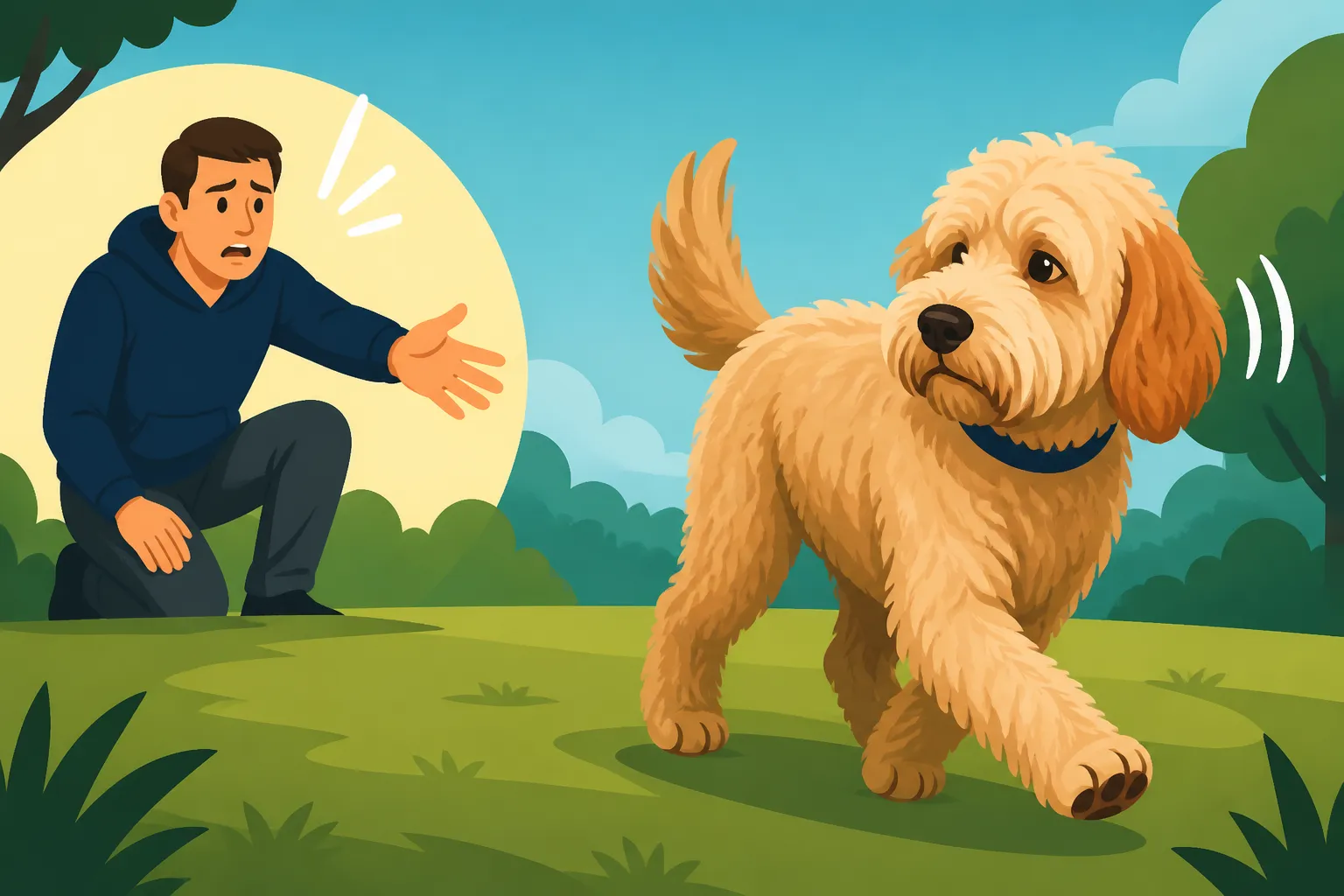
There's nothing quite as heart-stopping as calling your beloved Labradoodle, a dog who knew what "come" meant just last week, only to watch them sniff a particularly interesting patch of grass, or spot a distant squirrel, and completely pretend you don't exist. That sinking feeling of betrayal and panic when your usually obedient companion suddenly has selective hearing is all too common. This guide is here to walk you through why your Labradoodle might be ignoring its recall, and more importantly, how to systematically rebuild that vital connection and get them coming back reliably every single time.
Why Your Labradoodle Might Be Ignoring Its Recall
It’s incredibly frustrating when your Labradoodle, who once bounded back to you with enthusiasm, suddenly acts like they’ve never heard the word “come” in their life. You might wonder if they’ve forgotten everything, or if they’re just being stubborn. Often, it’s a combination of factors, deeply rooted in their development and the way we, as owners, inadvertently shape their behavior. Understanding why they might be doing this is the first step toward fixing it.
Adolescence: The "Teenage Rebellion" Phase
Just like human teenagers, adolescent Labradoodles go through a phase where their brains are re-wiring, their hormones are surging, and their world suddenly becomes much more interesting than listening to mom or dad. This period typically kicks in around 6 months and can last well into their second year. During this time, the strong bonds and predictable responses you built during puppyhood can feel like they’ve vanished overnight. It’s a classic case of The Ten Month Old Labradoodle That Forgets Everything.
Your Labradoodle, a wonderful mix of the intelligent Poodle and the often independent Labrador, can suddenly find the world outside the yard or dog park utterly captivating. That scent trail left by a deer, the distant bark of another dog, or the thrill of a chase become far more rewarding than your cheerful call. They aren't trying to be defiant; their developing brains are simply prioritizing novel experiences and high-value distractions over your command. Patience during this stage is absolutely critical, as is consistent, positive reinforcement training.
Overwhelming Distractions
One of the most common reasons a previously reliable recall crumbles is the introduction of too many distractions too quickly. What works perfectly in your quiet backyard or a fenced dog park might completely fail at a busy beach, a new hiking trail, or a park with lots of other dogs. Labradoodles are intelligent and often very social, meaning they can be highly stimulated by their environment.
Imagine your Labradoodle, off-leash in a new place. There are squirrels chattering, children playing, other dogs romping, and a myriad of fascinating smells telling tales of every creature that has passed by. For your dog, this is an information overload, a vibrant sensory buffet. Your voice, even if familiar and kind, can easily get lost in this cacophony of exciting new experiences. It's not that they don't know the command; it's that the perceived reward of engaging with the distraction far outweighs the perceived reward of returning to you in that moment.
Lack of Motivation or Reinforcement
Let's be honest: sometimes we get a little complacent when our dogs are doing well. When recall is solid, we might start to use lower-value treats, offer less enthusiastic praise, or simply assume they'll come because they always do. But dogs, much like us, respond best when there’s a compelling reason. If returning to you means a boring pat on the head, or worse, being immediately leashed and taken home, why would they choose that over the thrill of exploring?
The recall should always be a party! If your Labradoodle consistently receives bland treats or minimal acknowledgment for coming back, the "cost" of abandoning an exciting smell or a play session outweighs the "benefit" of returning. This is particularly true if you only call them when it's time to leave the park or end a fun activity. They quickly learn that "come" signals the end of fun, not the start of a new, rewarding interaction with you. Whether a Labradoodle Works for Food Like a Labrador is often a yes, and you should leverage that!
Inconsistent Training and Expectations
Another huge pitfall is inconsistency. If you only call your Labradoodle when you really need them, and then get frustrated when they don't come, you're setting yourself up for failure. Every time you call your dog and they don't come, and you can't enforce the command (e.g., you can't physically go get them), you've just taught them that "come" is optional. This erodes the reliability of the command over time.
Perhaps you use different words for "come," or your family members all have different ways of calling the dog. Confusion can set in. Moreover, if your recall isn't always followed by a positive experience – maybe you grab their collar roughly, or scold them for taking too long to arrive – they learn to associate "come" with something unpleasant. Consistency in your cue, your tone, and your follow-through is paramount for Building a Recall a Labradoodle Answers Off Leash.
Rebuilding and Strengthening Your Labradoodle's Recall
Okay, so your Labradoodle has developed selective hearing. Don't despair! This isn't a permanent condition, and with patience, consistency, and a renewed focus on positive reinforcement, you can absolutely get that reliable recall back. Think of it as hitting the reset button and going back to school, but this time, you're both smarter.
Go Back to Basics: The "Puppy Recall" Method
When recall breaks down, the best thing you can do is pretend your dog has never heard the command before. Start from scratch in a controlled, low-distraction environment, like your living room or a securely fenced yard. Your goal here is to make "come" the most exciting, rewarding word in your Labradoodle's vocabulary, with zero chance of failure.
Begin by having your Labradoodle a short distance away. Use an enthusiastic, happy voice and a clear, consistent recall cue (e.g., "Fido, come!"). As they take even one step towards you, shower them with praise ("Good dog! Yes!"). When they reach you, immediately reward them with a high-value treat—think boiled chicken, cheese, or hot dogs, not just dry kibble. Make it a party! You can even run backward to encourage them to chase you, making it a fun game. Practice this many, many times a day in short bursts. For structured online training that guides you step-by-step through recall and other foundational commands, programs like those offered by BAXTER & Bella can be incredibly helpful. They provide the consistent methodology you need to get back on track.
Gradual Increase in Distractions
Once your Labradoodle is reliably coming to you 100% of the time in a low-distraction environment, it’s time to slowly and carefully introduce more challenges. The key here is gradual. Don't jump from your living room to a bustling dog park. Think of it in stages:
- Slightly more distracting: Your backyard with a few toys scattered around, or a quiet park during off-peak hours.
- Moderate distractions: A park with a few people walking by, or another calm dog at a distance.
- High distractions: A busy dog park, a hiking trail with wildlife scents, or an area with lots of movement and noise.
Always set your Labradoodle up for success. If you suspect they won't come, don't call them. Instead, move closer to them, get their attention, or gently guide them back. Use a long line for safety during this phase. A 15-30 foot long line, easily found on Amazon, allows your Labradoodle to explore while giving you control to enforce the recall if they get distracted. When you call them and they ignore you on the long line, gently reel them in while continuing to use your happy recall cue, and reward them when they reach you. This teaches them that "come" is non-negotiable, but always leads to a positive outcome. Remember, the goal is never to punish them for not coming, but to guide them to the correct behavior and reward it heavily.
Varying Rewards and Reinforcement
To keep recall exciting and prevent your Labradoodle from getting bored with the same old treat, mix up your rewards! Just like people appreciate varied incentives, dogs do too. Don't let your rewards become predictable.
Consider a rotation of high-value treats: tiny pieces of hot dog, cheese, cooked chicken, or store-bought soft training treats. Sometimes the reward can be a quick game of tug with a favorite toy, a belly rub, or even permission to chase a thrown ball. The element of surprise keeps them engaged and eager to find out what amazing thing awaits them when they return to you. The ultimate goal is to make you the most rewarding and interesting thing in their environment. If coming back to you means delicious treats, exciting play, and loving attention, they’ll be far more inclined to drop whatever they’re doing. This ongoing motivation is crucial for Keeping a Labradoodle Sound Into Its Teens and keeping their recall sharp throughout their life.
Addressing Common Recall Roadblocks
Even with the best intentions and consistent training, you might encounter specific hurdles when trying to solidify your Labradoodle's recall. These roadblocks often stem from common mistakes we make as owners or from the particular temperament of our intelligent canine companions. Identifying and actively addressing these issues is key to achieving that rock-solid, reliable "come."
The "Only When It Matters" Trap
This is perhaps the most insidious recall destroyer. We've all done it: only calling our dog when we absolutely need them to come – to go home, to leave the dog park, to stop them from sniffing something unsavory, or to interrupt an exciting play session. What happens? Your Labradoodle quickly associates your recall cue with the end of fun or something unpleasant. They learn that "come" is a warning sign, not an invitation to something wonderful.
To break this pattern, you need to practice random, non-consequential recalls. Call your Labradoodle, enthusiastically reward them, and then immediately release them back to what they were doing. This teaches them that coming to you doesn't always mean the fun is over. It could just mean a quick check-in for a super tasty treat, then back to sniffing or playing. Do this dozens of times in every environment. Aim for at least 80% of your recalls to be "check-ins" where they are rewarded and released, reserving the "real" calls (where they'll be leashed) for genuine necessities. This builds trust and positive associations with your recall cue.
When to Use a Long Line (and How)
A long line is an invaluable tool for recall training, especially during adolescence or when working in new, moderately distracting environments. It provides a safety net, allowing your Labradoodle to explore while still giving you the ability to ensure they come back. This is particularly important for active Labradoodles who might bolt after something interesting. You can find durable long lines in various lengths, typically 15 to 30 feet, on platforms like Amazon.
Here's how to use it effectively:
- Choose the right length: Start with a shorter one (15 ft) in less open spaces, moving to longer ones as your dog gains confidence and you want to increase their freedom.
- Attach it to a harness: Never attach a long line to a collar, as a sudden stop could injure your dog's neck. A well-fitting harness distributes pressure safely.
- Let them drag it: In a safe, open area, allow your Labradoodle to drag the line. This gets them used to it and still gives you a "handle" if needed.
- Practice recall: Call your dog. If they ignore you, gently step on the line or take it in hand and reel them in while still using your happy recall cue. As soon as they reach you, reward generously. Never yank them; it's about guiding, not punishing.
- Gradual release: Only when your Labradoodle is consistently coming to you on the long line in various environments, showing strong focus on you even with distractions, should you consider trying short periods off-leash in truly safe, contained areas. This takes time and consistency, but it works, especially for scenarios like Long Line Work for a Labradoodle That Bolts After Birds.
| Recall Training Stage | Environment Type | Distraction Level | Key Strategy | Recommended Tool |
|---|---|---|---|---|
| Foundation | Home/Quiet Yard | Low | High-value treats, enthusiastic praise, consistent cue | None/Short Leash |
| Building | Quiet Park/Fenced Area | Low-Medium | Gradually introduce distractions, random recalls, vary rewards | Long Line (15-20ft) |
| Proofing | Moderately Busy Park/Open Space | Medium-High | Increase distance, practice with mild distractions, keep rewards unpredictable | Long Line (20-30ft) |
| Reliability | Busy Park/Off-Leash Trails | High | Continue random recalls, diverse rewards, occasional off-leash in very safe areas | Long Line as backup |
Seeking Professional Help
Sometimes, despite your best efforts, recall challenges persist. If you're feeling stuck, frustrated, or if your Labradoodle's behavior feels genuinely baffling, it might be time to bring in a professional. There's no shame in seeking expert guidance; in fact, it's a sign of a committed and responsible pet owner.
A certified professional dog trainer or a canine behaviorist can observe your Labradoodle's behavior, identify specific triggers or underlying issues you might be missing, and provide personalized strategies. They can help you refine your technique, troubleshoot stubborn areas, and even work through more complex behavioral patterns that might be impacting recall, such as anxiety or over-excitement. They might suggest structured group classes or private one-on-one sessions, which can be invaluable for gaining confidence and consistency. Whether a Labradoodle Needs a Trainer or a Class is a question many owners face, and for recall issues, the answer is often yes, at least for some guided support. Remember, a professional can offer an objective perspective and equip you with the tools to build a truly unbreakable bond and a reliable recall with your beloved Labradoodle.
The journey to a reliable recall, especially after a setback, requires patience, consistent effort, and a willingness to understand your Labradoodle's perspective. It's about building trust, making yourself the most exciting part of their world, and never taking that vital connection for granted. With the right approach, you and your Labradoodle can enjoy many happy, safe adventures together, with the confidence that they'll always come running back to you.
Disclaimer
This article is for general informational purposes only and does not constitute professional advice. Laws, prices and regulations vary by location and change over time. Consult a qualified professional for guidance on your specific situation.