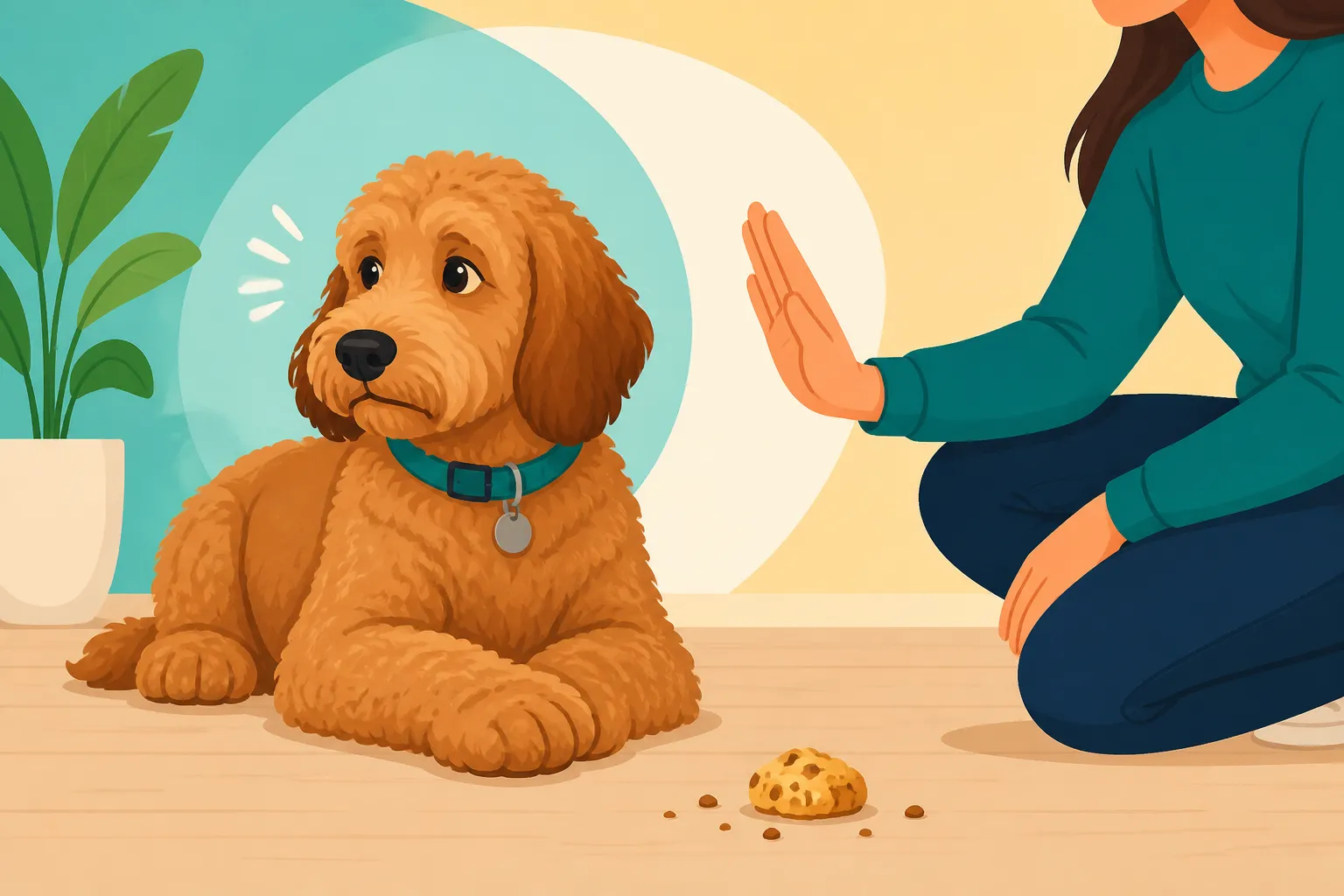
Teaching a Labradoodle to Ignore Food on the Floor
Ah, the daily dance with a Labradoodle who views every dropped crumb as a personal treasure! It's a common frustration for so many of us. You're trying to cook, you drop a bit of carrot, and poof—it's gone before you can even react. Or perhaps a piece of toast falls, and your otherwise well-behaved companion turns into a speedy vacuum cleaner. This guide is all about equipping you with the strategies, training techniques, and patience to teach your Labradoodle to gracefully ignore food on the floor, turning those accidental drops into non-events rather than a race against your dog.
Why Your Labradoodle is a Food Vacuum: Understanding the Instinct
It’s easy to feel like your Labradoodle is purposefully being disobedient when they snatch food from the floor, but it’s often a deep-seated instinct at play. We’re talking about a blend of two highly food-motivated, intelligent, and often enthusiastic breeds. Understanding where this drive comes from is the first step in tackling it effectively and with empathy.
The Labrador Retriever's Scavenging Heart
Let's be honest, the Labrador Retriever side of your Labradoodle often comes with an insatiable appetite and a keen nose for anything edible. Labradors were bred to retrieve fallen game, and that natural inclination to pick things up with their mouths extends easily to food. They’re often thinking with their stomachs, and a dropped morsel represents a prime opportunity for a quick, delicious snack. This isn't just about hunger; it's about their genetic predisposition to forage and grab. You might have noticed Whether a Labradoodle Is Always Hungry, and this often stems from that Labrador heritage, making floor food an irresistible temptation.
Furthermore, Labradors are known for their strong desire to please and work for rewards, and for many, food is the ultimate motivator. This means that while they can be trained, their drive to acquire food can be incredibly powerful. If you’ve ever wondered Whether a Labradoodle Works for Food Like a Labrador, the answer is often a resounding yes, which makes food left unattended on the floor an almost impossible challenge for an untrained dog. They aren't trying to be naughty; they're simply operating on what feels like a very natural impulse.
The Poodle's Intelligence and Resourcefulness
Then we have the Poodle half, bringing intelligence, problem-solving skills, and often a bit of independent thought to the mix. Poodles are incredibly smart, and they learn quickly—both the good and the bad. If your Labradoodle discovers that snatching dropped food gets them a tasty reward, they're smart enough to repeat that behavior. They'll quickly associate the sound of something hitting the floor with a potential treat. This isn’t just impulse; it’s learned behavior reinforced by delicious success.
A Poodle's intelligence can also mean they are incredibly observant. They watch your every move, listen to the subtle cues, and can often anticipate when food might be about to hit the floor. This makes them quick on the draw. While this intelligence is fantastic for training complex commands, it also means they can be quite adept at finding loopholes or seizing opportunities that aren't intended for them. The combination of the Labrador's drive and the Poodle's smarts makes for a formidable food-finding machine!
The Cornerstone Commands: "Leave It" and "Drop It"
These two commands are absolute game-changers when it comes to teaching your Labradoodle appropriate behavior around food, both on the floor and in other tempting situations. They empower you to communicate clearly with your dog, giving them a specific action to take instead of just expecting them to magically know what you want.
Teaching "Leave It" from the Ground Up
"Leave It" is perhaps the most crucial command for preventing your Labradoodle from eating something they shouldn't. It teaches them to ignore an item, even if it's right in front of them, until you give a release cue. Start in a quiet, distraction-free environment. Hold a low-value treat in your closed fist. When your Labradoodle sniffs or paws at your hand, ignore them. The moment they pull away, even for a second, open your hand and immediately reward them with a different, higher-value treat from your other hand. Say "Yes!" or use a clicker right as they disengage. Repeat this many times. The goal is for them to understand that ignoring the guarded item (your closed hand) gets them a better reward.
Once they consistently ignore your closed fist, move to placing a low-value treat on the floor, covering it with your hand. The moment your Labradoodle looks away from your hand, say "Leave it!" and then reward them with a high-value treat from your other hand, away from the tempting treat on the floor. Slowly, you'll work up to having the treat on the floor uncovered. Keep your hand ready to cover it if they try to snatch it. The key is to reward them for ignoring the item, not for taking it. Consistency is vital here; if they get to snatch it even once, it sets back your training. Many online training platforms, like those offered by BAXTER & Bella, have excellent step-by-step videos that demonstrate this process beautifully, providing visual guidance that can be incredibly helpful.
Mastering "Drop It" for Unexpected Catches
While "Leave It" is preventative, "Drop It" is your go-to command when your Labradoodle has already gotten something in their mouth. This is incredibly useful not just for dropped food, but also for things they might pick up outside that could be dangerous. Begin by offering your Labradoodle a less desirable toy. Once they have it in their mouth, hold a high-value treat right under their nose. As they open their mouth to drop the toy and take the treat, say "Drop It!" and then immediately reward them with the treat. Once they eat the treat, you can often give them their toy back, reinforcing that "dropping" doesn't mean losing their treasure forever.
Gradually increase the value of the items they are holding. If they have a favorite squeaky toy, offer an even more irresistible treat, like a small piece of cooked chicken or cheese. The goal is to make the act of dropping the item a positive experience, associated with getting something even better. This builds a strong foundation. You can then practice with dropped food items in a controlled environment. Drop a piece of kibble, and if they go for it, say "Drop It!" and immediately offer a high-value treat. Over time, they'll learn that dropping something on command leads to a guaranteed, better reward from you, rather than the uncertainty of keeping the floor-snack. This is an essential skill, especially given The Mouthing a Labradoodle Puppy Does Longest, as it helps manage their instinct to pick up everything with their mouths.
| Command | Purpose | Starting Exercise | Progression Example | Common Pitfall |
|---|---|---|---|---|
| Leave It | Ignore an item | Closed fist with low-value treat | Uncovered treat on floor, increasing distraction | Letting dog "win" by snatching |
| Drop It | Release an item from mouth | Dog holding low-value toy, offer high-value treat | Dog holding high-value toy, offer irresistible treat | Not rewarding quickly enough |
Proactive Management: Preventing the Snatch Before It Happens
No amount of training will be effective if your Labradoodle constantly gets reinforced for bad behavior. Management is about setting your dog up for success by controlling their environment and preventing opportunities for them to practice unwanted actions. Think of it as creating a "safe zone" for training to take hold.
Creating a Controlled Environment
One of the easiest ways to prevent your Labradoodle from snatching food is to simply remove the opportunity. This means being incredibly vigilant, especially in areas where food is prepared or eaten. If you’re cooking, consider putting your Labradoodle in another room or behind a baby gate. Whether a Labradoodle Can Be Trusted With a Full Bowl is a good question to ask yourself, and if the answer is no, then management is key. Use crates or secure playpens during meal times or when you're busy in the kitchen. Many people find that using a long-lasting chew toy or a puzzle feeder during these times can keep their Labradoodle happily occupied elsewhere.
When guests are over, especially children who might be less careful with dropped food, it's even more critical to manage the environment. A tether near your chair or a designated mat where your Labradoodle learns to settle during mealtimes can be a lifesaver. Ensure that any food preparation area is always clean and crumbs are immediately swept up. You can find all sorts of helpful tools, from enrichment toys to indoor gates, easily on platforms like Amazon to help manage your home environment. Remember, every time your Labradoodle successfully snatches food, that behavior is reinforced, making it harder to break.
Teaching a "Place" Command for Mealtimes
A "Place" command is incredibly valuable for management during mealtimes. This teaches your Labradoodle to go to a designated spot (like a dog bed or mat) and stay there until released. Start by luring your Labradoodle onto their mat with a treat. As they step onto it, say "Place!" and reward them. Gradually increase the time they spend on the mat before rewarding and releasing them. Once they understand the concept, introduce distractions. Practice having family members walk by, or even drop non-food items near the mat.
The goal is for your Labradoodle to calmly remain on their "place" while you eat or cook. This not only prevents opportunistic food snatching but also teaches them impulse control and settles them during potentially exciting times. When you sit down to eat, ask your Labradoodle to go to their place and offer them a long-lasting chew or stuffed Kong to keep them occupied. Only release them from their place after you have finished eating and cleaned up any dropped food. This ensures they don't associate being released with getting floor snacks. This consistent routine will build excellent habits.
Taking "Leave It" to the Real World: Proofing and Practice
Once your Labradoodle understands "Leave It" in a controlled setting, the real challenge begins: applying it to unpredictable, real-life situations. This requires patience, gradual progression, and a willingness to set up controlled practice scenarios.
Gradual Increase in Distractions and Value
The transition from a quiet living room to a bustling kitchen or a dog park is huge for your Labradoodle. Start by increasing distractions slowly. Practice "Leave It" in different rooms of your house. Then, introduce slightly higher-value foods. If you started with kibble, move to a piece of dry pasta, then a piece of plain bread, then a small piece of cheese or cooked meat. Always ensure you are ready to cover the item or pick it up if your Labradoodle tries to snatch it. The key is to never let them "win."
Next, introduce movement and noise. Practice dropping non-food items, then low-value food items, while saying "Leave It." Gradually increase the "realism" by having family members walk by or talk while you're practicing. Consider adding a leash to your Labradoodle during these proofing stages. This gives you an extra layer of control if they struggle, allowing you to gently guide them away from the temptation if needed. This type of systematic desensitization and proofing is also essential when teaching behaviors like Teaching a Labradoodle to Ignore Other Dogs in Public or Building a Recall a Labradoodle Answers Off Leash, where distractions are plentiful.
Setting Up Controlled "Accidents"
One of the most effective ways to proof "Leave It" for dropped food is to set up controlled "accidents." This means you intentionally drop food, but you are prepared and ready to act. Start with low-value foods in a less distracting area. You might even drop it onto a paper plate or a designated spot that makes it easier for you to cover quickly if needed. As soon as the food hits the floor, immediately say "Leave It!" and be ready to reward for compliance. The goal is to make the immediate "Leave It" command part of their muscle memory when they see or hear something fall.
As your Labradoodle improves, you can increase the value of the dropped food and the realism of the scenario. Pretend to drop a piece of cheese while you're standing in the kitchen. If your Labradoodle looks at it but doesn't go for it, reward heavily with praise and a high-value treat from your hand. If they start to move towards it, quickly cover it with your foot or hand, say "Ah-ah!" and then redirect them to "Leave It," rewarding when they comply. Remember, consistency in your reactions is paramount. Don't forget that training extends beyond the kitchen; issues like Whether a Labradoodle Steals Food Off the Counter or Whether a Labradoodle Raids the Trash can also be addressed with strong "Leave It" and management skills. This dedicated practice, combined with vigilant management, will transform your Labradoodle from a floor food scavenger into a well-mannered companion.
Disclaimer
This article is for general informational purposes only and does not constitute professional advice. Laws, prices and regulations vary by location and change over time. Consult a qualified professional for guidance on your specific situation.