Whether Owner Training Beats Buying a Program Labradoodle
Deciding how to get a service dog, especially a wonderful Labradoodle, can feel like navigating a maze blindfolded. Many people dream of the profound bond and tailored assistance a service dog provides, but they quickly hit a wall when faced with the astronomical costs and long waitlists of professional programs. The burning question becomes: can I train my own Labradoodle, or is biting the bullet and going through a program the only way to truly get the help I need? This guide will dive deep into both paths, exploring the real commitment, costs, and emotional journey involved in each, so you can make an informed decision for yourself and your future furry helper.
Understanding Program-Trained Labradoodles
When you envision a service dog, chances are you're picturing one that has come through a rigorous, professional training program. These programs are often the gold standard, producing dogs with impeccable manners and specialized skills, but they come with a unique set of considerations that every prospective owner needs to understand. It’s not just about the finished product; it’s about the entire journey and what it means for you.
The Rigor of Professional Training
Imagine a puppy starting its journey from a carefully selected breeding program, chosen for traits that lend themselves perfectly to service work: steady temperament, high intelligence, biddability, and excellent health. That's often where a program-trained Labradoodle begins. These puppies aren't just taught basic obedience; they undergo months, sometimes even years, of intensive, structured training by professional handlers and trainers. They learn an array of specific tasks, from retrieving dropped items or opening doors to providing deep pressure therapy or alerting to medical changes. The curriculum is incredibly detailed, designed not only to teach the dog skills but also to generalize those skills across countless environments. They’ll have practiced ignoring distractions in busy shopping malls, remaining calm in medical settings, and navigating public transportation with grace.
This level of training means the dog arrives at your home essentially "ready to work." They've been exposed to an incredible variety of sights, sounds, and situations, building a solid foundation of confidence and reliability. For someone facing significant daily challenges, this ready-made solution can feel like a lifeline. It means less stress about the training process itself and more focus on integrating your new partner into your life and allowing them to immediately assist you. Many programs also offer post-placement support and refresher training, ensuring the partnership remains strong and effective for years to come. This kind of specialized education is precisely why many individuals seek out these established avenues, even with their associated complexities. You might find it illuminating to read about The Tasks a Labradoodle Is Taught for Disability Work to grasp the extent of their training.
The Financial Investment
Let's be brutally honest: program-trained service dogs are expensive. We're talking figures that can make your jaw drop, often ranging anywhere from the tens of thousands into the substantial six figures. This cost reflects everything involved in creating a highly skilled assistance animal: the breeding, the comprehensive health screenings (think genetics, hips, elbows, eyes – all to ensure a long, healthy working life), puppy raising, extensive professional training, handler education, public access training, and ongoing support. When you consider the sheer number of hours dedicated to a single dog's development, the cost begins to make sense, even if it feels inaccessible to many.
Many programs are non-profits and rely heavily on donations, grants, and fundraising to subsidize these costs for recipients, sometimes asking for a "program fee" rather than the full market value. Even so, these fees can still be substantial, and the waitlists to receive a dog can stretch for years. This financial barrier is one of the most significant frustrations people face when seeking a service animal. It's a cruel Catch-22: you need the dog for a better quality of life, but accessing that dog requires resources that your current quality of life might prevent you from accumulating. Understanding What an Assistance Dog Program Charges for a Labradoodle can give you a clearer picture of these financial demands.
Benefits and Drawbacks of a Program Dog
The benefits of acquiring a program-trained Labradoodle are clear: you receive a dog that is already largely trained, housebroken, socialized, and ready to perform specific tasks to mitigate your disability. This significantly reduces the immediate stress and time commitment on your part, allowing you to focus on adapting to life with your new partner. The dog's temperament is usually well-vetted, reducing the likelihood of behavioral surprises, and many programs provide continued support and follow-up training sessions to ensure a successful partnership. Plus, the dog often comes with a strong foundation in What Public Access Training Asks of a Labradoodle, which is crucial for a working service animal.
However, there are definite drawbacks. Beyond the often prohibitive cost and lengthy wait times, you typically don't get to choose your specific dog. Programs match dogs to handlers based on need, temperament, and lifestyle, which means you might not get the gender, color, or specific look you had in mind. More importantly, the bond with a program dog might take longer to form compared to a dog you've raised and trained yourself from puppyhood. While the dog is expertly trained, building that deep, intuitive connection still requires time and effort from both sides. There's also less flexibility in the training; the dog is trained for specific tasks, and while adaptable, making significant changes or teaching entirely new tasks might require additional professional intervention. It's a trade-off between immediate functionality and the deeply personal journey of owner-training.
The Journey of Owner Training a Labradoodle
For many, the idea of owner-training a service dog, particularly a smart and eager-to-please Labradoodle, is incredibly appealing. It offers the promise of a deeper bond, a tailored training experience, and potentially lower upfront costs. However, it's a path that demands immense dedication, patience, and a realistic understanding of the challenges involved. It's not just about teaching a few tricks; it's about shaping a canine partner capable of performing life-changing tasks in any environment.
The Time and Dedication Required
Owner-training a Labradoodle to be a fully qualified service dog is a monumental undertaking, akin to taking on a part-time job – or sometimes, a full-time one – for at least two years, often longer. From the moment you bring your puppy home, every interaction becomes a training opportunity. You're responsible for basic obedience, advanced obedience, public access manners, and task training specific to your disability. This means countless hours in puppy classes, private lessons with a qualified service dog trainer, and daily practice in various environments. Your dog needs to be exposed to a multitude of sights, sounds, smells, and people, learning to remain calm and focused regardless of distractions.
The time commitment isn't just about structured training sessions; it's about constant vigilance and consistency in every aspect of your dog's life. You'll be teaching them appropriate behavior at home, in the car, at the grocery store, and everywhere else you go. Adolescence can be particularly challenging, as even the most well-behaved Labradoodle might "forget" its training during this phase, requiring extra patience and reinforcement. This relentless dedication is the bedrock of a successful owner-trained service dog. You will become deeply immersed in the world of dog training, learning alongside your canine companion. The article on How Long Training a Service Labradoodle Takes really underscores this commitment.
The Financial Realities of Owner Training
While owner-training often appears to be the cheaper alternative to buying a program dog, it’s crucial not to underestimate the financial commitment involved. You might not pay a single lump sum of tens of thousands, but the costs accrue steadily over time and can still add up significantly. Think about it: the initial cost of a well-bred Labradoodle puppy from health-tested parents (which is essential for a service dog prospect), veterinary care including vaccinations, spay/neuter, and regular check-ups, high-quality food (brands like Ollie offer tailored fresh food, and Chewy has a vast selection of premium kibble), and all the equipment like leashes, harnesses, crates, and toys. Then comes the training itself.
You'll need professional guidance from a reputable service dog trainer, which can involve private lessons, group classes, and specialized workshops. What Owner Training a Service Labradoodle Costs can quickly reach into the thousands of dollars, depending on your trainer's rates and the duration of your training. Factor in travel expenses for training sessions, public access practice outings, and potential costs for re-testing if your dog struggles with certain aspects. And don't forget the unexpected: vet emergencies (this is where pet insurance like Healthy Paws becomes invaluable), behavioral consultations if issues arise, or even the possibility that your dog might "wash out" of service work, meaning all that time and money invested might not result in a working dog.
The Unique Bond of Owner-Trained Dogs
One of the most profound advantages of owner-training your Labradoodle is the unparalleled bond you forge through the shared journey. Every success, every challenge overcome, every new skill mastered deepens the connection between you and your dog. You learn to communicate in subtle ways, understanding each other's cues and needs intuitively. This level of intimacy can be incredibly empowering, creating a service dog partnership that feels truly symbiotic. Because you've been involved in every step of their development, you understand their personality, quirks, and motivations inside and out.
This deep bond often translates into a dog that is incredibly attuned to your specific needs and emotional state, sometimes anticipating your struggles before you even vocalize them. It's a partnership built on trust, mutual respect, and countless hours of shared experience. While a program-trained dog is highly effective, the organic growth of an owner-trained partnership often creates an emotional resonance that is deeply satisfying and incredibly personal. It’s not just a dog performing tasks; it's your best friend helping you live your life to the fullest. This kind of connection is something many people cherish above all else, making the demanding owner-training path worthwhile.
Key Considerations Before Deciding
The choice between buying a program-trained Labradoodle and owner-training your own is a deeply personal one, with significant implications for your lifestyle, finances, and emotional well-being. There’s no single right answer; what works best depends entirely on your individual circumstances, resources, and commitment level. Taking the time to honestly assess these factors will be crucial in making a decision you won't regret.
Evaluating Your Labradoodle's Suitability
Not every Labradoodle, no matter how loving or intelligent, is cut out to be a service dog. This is a tough pill for some owners to swallow, especially when they've invested so much hope. A service dog needs an exceptional temperament: calm, confident, resilient, easily motivated, and absolutely rock-solid in its focus and impulse control. It must be able to ignore distractions like other dogs, tempting dropped food, loud noises, and excited children in order to perform its job. These are traits that can be influenced by breeding and early socialization, but ultimately, they are inherent to the individual dog.
If you're considering owner-training, it's paramount to select a puppy from a reputable breeder who focuses on health, temperament, and has experience breeding dogs suitable for service work. Even then, your Labradoodle puppy will need temperament testing as it grows to ensure it possesses the necessary qualities. If your dog exhibits reactivity, fear, aggression, or an inability to focus consistently, it simply won't be able to handle the demands of public access and task work. Sometimes, despite your best efforts, a dog just isn't suitable, and recognizing this early can save a lot of heartache. It’s important to understand What Washes a Labradoodle Out of a Program to have realistic expectations.
Legal and Public Access Implications
One of the most frequently misunderstood aspects of service dog ownership, especially for owner-trainers, revolves around legal rights and public access. In the United States, under the Americans with Disabilities Act (ADA), a service animal is defined as a dog that is individually trained to do work or perform tasks for people with disabilities. There is no federal requirement for registration, certification, or vests. This means that an owner-trained dog has the same public access rights as a program-trained dog, provided it meets the ADA definition and is well-behaved. However, this lack of formal certification also means that owner-trainers often face more scrutiny and challenges when out in public.
Business owners or staff, unfamiliar with ADA regulations, may question your dog's legitimacy, even if your Labradoodle is performing its tasks perfectly. You need to be prepared to confidently advocate for your rights, understand what questions they can and cannot ask, and ensure your dog is impeccably behaved at all times. A poorly behaved owner-trained dog can unfortunately give all service dogs a bad name and make public access more difficult for everyone. Many owner-trainers opt for vests or patches that clearly state "Service Dog In Training" or "Service Dog" to help mitigate these encounters, but these are not legally required. Understanding Whether a Labradoodle Needs Certification to Work is critical for navigating public spaces confidently.
Support Systems and Resources Available
Whichever path you choose, having a robust support system and access to reliable resources is non-negotiable. For program-trained dogs, the program itself often serves as a primary support, offering follow-up training, advice, and a community of fellow handlers. For owner-trainers, building your own network is essential. This includes finding a qualified service dog trainer experienced in public access and task training, not just basic obedience. A good trainer can guide you through the complexities, troubleshoot issues, and help you recognize when your dog might not be suited for service work. You'll want to find a trainer who charges a fair rate, which you can learn more about in What a Service Dog Trainer Charges by the Hour.
Beyond professional trainers, connecting with other owner-trainers can provide invaluable emotional support, practical tips, and a sense of community. Online forums, local groups, and social media can be great places to find these connections. Additionally, reliable resources for supplies, food, and veterinary care are paramount. Companies like Chewy can be a lifeline for everything from specialized training treats to durable equipment, while pet food providers such as Ollie can ensure your working dog receives optimal nutrition. Having pet insurance, like a policy from Healthy Paws, is also a smart move, as a working dog's health is crucial, and unexpected vet bills can derail your efforts. Equipping yourself with these resources ensures you're not going it alone.
Comparing Your Options: Program vs. Owner Training
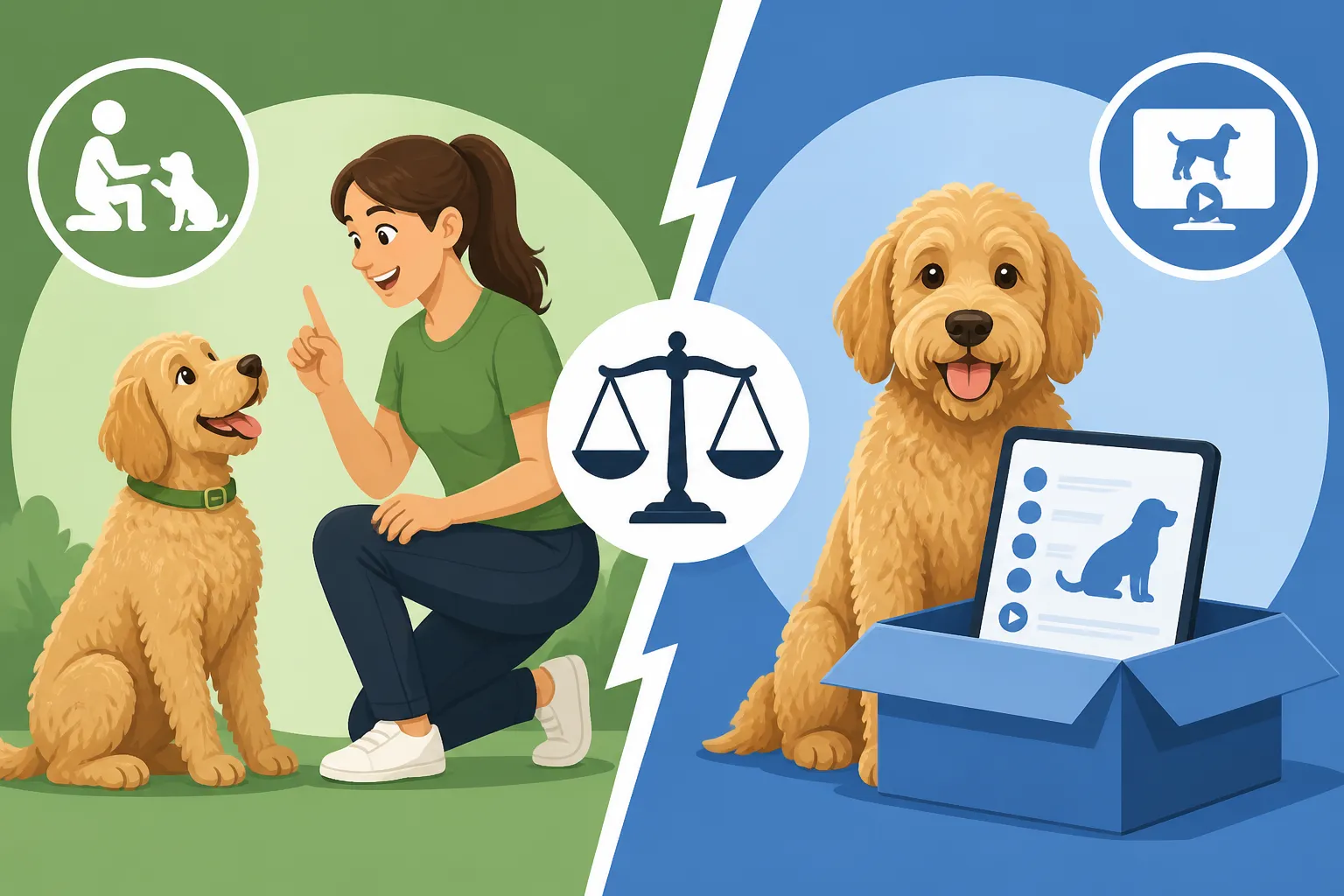
Choosing between a program-trained Labradoodle and an owner-trained one involves weighing various factors. Here's a brief comparison to help crystallize the differences:
| Feature | Program-Trained Labradoodle | Owner-Trained Labradoodle |
|---|---|---|
| Initial Cost | High upfront (tens of thousands, though often subsidized) | Lower upfront for puppy, but ongoing training costs add up |
| Total Cost | Can be very high, but often includes lifelong support | Variable, depends on trainer, vet care, and time |
| Time Commitment | Less personal time for training; focus on bonding after placement | Massive personal time commitment for 1-3+ years of training |
| Training Quality | Professionally consistent, extensive, and proven | Depends heavily on owner's dedication and trainer's expertise |
| Wait Time | Can be very long (months to years) | Dependent on breeder waitlists and your training pace |
| Dog Selection | Matched to you by the program; less choice | You select your puppy, but must vet for service potential |
| Bonding | Takes time to build with a mature dog | Deep bond forged through shared training journey |
| Flexibility | Less flexibility in task modification | Highly customizable to your specific needs |
| Public Access | Generally smoother, fewer questions, established reputation | May face more questions, requires owner advocacy |
| Support | Program provides ongoing support, community | Requires building your own network of trainers and peers |
| Washout Risk | Primarily managed by program during training; less risk to owner | Owner bears full risk of dog not making it as a service animal |
Ultimately, both paths can lead to a successful service dog partnership. The decision hinges on what resources you have available – be it financial, time, or emotional capacity – and what kind of journey you envision for yourself and your future Labradoodle companion. It’s a marathon, not a sprint, no matter how you approach it.
Disclaimer
This article is for general informational purposes only and does not constitute professional advice. Laws, prices and regulations vary by location and change over time. Consult a qualified professional for guidance on your specific situation.