Telling Nuclear Sclerosis From Cataracts in a Labradoodle
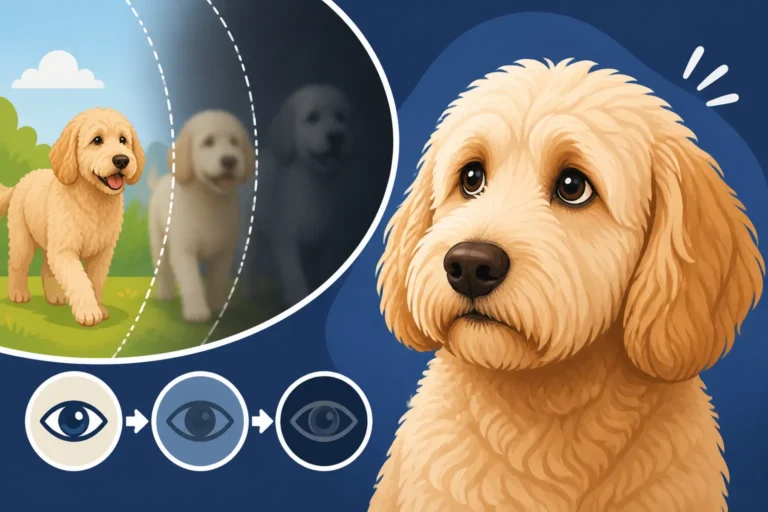
It’s a moment that can make any Labradoodle owner's heart sink: you’re looking into your beloved dog’s eyes, and you notice a cloudiness, a subtle haziness that wasn't there before. Immediately, your mind races to the worst-case scenarios, fearing vision loss and debilitating illness. This guide is here to help you understand two common canine eye conditions, nuclear sclerosis and cataracts, explaining the crucial differences so you can better advocate for your Labradoodle's eye health.
Understanding Your Labradoodle's Eye Health
Our Labradoodles, with their expressive eyes, communicate so much, and any change can be alarming. When it comes to their vision, two terms often cause confusion, and understanding the normal aging process is the first step to telling them apart.
The Natural Aging Process of the Lens
Just like us, our dogs experience natural changes as they age, and their eyes are no exception. One of the most common and entirely normal age-related changes you might notice in your Labradoodle’s eyes is a subtle clouding of the lens. This usually starts to become noticeable around 6 to 8 years of age, though it can vary. It's often described as a grayish-blue haze deep within the pupil, and it's something many owners first spot when their dog turns its head just right in the sunlight.
It's completely natural to feel a pang of worry when you first see this. We love our dogs like family, and the thought of them losing their sight can be incredibly distressing. However, in many cases, what you’re observing is simply the lens becoming denser with age, a process called nuclear sclerosis, and it's far less serious than the alternative.
What Exactly Is Nuclear Sclerosis?
Nuclear sclerosis is a perfectly normal, age-related change that occurs in the lens of your Labradoodle's eye. Think of the lens as an onion, with layers constantly forming. As new fibers are laid down on the outside of the lens, the older, central fibers get compressed and harden. This compression and hardening lead to a slight increase in opacity in the center of the lens, which is what gives it that characteristic grayish-blue, sometimes milky, appearance.
The key thing to remember about nuclear sclerosis is that it generally doesn't significantly impair vision. While the lens is denser, light can still pass through it relatively easily, much like looking through slightly frosted glass. Your Labradoodle might experience a very minor decrease in visual acuity, especially in low light conditions, but for the most part, they can still navigate their world, fetch their favorite toys, and see your loving face without issue. It's often compared to presbyopia in humans, where we need reading glasses, rather than blindness. This is an important distinction that can save you a lot of undue worry.
Unpacking Cataracts in Labradoodles
While nuclear sclerosis is a benign sign of aging, cataracts are a more serious condition that involves the actual opacification of the lens, and they can severely impact a Labradoodle's vision.
The Different Faces of Cataracts
A cataract is, simply put, an opacity within the lens of the eye that blocks the passage of light, leading to impaired vision or even blindness. Unlike the gentle haze of nuclear sclerosis, cataracts are typically dense and often appear as a milky white or cloudy spot within the pupil. They can affect one eye or both and vary greatly in size and density, from tiny pinprick opacities to those that cover the entire lens.
Labradoodles, due to their Poodle and Labrador heritage, can be predisposed to certain types of cataracts. Some cataracts are hereditary, meaning they're passed down through generations, and can appear at any age, from puppyhood to senior years. Other common causes include diabetes (diabetic cataracts can develop very rapidly), trauma to the eye, inflammation within the eye, or simply old age, though age-related cataracts tend to be more progressive and can often be managed. It’s crucial for breeders to screen for conditions like The Progressive Retinal Atrophy Labradoodles Are Tested For, as certain genetic predispositions can increase the risk of various eye issues, including some forms of cataracts.
How Cataracts Impact Vision
The progression of cataracts and their impact on your Labradoodle's vision can vary dramatically. A small, immature cataract might only slightly blur vision, or your dog might not even notice it. However, as cataracts mature and grow, they become denser and block more light from reaching the retina. This is when you'll start to see a more noticeable change in your Labradoodle's daily life.
Dogs with advanced cataracts might start bumping into furniture, especially in unfamiliar environments or low light. They might become hesitant to go down stairs, miss toys you throw, or show increased anxiety when navigating. You might also notice their pupils appearing persistently dilated as their eyes try to let in more light. It’s a heartbreaking sight to witness your once confident, active Labradoodle become tentative because their world is becoming a blur. If you suspect your Labradoodle is struggling with their vision, don't hesitate to contact your veterinarian.
Key Differences: Nuclear Sclerosis vs. Cataracts
Distinguishing between these two conditions is paramount because their implications and treatment options are vastly different. While both involve a change in the lens, their nature and impact are night and day.
Visual Appearance: The Subtle vs. The Obvious
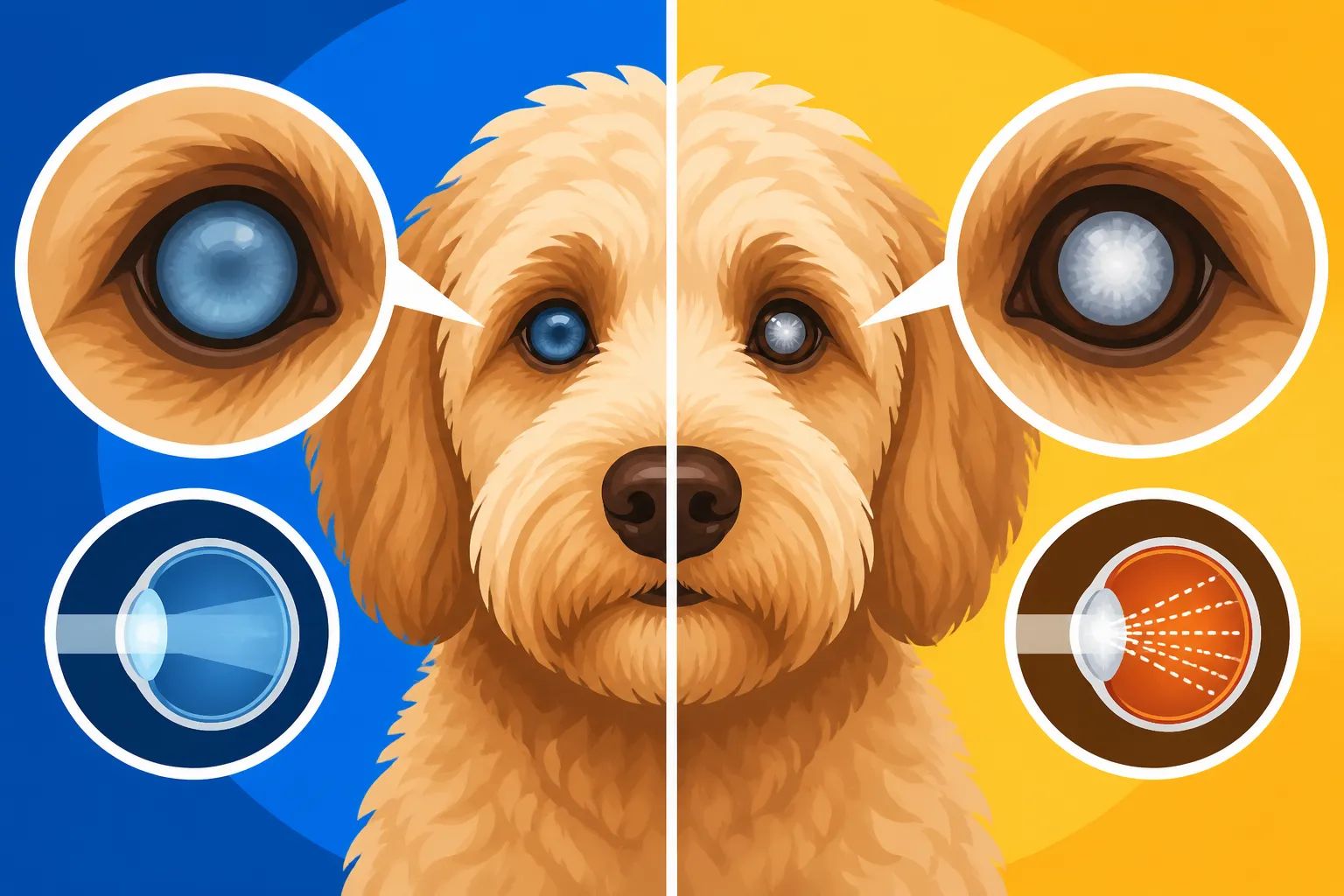
The most immediate difference you might observe with your own eyes is how they appear. With nuclear sclerosis, the lens often presents with a translucent, grayish-blue, or almost smoky haze that appears deep within the eye. If you shine a light into your Labradoodle's eye, you can typically still see through the hazy area to the retina at the back, albeit with a slight visual distortion. It’s like looking through a clean, but slightly foggy, window.
Cataracts, on the other hand, tend to be much more opaque. They often appear as a distinct milky white, cloudy, or even crystalline obstruction within the pupil. When you shine a light, the cataract will block the light from passing through, making it difficult or impossible to see the underlying structures of the eye. It's less like a foggy window and more like a pane of frosted glass or even a wall, depending on the severity. This difference in opacity is a primary indicator for veterinarians when making a diagnosis.
Impact on Daily Life and Behavior
This is where the true divergence lies for your Labradoodle's quality of life. A Labradoodle with nuclear sclerosis will generally show no significant changes in behavior related to their vision. They'll still navigate their home, play fetch, and recognize you just as they always have. Any subtle vision loss is usually so gradual and minimal that they adapt without issue, often relying more on their other keen senses like smell and hearing. You might notice them being a tiny bit slower to catch a treat in low light, but it won't impede their joy for life.
Conversely, cataracts can lead to noticeable and often significant behavioral changes. A Labradoodle with developing cataracts might start bumping into furniture, especially after dark, or become hesitant to jump on and off familiar surfaces. They might stop playing fetch as readily, or become more easily startled. They might also exhibit signs of anxiety or confusion in new environments because their visual input is compromised. Monitoring for these changes is essential, as early detection can influence treatment outcomes for their comfort and safety.
Diagnosis and Prognosis
Diagnosing whether your Labradoodle has nuclear sclerosis or cataracts requires a visit to your veterinarian, who may then refer you to a veterinary ophthalmologist for specialized care. A general vet can often differentiate between the two using an ophthalmoscope, which allows them to shine a light into the eye and magnify the lens. With nuclear sclerosis, the vet can typically see through the cloudy lens to the back of the eye, indicating that light is still passing through.
For cataracts, the opacity will obstruct the view, confirming that light transmission is blocked. For nuclear sclerosis, the prognosis is excellent – it’s a normal part of aging and requires no treatment. For cataracts, the prognosis depends on the cause and severity. Many cataracts can be surgically removed, restoring significant vision to your Labradoodle. However, cataract surgery is a specialized procedure that requires careful consideration and carries its own risks and recovery period. If you're exploring options, remember that having a robust pet insurance plan like those from Healthy Paws can be incredibly helpful for managing the costs of advanced diagnostics and surgical interventions.
When to Seek Veterinary Advice
As a devoted Labradoodle owner, it's easy to second-guess yourself when you notice something different. However, when it comes to eye health, it's always best to err on the side of caution.
Signs That Warrant an Immediate Vet Visit
While nuclear sclerosis is benign, any sudden or significant change in your Labradoodle's eyes or vision should trigger an immediate call to your vet. Look out for these red flags:
- Sudden onset of cloudiness or vision loss: If the cloudiness appears rapidly, or your Labradoodle suddenly starts bumping into things, it’s a strong indication of a more serious issue.
- Pain or discomfort: Pawing at the eye, squinting, excessive tearing, or sensitivity to light are all signs of pain and require urgent attention.
- Redness or discharge: Any redness in the whites of the eyes or around the eyelid, or unusual discharge (other than clear tears), could indicate infection, inflammation, or injury.
- Changes in pupil size or shape: Unequal pupil sizes, pupils that don't react to light, or an irregular pupil shape are serious signs.
- Changes in eye pressure: While you can't measure this at home, a vet will check for glaucoma, which can cause pain and rapid vision loss.
- Changes in the color of the iris: Any unusual discoloration of the colored part of the eye.
Early diagnosis and treatment are critical for many eye conditions, especially those that can lead to permanent vision loss if neglected. Don't wait if you observe any of these symptoms.
The Role of Regular Eye Exams
One of the best ways to ensure your Labradoodle’s eye health, and to catch any issues like cataracts early, is through regular veterinary check-ups. Just like we get our eyes checked, your Labradoodle needs routine examinations, especially as they enter their senior years. A thorough physical exam, which includes an eye examination, can help your vet monitor for changes over time. Remember, The Yearly Eye Exam a Labradoodle Should Have is not just about vaccinations; it's a comprehensive health check.
For Labradoodle owners, discussing eye health with your vet during annual visits is vital. They can perform basic ophthalmic exams and, if anything seems amiss, recommend a specialist referral. If your Labradoodle has a known genetic predisposition to eye conditions, like some types of Progressive Retinal Atrophy (PRA), your vet might recommend more frequent or specialized screenings. Consistent care helps ensure that whether it’s a benign change like nuclear sclerosis or a more challenging condition like cataracts, you're always prepared and can provide the best care for your furry friend.
Nuclear Sclerosis vs. Cataracts: A Quick Comparison
Here's a handy table to help summarize the key differences between these two conditions:
| Feature | Nuclear Sclerosis | Cataracts |
|---|---|---|
| Appearance | Grayish-blue, hazy, deep in lens, translucent | Milky white, cloudy, opaque, can be dense |
| Light Transmission | Light can still pass through, view to retina possible | Light transmission blocked, view to retina obstructed |
| Impact on Vision | Minimal to no significant vision loss | Ranges from slight blur to complete blindness |
| Onset | Gradual, age-related (typically 6-8+ years) | Can be sudden or gradual, any age (hereditary, diabetic, age-related) |
| Progression | Slowly becomes denser, but rarely impairs vision significantly | Can progress rapidly, especially diabetic or certain hereditary types |
| Associated Pain | No | No, but underlying conditions can cause pain |
| Treatment Required | None, benign condition | Often requires surgery for vision restoration, or management of underlying cause |
| Effect on Daily Life | Generally no noticeable change | Can lead to bumping, hesitation, anxiety, and altered behavior |
Disclaimer
The information provided in this article is for educational purposes only and is not intended to be a substitute for professional veterinary advice, diagnosis, or treatment. Always seek the advice of your veterinarian or other qualified health provider with any questions you may have regarding a medical condition.