The Age prcd-PRA Takes a Labradoodle’s Night Vision
It’s truly heartbreaking to notice changes in your beloved Labradoodle’s health, and when it comes to their eyesight, the worry can be immense. One condition that can cast a shadow over their later years is progressive rod-cone degeneration (prcd-PRA), a genetic eye disease that slowly, but surely, robs them of their vision. This guide will walk you through what prcd-PRA is, exactly when you might start seeing its effects on your Labradoodle’s night vision, and how you can support them through this challenging journey.
Understanding prcd-PRA in Labradoodles
When we talk about prcd-PRA, we’re delving into a genetic condition that specifically targets the photoreceptor cells in your dog's eyes. It's not a sudden onset disease; rather, it’s a slow and insidious process that gradually leads to blindness. Knowing what this means for your Labradoodle is the first step in understanding how to best care for them.
What is Progressive Rod-Cone Degeneration PRA?
At its core, progressive rod-cone degeneration (prcd-PRA) is an inherited retinal disease that causes the photoreceptor cells in the retina to degenerate over time. Think of the retina as the "film" in a camera – it's responsible for capturing light and sending images to the brain. Within the retina, there are two main types of photoreceptor cells: rods and cones.
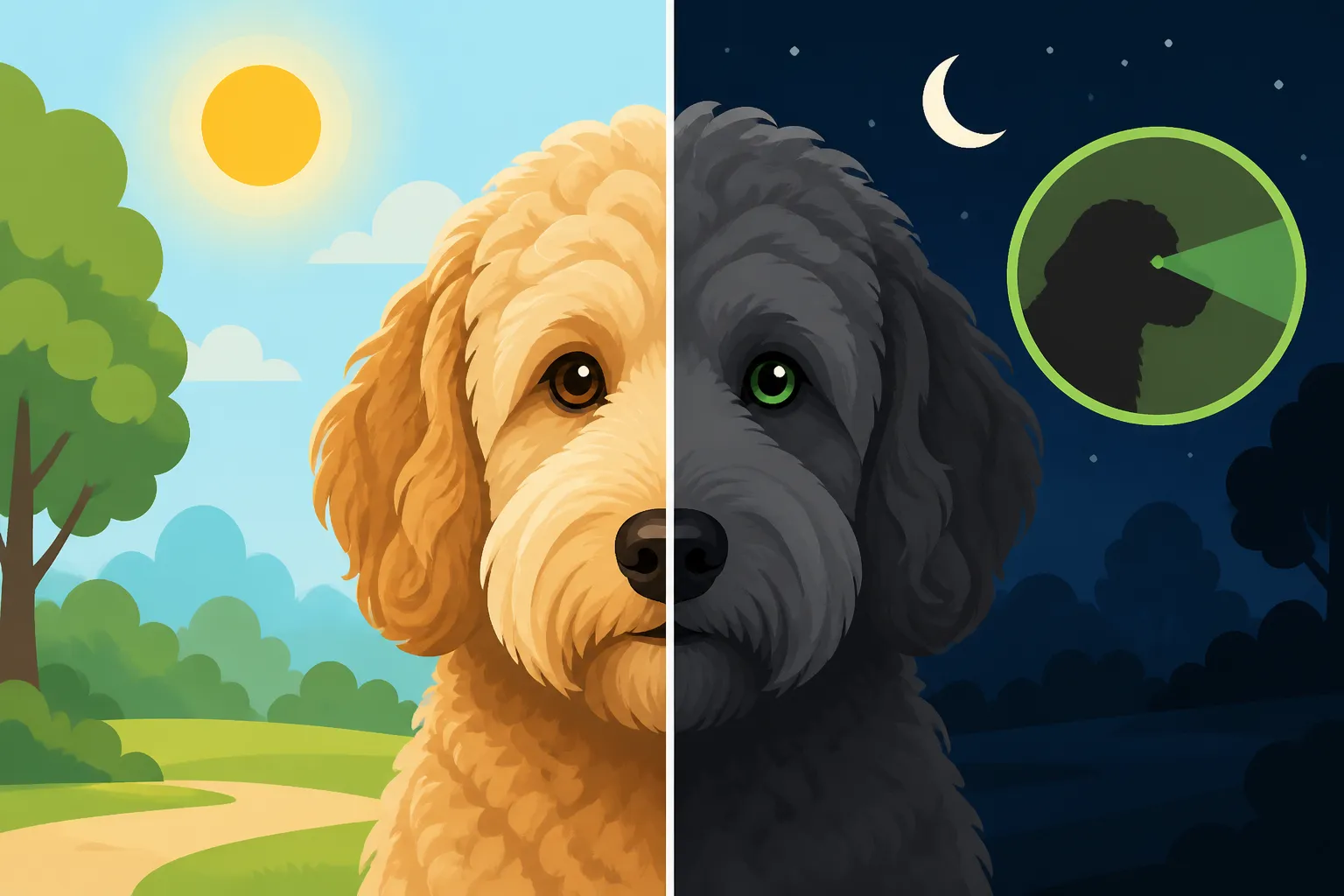
Rod cells are primarily responsible for vision in low light conditions, or what we commonly call night vision, and for detecting motion. Cone cells, on the other hand, are essential for bright light vision and for distinguishing colors and fine details. In prcd-PRA, the degeneration typically starts with the rod cells. This means that the earliest and most noticeable symptom in affected dogs is a gradual loss of night vision. As the disease progresses, the cone cells also begin to degenerate, eventually leading to complete blindness, even in daylight.
This process is slow and can take years, giving dogs a remarkable ability to adapt to their diminishing eyesight in familiar environments. The genetic mutation causing prcd-PRA is inherited in an autosomal recessive pattern, meaning a dog must inherit two copies of the defective gene (one from each parent) to be affected by the disease. Dogs inheriting only one copy are carriers and will not develop the disease themselves, but can pass the gene to their offspring.
The Genetic Link: Why Labradoodles are Susceptible
The Labradoodle, being a crossbreed of the Labrador Retriever and the Poodle, inherits genetic predispositions from both parent breeds. In the case of prcd-PRA, the primary genetic link often traces back to the Poodle side of their family tree. Standard Poodles, in particular, have a known incidence of prcd-PRA, and this gene can be passed down to their Labradoodle offspring. While Labrador Retrievers can also carry forms of PRA, prcd-PRA is strongly associated with the Poodle lineage.
This genetic inheritance is precisely why responsible Labradoodle breeders place such a high emphasis on health testing. Reputable breeders will screen their breeding stock for the prcd-PRA gene mutation using DNA tests. These tests can definitively identify whether a dog is clear, a carrier, or affected by the gene. By only breeding clear dogs, or breeding a clear dog with a carrier (which will produce only clear or carrier offspring, but no affected ones), breeders can prevent the disease from appearing in puppies. This is crucial for minimizing the risk of your Labradoodle developing this debilitating condition. When you’re looking into getting a puppy, asking a breeder for Labradoodle eye certificates and DNA test results for both parents is non-negotiable. It's the best way to ensure your future companion has the clearest possible start.
When Night Vision Starts to Fade
Understanding the typical timeline for prcd-PRA progression can help you recognize the signs early and prepare for the changes ahead. It’s a slow journey, but knowing what to expect can make all the difference.
Early Signs and Initial Progression
For most Labradoodles affected by prcd-PRA, the first noticeable symptoms typically emerge in middle age, often between 3 to 5 years old, though it can sometimes be observed as early as 2 or as late as 6 years of age. The earliest sign you'll likely observe is a subtle, then increasingly pronounced, loss of night vision.
Initially, you might chalk it up to your dog being a bit clumsy in the dark. Perhaps they're suddenly bumping into furniture in a dimly lit room they've navigated flawlessly for years. Maybe they hesitate more on evening walks, especially in areas with poor street lighting, or seem reluctant to go outside into the yard after dusk. Owners often describe their dogs becoming more cautious when descending stairs in low light or having trouble finding toys they’ve dropped under the sofa in the evening. They might start relying more on their other senses, like scent and hearing, to get around in the dark.
This isn't a sudden blindness; it's a gradual dimming of their world after the sun goes down. The rod cells, which function best in low light, are the first to be significantly affected. Think of it like a camera lens slowly becoming less sensitive to light – it needs more ambient light to "see" clearly. Your dog might still be perfectly fine during the day, which can make the early diagnosis confusing if you're not specifically looking for night-time issues. It's important to remember that dogs are incredibly adaptable, and they might hide these early signs well, especially if their environment is consistent.
Gradual Decline: From Night to Day
As prcd-PRA continues its slow, relentless march, the vision loss progresses beyond just nighttime. Over a period of several months to a few years, the degeneration of cone cells will also become significant, eventually leading to impairment in bright light and ultimately, complete blindness.
Typically, after the initial signs of night blindness in the 3-5 year range, it can take another 2 to 4 years for day vision to be severely impacted. So, a Labradoodle that started showing night vision issues at 4 years old might be completely blind by 6-8 years old. This timeline, however, is not set in stone and can vary between individual dogs.
During this stage, you'll notice their daytime vision becoming poorer. They might stumble over objects in brightly lit rooms, have trouble locating food bowls, or misjudge distances when jumping onto furniture. Outdoor walks might become more challenging as they struggle with uneven terrain or obstacles. Their once bright and attentive eyes might develop a dilated pupil appearance, even in normal light, as their eyes try to gather more light to compensate for the damaged photoreceptors. Some dogs might also develop cataracts, which can further obscure vision, though these are secondary to the retinal degeneration.
One of the most profound aspects of this gradual decline is how resilient dogs can be. Because the loss happens incrementally, they often develop incredible coping mechanisms, relying heavily on memory, smell, and hearing to navigate their world. You might notice them sticking closer to you, becoming more hesitant in new places, or developing what some call a "head bob" as they try to use their peripheral vision more effectively. This means that by the time you're certain something is wrong, their vision loss may already be quite advanced. This is why regular veterinary eye exams, even if your dog seems fine, are so important, especially for breeds prone to such conditions. Learning whether a Labradoodle loses its sight slowly can help you mentally prepare for these changes.
Living with a Vision-Impaired Labradoodle
Discovering your Labradoodle is losing its sight is tough, but it's far from the end of their happy, fulfilling life. With some thoughtful adjustments and a lot of love, they can continue to thrive.
Adapting Your Home Environment
The key to supporting a vision-impaired Labradoodle is creating a consistent, safe, and navigable home environment. Their world will become largely dependent on familiarity and predictability.
First and foremost, maintain consistency in furniture placement. Once you’ve established a layout that works, try not to move couches, tables, or dog beds. Your Labradoodle builds a mental map of their home, and even small changes can cause confusion, anxiety, and bumps. If you must move something, do it slowly and guide them around the new obstacle several times. Lay down distinct textures like a rug or a mat near their food bowl or door to the outside, providing tactile cues for important locations.
Clear pathways are essential. Keep floors free of clutter – shoes, toys, bags, and anything else that could become a tripping hazard for a dog who can't see them. Make sure stairways are blocked off if unattended, or provide ramps if your dog still needs to use them. Consider adding gates to prevent access to dangerous areas like swimming pools or roads.
Another helpful tip is to use scent markers. A drop of essential oil (diluted and safe for pets, check with your vet first!) or a specific air freshener near their water bowl or bed can help them locate these essential spots easily. Non-toxic floor waxes that create a distinctive smell can also mark boundaries or important paths.
For doors and entryways, consider adding chime bells or wind chimes. The sound can help them orient themselves before bumping into a closed door. When introducing new items or people, speak to your dog calmly and allow them to approach and sniff at their own pace. Remember, their other senses will be heightened, so be mindful of strong perfumes, loud noises, and sudden movements. Many owners find that the yearly eye exam a Labradoodle should have helps track the progression, allowing them to make gradual adjustments as needed.
Maintaining Quality of Life and Comfort
Beyond physical adaptations, maintaining your Labradoodle's quality of life involves psychological and emotional support. A dog losing its sight might experience anxiety, frustration, or a change in confidence. Your calm and consistent reassurance is paramount.
Continue with enrichment and modified activities. Just because they can't see doesn't mean they can't play! Scent games are fantastic for vision-impaired dogs. Hide treats around the house and encourage them to "find it" using their powerful nose. Toys that make noise, like squeaky balls or crinkle toys, are also excellent. Interactive puzzle feeders can keep their minds stimulated. Continue short, familiar walks on a leash, allowing them to sniff and explore their environment safely. A long line in a secure, fenced yard can give them a sense of freedom without risk. Brands like Healthy Paws can offer great pet insurance options that help cover the costs of ongoing care and vet visits, which become even more critical when managing conditions like prcd-PRA.
Verbal cues become incredibly important. Start using clear, consistent verbal commands for everything: "step up," "step down," "wait," "left," "right," "danger," or "clear." Praise them enthusiastically when they respond correctly. Always speak to them before touching them so you don’t startle them.
Consider a halo harness or a "blind dog" vest. A halo harness can provide a physical bumper, protecting their head from bumping into objects. A vest that says "blind dog" can gently inform strangers and other dog owners to approach with caution, making public outings less stressful for both of you.
Regular veterinary check-ups are even more crucial. Your vet can monitor the progression of the disease, rule out secondary eye issues, and provide advice on pain management or other health concerns that might arise as your dog ages. They can also help you distinguish between nuclear sclerosis and cataracts in a Labradoodle, both of which can affect vision but have different implications. Remember, a blind dog can still have a wonderfully happy life, filled with love and connection, largely thanks to your patience, understanding, and adaptability.
Here's a quick overview of the typical progression:
| Age Range (Approximate) | Symptoms to Watch For | Vision Impact | Owner Response |
|---|---|---|---|
| 2-5 years | Hesitation in dim light, bumping into objects at night, reluctance to go out after dark, difficulty locating toys in low light. | Initial loss of night vision (rod cells affected). | Increase lighting indoors, consistent evening routines, use verbal cues for guidance. |
| 5-8 years | Increased bumping even in well-lit rooms, misjudging steps/distances, dilated pupils in normal light, increased reliance on other senses. | Progressive loss of day vision (cone cells also affected). | Maintain consistent home layout, clear pathways, use scent/sound markers, continue modified activities. |
| 8+ years | Complete blindness, profound reliance on other senses, potential anxiety in new environments. | Complete vision loss. | Continued environmental consistency, strong verbal cues, focus on comfort and tactile/auditory enrichment. |
Disclaimer
This article is for general informational purposes only and does not constitute professional advice. Laws, prices and regulations vary by location and change over time. Consult a qualified professional for guidance on your specific situation.