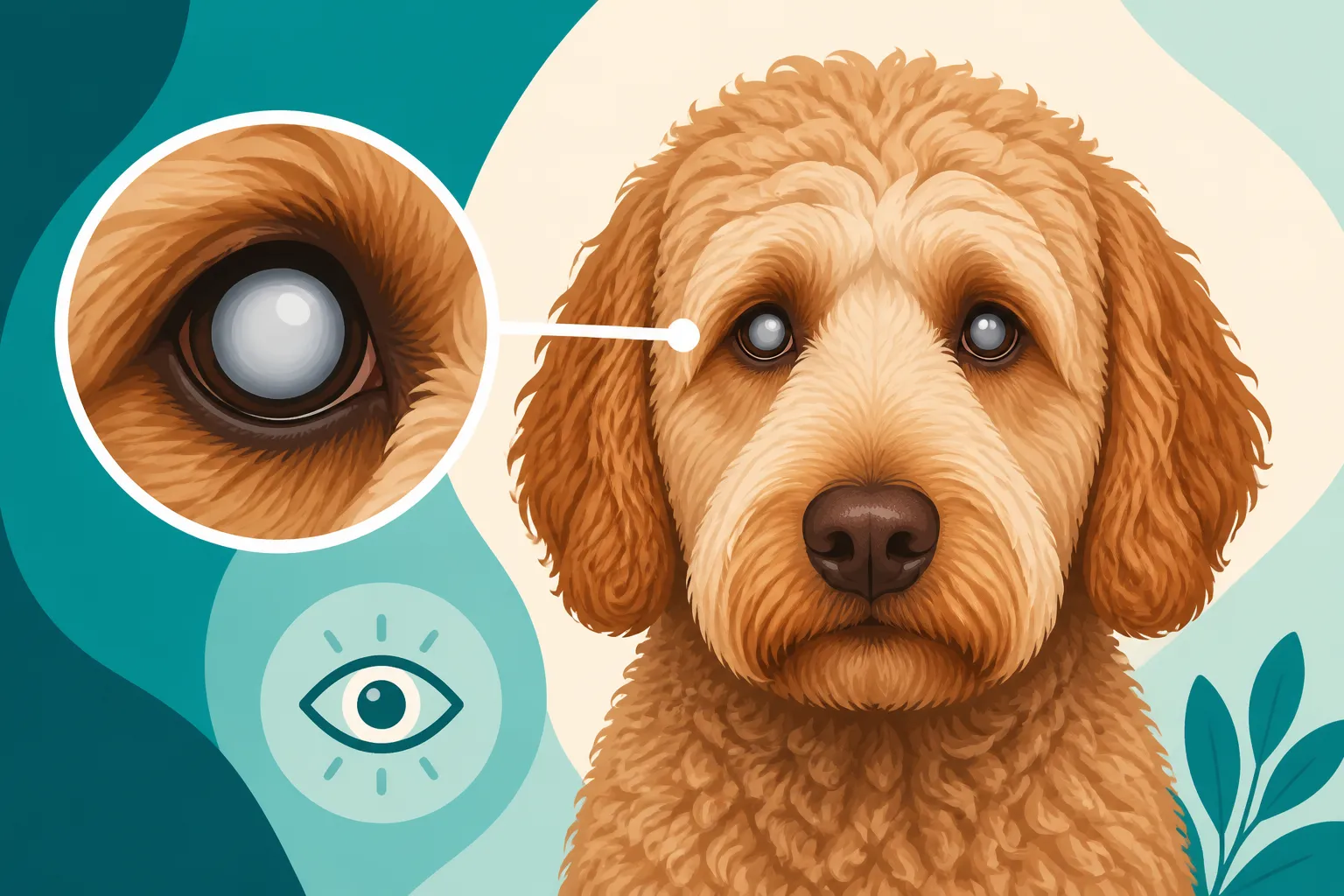
Cataracts in a Middle Aged Labradoodle
It's truly heartbreaking to notice those first hazy changes in your beloved Labradoodle's eyes, isn't it? That subtle cloudiness can trigger a wave of fear, immediately making us worry about their comfort, their independence, and whether their world is slowly fading to grey. This comprehensive guide is here to walk you through everything you need to know about cataracts, especially as your wonderful Labradoodle enters their middle-aged years, so you can face this challenge with knowledge and confidence.
Understanding What Cataracts Truly Are
When we talk about cataracts, it's often with a sense of dread, picturing a complete loss of vision. But like so many things in our Labradoodles' health, it's more nuanced than that. Understanding what's actually happening inside their eyes can help demystify the process and prepare you for what might be ahead.
More Than Just 'Cloudy Eyes'
At its core, a cataract is an opacity that develops within the lens of the eye. The lens, located behind the iris (the colored part of the eye), is normally perfectly clear, designed to focus light onto the retina at the back of the eye, much like the lens in a camera. This precise focusing is what allows your Labradoodle to see clearly, whether they're tracking a tennis ball across the yard or navigating their way to their food bowl. When a cataract forms, it's because the proteins within the lens begin to break down and clump together, creating a cloudy, opaque area that light can't pass through properly.
This protein aggregation isn't just a surface phenomenon; it affects the internal structure of the lens. The severity of the cataract depends on how much of the lens is affected and how dense the opacity becomes. A small, partial cataract might cause minimal vision impairment, perhaps just making things a little blurry, while a complete cataract can block all light, leading to blindness in that eye. It's not like simply wiping a dirty window; it's a structural change within the eye itself.
The Types of Cataracts in Labradoodles
Cataracts aren't a single condition; they come in various forms, each with different causes and implications for your Labradoodle. While age-related cataracts are common, especially as dogs get older, Labradoodles can also be susceptible to other types due to their genetic background or other health issues. Knowing the distinction is important for accurate diagnosis and treatment.
One of the most concerning types, especially in breeds like the Poodle and Labrador (the parents of your Labradoodle), is inherited cataracts. These can develop at different ages, sometimes even appearing in young dogs, but can also manifest in middle age. Then there are diabetic cataracts, which unfortunately are a rapid and common complication for dogs with uncontrolled diabetes. The high sugar levels in their blood cause an osmotic imbalance in the eye's lens, leading to quick and often complete cataract formation. Trauma to the eye, inflammation (uveitis), or even exposure to certain toxins can also induce cataracts. For a middle-aged Labradoodle, the vet will be looking closely at their overall health profile to determine the likely cause.
Why Middle Age Brings Cataract Concerns in Labradoodles
As our Labradoodles gracefully move into their middle years – typically around six to eight years old for a standard size, perhaps a bit earlier for a miniature – we start paying closer attention to age-related changes. Their steps might slow down, their muzzle might silver, and their eyes, once bright and clear, can begin to show the subtle hallmarks of time.
Genetic Predispositions and the Labradoodle's Lineage
Both the Labrador Retriever and the Standard Poodle, the foundation breeds for the Labradoodle, have documented predispositions to certain eye conditions, including hereditary cataracts and Progressive Retinal Atrophy (PRA). While breeders strive to select for healthy lines, genetic conditions can sometimes surprise us. If a Labradoodle inherits genes for certain types of cataracts, they might start to develop opacities in their lens during their middle years, even if their parents were tested clear for specific, common eye diseases.
It’s why responsible breeding practices emphasize extensive health screening, including eye certifications. While a clear prcd-PRA Test Both Labradoodle Parents Need is vital for preventing one form of inherited blindness, it doesn't cover all potential eye issues. Sometimes, a general predisposition to cataracts, separate from specific PRA genes, can be passed down. This means that even with all the best intentions and health testing in the world, your Labradoodle might still face this challenge as they age.
The Role of Other Health Conditions
Beyond genetics, a Labradoodle's overall health plays a massive role in their susceptibility to developing cataracts in middle age. The most significant culprit here is diabetes. If your Labradoodle develops diabetes, cataracts can often follow swiftly, sometimes within weeks or months, progressing rapidly from subtle cloudiness to full blindness. It's a stark reminder of the interconnectedness of our dogs' health systems.
Other systemic health issues, such as hypothyroidism or certain nutritional deficiencies, while less common causes, can also contribute to lens changes. Inflammation within the eye itself (uveitis), even if caused by an injury or infection years prior, can also slowly lead to cataract formation. Regular veterinary check-ups are crucial for catching these underlying conditions early. For example, if your vet suspects something like diabetes, they'll perform blood tests to check glucose levels, and if they confirm it, immediate management of the diabetes becomes critical, not just for the eyes but for your Labradoodle's entire well-being.
Spotting the Signs: What to Look For in Your Labradoodle
Catching eye problems early can make a big difference, not just for potential treatment but also for helping your Labradoodle adjust. It's easy to miss subtle changes, especially in a dog as loving and adaptable as a Labradoodle, so knowing exactly what to observe is key.
Visual Cues of Developing Cataracts
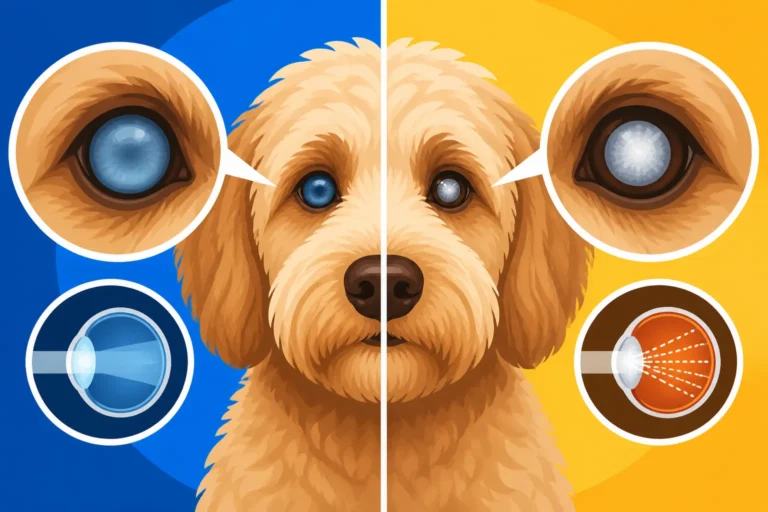
The most obvious sign of a cataract is a change in the appearance of your Labradoodle's eyes. You might start to notice a hazy or cloudy appearance in the pupil, which is normally black. This cloudiness can range from a faint, pearly sheen to a dense, milky white or grey. It often starts subtly, perhaps in just one small area of the lens, and then gradually progresses. Sometimes, it might look like a bluish-grey haze, which can be mistaken for nuclear sclerosis – a normal aging change where the lens hardens and scatters light, but doesn't usually impair vision significantly. We'll talk more about the distinction soon.
As the cataract grows, it might block more and more light, making the pupil appear increasingly opaque. In some cases, if light catches their eyes in a certain way, you might even see a reflection that looks different than before, less clear and more diffused. Pay close attention in different lighting conditions; sometimes the opacity is more apparent in bright light, other times in dimmer settings. Remember to check both eyes, as cataracts can affect one eye more than the other, or develop at different rates.
Behavioral Changes and Navigational Challenges
Beyond what you see visually, your Labradoodle's behavior can offer significant clues that their vision is deteriorating. They might start to hesitate more when navigating familiar environments, especially in low light conditions or when going from a bright room to a darker one. Bumping into furniture, misjudging distances, or even having trouble catching toys that used to be a breeze are all potential red flags.
You might notice they become more reliant on their other senses. Perhaps they're using their nose more to find objects or relying on auditory cues to follow you around the house. They might seem more cautious descending stairs or jumping off furniture. This can be incredibly frustrating and confusing for a dog that has always been confident and active. It's important to approach these changes with empathy and patience. They aren't being stubborn; they're genuinely struggling to see their world as they once did. If your Labradoodle is showing signs of Whether a Labradoodle Loses Its Sight Slowly, this could very well be a sign of developing cataracts.
Diagnosis and Prognosis: Getting a Clear Picture
When you suspect your Labradoodle might have cataracts, the first step is always a visit to your veterinarian. They can provide an initial assessment and, if necessary, refer you to a veterinary ophthalmologist, a specialist in animal eye care.
The Vet Visit: What to Expect
During your appointment, your general veterinarian will likely perform a thorough physical exam, including a basic eye examination. They'll use an ophthalmoscope to look at the internal structures of the eye, checking for clarity of the lens and retina. They might also dim the lights and observe your dog's reflexes to light and their ability to track objects. If they see signs of cataracts, they'll want to investigate potential underlying causes. This often includes blood tests to check for systemic diseases, most notably diabetes, which, as we discussed, can rapidly induce cataracts. They might also recommend checking for thyroid function or other metabolic conditions.
For a definitive diagnosis and to discuss treatment options, a referral to a veterinary ophthalmologist is often recommended. This specialist has advanced equipment, such as slit lamps, which allow them to examine the eye in much greater detail. They can precisely map the location and density of the cataracts, assess the health of the retina, and determine if your Labradoodle is a candidate for surgical intervention. They'll also be able to tell you more about the likely prognosis – how quickly the cataracts might progress and what vision your dog might retain.
Differentiating Cataracts from Other Eye Conditions
One of the most crucial aspects of an ophthalmologist's examination is differentiating cataracts from other eye conditions that can cause a similar cloudy appearance, especially nuclear sclerosis. Nuclear sclerosis is a common, normal aging change in dogs, typically appearing after the age of six or seven. It causes a bluish-grey haze in the center of the lens due to the natural hardening and compression of older lens fibers. While it scatters light, it generally does not impair vision significantly. Your Labradoodle can still see perfectly fine with nuclear sclerosis.
However, a cataract is different. It's a true opacity that blocks light, leading to varying degrees of vision loss. Distinguishing between the two requires a skilled professional with specialized equipment, as they can look deep into the eye and determine if light is merely scattering (nuclear sclerosis) or truly being blocked (cataract). This distinction is vital because nuclear sclerosis doesn't require treatment, whereas cataracts might. This is why knowing Telling Nuclear Sclerosis From Cataracts in a Labradoodle is so important. Other conditions, like corneal dystrophy, uveitis, or even advanced Progressive Retinal Atrophy (PRA), can also sometimes mimic cataract symptoms, making expert diagnosis indispensable.
| Feature | Cataract | Nuclear Sclerosis |
|---|---|---|
| Appearance | Milky white, grey, or opaque cloudiness | Bluish-grey haze, often symmetrical in both eyes |
| Location | Anywhere in the lens (cortex, nucleus, capsule) | Central part of the lens (nucleus) |
| Vision Impact | Significant to complete vision loss (depending on size/density) | Minimal to no vision impairment; light scattering |
| Progression | Can progress and worsen over time, sometimes rapidly | Non-progressive or very slow, doesn't typically lead to blindness |
| Causes | Genetics, diabetes, trauma, inflammation, toxins | Normal aging process |
| Treatment | Surgical removal (phacoemulsification) is the only cure | No treatment required |
| Light Blockage | Yes, light is blocked | No, light is scattered |
Treatment Options: Beyond Just Waiting and Watching
Once your Labradoodle has been diagnosed with cataracts, you'll naturally want to know what can be done. The good news is that there are options, ranging from management strategies to surgical interventions, depending on the type and severity of the cataracts, and your dog's overall health.
Medical Management and Lifestyle Adjustments
For some types of cataracts, or in cases where surgery isn't an option (perhaps due to other health concerns or financial constraints), management focuses on supporting your Labradoodle's remaining vision and quality of life. Unfortunately, there's no medication that can reverse or dissolve an existing cataract. However, if the cataract is secondary to another condition, such as diabetes, managing the primary disease is paramount. In cases of inflammation, anti-inflammatory eye drops might be prescribed to reduce discomfort and prevent further damage, though they won't clear the cataract itself.
Lifestyle adjustments are crucial. Creating a safe and predictable home environment becomes essential. Avoid moving furniture around unnecessarily, use consistent pathways, and ensure good lighting, especially in areas where your Labradoodle frequently navigates. Using scent markers or different textures on the floor can also help them orient themselves. Continue to engage them with toys that make noise or are scented. Regular walks on a leash in familiar areas, rather than off-leash adventures in new places, will help keep them active and stimulated without risk.
Surgical Intervention: When It's the Right Choice
For many Labradoodles, especially those with significant vision loss due to cataracts, surgical removal is the only way to restore sight. This procedure, called phacoemulsification, is the same technique used in humans. It involves making a tiny incision in the eye, using an ultrasonic probe to break up the clouded lens, and then aspirating the fragments. An artificial intraocular lens (IOL) is usually implanted to restore proper focus. The success rate for this surgery is very high, often exceeding 90-95% in otherwise healthy dogs, and can dramatically improve their quality of life.
However, cataract surgery is a specialized procedure that comes with considerations. It's expensive, requires significant post-operative care (including frequent eye drops and restricted activity), and carries potential risks, such as glaucoma, retinal detachment, or infection, though these are rare. Your veterinary ophthalmologist will conduct a thorough pre-surgical evaluation, including electroretinography (ERG) to ensure the retina is healthy enough to benefit from surgery. This also assesses whether your Labradoodle's eyes are healthy enough for something like Whether Cataract Surgery Suits a Labradoodle. It’s important to have an open conversation about the pros and cons, potential outcomes, and the commitment involved. Many owners find that investing in pet insurance like Healthy Paws, which often covers such specialist procedures, can provide immense peace of mind when these unexpected but critical health issues arise.
Living with a Labradoodle with Impaired Vision
Discovering your Labradoodle has cataracts and might lose some or all of their vision can be incredibly distressing. But dogs are remarkably adaptable, and with your help, they can continue to live full, happy lives. It requires patience, understanding, and a willingness to make some adjustments to their daily routine and environment.
Creating a Safe and Predictable Home Environment
The key to supporting a vision-impaired Labradoodle is consistency and safety. Try to keep furniture and their food and water bowls in the same places. This helps them build a mental map of their home. Block off any hazardous areas, like stairs or swimming pools, until you can supervise them closely or install safety gates. Consider covering sharp corners with bumpers to prevent accidental bumps. For outdoor spaces, ensure your yard is securely fenced and free of obstacles.
Using different textures on floors, such as a rug near their water bowl or a mat at the door, can provide sensory cues. Scent markers can also be useful – a dab of essential oil (safe for dogs and diluted, like lavender or vanilla) on furniture legs can help them navigate. When outside, always keep them on a leash, especially in unfamiliar territory. Remember that your Labradoodle relies heavily on their sense of smell and hearing, so talk to them frequently, use consistent verbal cues, and keep their world predictable.
Supporting Your Labradoodle's Emotional Well-being
A Labradoodle with declining vision might become more anxious, insecure, or even a bit clingy. It's crucial to acknowledge these feelings and provide extra reassurance. Maintain a consistent daily routine for feeding, walks, and playtime. This predictability helps reduce anxiety. Continue to engage them in activities they enjoy, adapting them as needed. For example, instead of fetch with a regular ball, try a ball that makes noise. Scent work, where they use their powerful noses to find hidden treats or toys, can be a fantastic way to keep their minds active and boost their confidence.
Physical touch, gentle grooming, and plenty of verbal praise will reinforce their bond with you and help them feel secure. Encourage interaction with familiar people and other calm, known pets. If you have children, teach them to approach your Labradoodle gently, speaking their name before touching, to avoid startling them. While pet insurance providers like Healthy Paws focus on physical health, the peace of mind they offer by covering specialist treatments can allow you to focus more on your Labradoodle's emotional support during this challenging time. Regular check-ups with your vet for The Yearly Screening a Labradoodle Should Get are also important to ensure any other age-related issues are caught early.
The Long-Term Outlook for Labradoodles with Cataracts
Dealing with cataracts in a middle-aged Labradoodle isn't a short-term issue; it's a condition that often requires ongoing management and adjustments as your dog continues to age. Understanding the potential long-term trajectory can help you plan and provide the best care.
Monitoring Progression and Managing Secondary Issues
After an initial diagnosis, your veterinary ophthalmologist will likely recommend regular follow-up appointments to monitor the progression of the cataracts. The frequency of these visits will depend on the type of cataract and how quickly it's developing. For instance, diabetic cataracts can progress incredibly fast, requiring more immediate attention, while age-related cataracts might develop more slowly. During these visits, the ophthalmologist will check for any complications, such as lens-induced uveitis (inflammation caused by a leaking lens), glaucoma (increased pressure in the eye), or retinal detachment, all of which can severely impact comfort and vision.
If these secondary issues arise, they will require additional treatment, which could include anti-inflammatory medications, pain relief, or specific glaucoma drops. It's a continuous balancing act of managing the primary condition and preventing or treating any subsequent problems. This proactive monitoring is key to maintaining your Labradoodle's comfort and health for as long as possible. Sometimes, even if surgery isn't opted for, managing these secondary conditions is critical to prevent pain and further deterioration.
Quality of Life and Adjustments as They Age
For many Labradoodles, living with partial or even complete blindness due to cataracts doesn't mean a diminished quality of life, especially with dedicated owners. Dogs adapt remarkably well, relying on their incredible sense of smell and hearing to navigate their world. Your consistent support and a stable environment are the biggest factors in their continued happiness. As they get older, a Labradoodle might also experience other age-related conditions, such as arthritis or cognitive decline, which can further impact their mobility and confidence.
These compounding factors mean that your approach to their care will need to evolve. You might need to provide ramps for stairs, comfortable orthopedic beds, and continue with brain-stimulating games to keep their minds sharp. Regular conversations with your veterinarian about their overall well-being, pain management, and nutritional needs, especially for What a Labradoodle Owner Should Watch For After Eight, will become even more vital. Remember that while a significant upfront cost may be associated with cataract surgery, organizations like Healthy Paws can often alleviate the financial burden of these essential and impactful procedures, allowing you to prioritize your Labradoodle's well-being throughout their senior years. Ultimately, it’s about ensuring they feel safe, loved, and engaged in their world, regardless of how they perceive it visually.
Disclaimer
This article is intended for informational purposes only and is not a substitute for professional veterinary advice, diagnosis, or treatment. Always seek the advice of your veterinarian or other qualified health provider with any questions you may have regarding a medical condition.