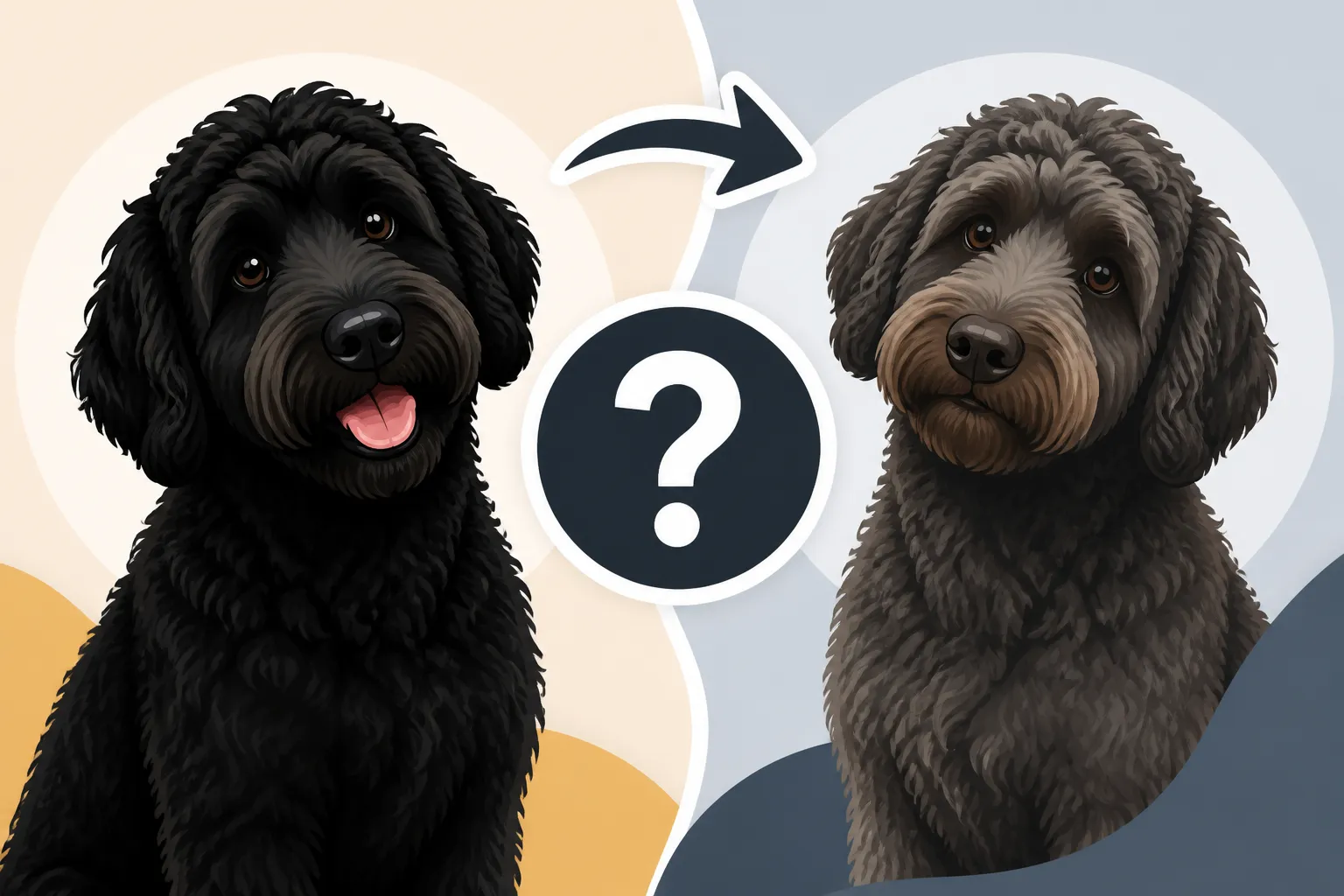
Whether a Black Labradoodle Fades
A black Labradoodle can grow up looking charcoal, silver, or brownish rather than the deep black you brought home, and that change can be surprising. In many dogs, fading is a normal inherited coat-color trait or the result of sun exposure—not a sign that the coat is unhealthy. This guide explains what causes the color shift, how to tell it from a skin problem, and what care can and cannot change.
Why a black Labradoodle’s coat may fade
Inherited fading and changing coat color
Some Labradoodles inherit genes that cause dark pigment to lighten as they mature. A puppy may start with a nearly black coat and gradually develop charcoal, silver, or a lighter gray-brown shade. The change can happen slowly, so owners may only notice it when comparing puppy photographs with the dog standing in the same spot a year or two later.
The final shade is hard to predict from a puppy’s appearance alone. Labradoodles are a cross, and the combination of traits passed down from each parent can vary—even among puppies from the same litter. A black puppy may stay very dark, lighten noticeably, or change mainly around the face and legs. A breeder’s knowledge of the parents and relatives can offer clues, but it cannot guarantee an exact adult color.
A fading coat is different from a coat simply looking lighter because it is longer, freshly clipped, or lit differently. Curl and texture affect how light reflects off the hair, while a haircut can expose a paler undercoat or remove darker sun-exposed tips. The way a dog’s color changes can also overlap with changes in texture; Whether a Labradoodle's Coat Changes Texture With Age explores that separate but related part of growing up.
Puppy coat changes can make the shift more noticeable
Many Labradoodles change from their soft puppy coat to an adult coat as they grow. During this transition, loose puppy hair and new adult hair may appear together, and the adult coat can have a different shade, curl pattern, or density. Owners sometimes interpret that whole transition as fading, even if the main change is a new coat growing in.
This is especially confusing when the coat becomes more wavy or curly. A black coat can look lighter where the curls catch the light, and variations in the hair may become easier to see once the coat is longer. The puppy-to-adult change does not mean every Labradoodle will fade, but it is one reason the color seen at eight weeks may not match the mature coat. For more on that uncertainty, see Whether a Labradoodle Puppy's Coat Predicts the Adult One.
If you are choosing a puppy and a particular shade matters to you, ask what colors the parents and close relatives became as adults. Treat photos as useful context, not a promise: lighting, grooming length, camera settings, and age can make two pictures of the same dog look quite different. Coat-color expectations are often less predictable than families hope, as discussed in Whether an F1 Labradoodle's Coat Is a Gamble.
Sunlight and everyday wear can lighten the coat
Sun exposure can bleach the hair shaft, particularly on areas that spend more time outdoors or face the sun. The tips may look rusty, reddish, or brownish while hair closer to the skin remains darker. This is more like fading in a fabric than a change happening in the skin itself: the affected hair looks lighter, but the skin underneath is not necessarily changing color.
Salt water, chlorine, frequent swimming, and repeated washing with harsh or unsuitable products may also leave a coat looking dry or dull. These factors do not explain every color shift, and they do not usually create the same pattern as inherited gradual graying. Still, if a dog swims often or spends long days outside, gentle rinsing and thorough drying can help keep the coat in better condition.
Protecting a dog from heat and sun is more important than trying to preserve a specific shade. Provide shade, fresh water, and breaks during hot weather rather than keeping a dog indoors solely to prevent coat bleaching. If the dog’s coat seems dry after swimming, rinse out residue and use a dog-formulated grooming product suited to the coat. Retailers such as Chewy carry a range of pet shampoos and conditioners, but check the label and ask your groomer or veterinarian if your dog has sensitive skin.
What kind of fading are you seeing
Gradual all-over color change
Inherited fading often appears gradually and may affect much of the coat. A black dog might become dark charcoal first, then show silver hairs around the muzzle, chest, ears, or legs. The pattern and pace vary. Some dogs retain a dark saddle or darker patches, while others become more evenly lighter.
Take occasional photos in consistent natural light, ideally with the coat at a similar length. That gives you a more reliable comparison than relying on memory or indoor photos taken under different bulbs. Also note whether the dog’s skin looks normal and whether the hair itself feels healthy. A smooth, gradual shift in color without itching, bald spots, or redness is less concerning than a sudden change alongside skin symptoms.
A coat that fades with age is not necessarily a sign of poor health, poor breeding, or an inadequate diet. Color alone does not tell you whether a dog is receiving good care. Coat texture, comfort, skin condition, and overall health matter more than whether the black stays jet black.
Sun bleaching and environmental wear
Sun-bleached hair often looks lighter at the ends or on the back and other exposed areas. You may notice the change most after a sunny season, especially if your Labradoodle spends time outdoors, swims, or has a long coat that collects residue. The hair near the roots may appear darker than the tips.
Compare different areas rather than judging the coat as a whole. If the ears or underside remain dark while the topcoat looks bronze, exposure may be contributing. A trim can also make the color seem to change suddenly because it removes worn or bleached ends and reveals newer growth underneath.
Regular grooming helps you spot changes, but brushing or bathing will not reverse pigment that has already lightened in the hair shaft. Choose products for cleanliness and coat condition, not promises to restore a particular color. Chewy is one place owners may compare grooming supplies, but a product’s suitability depends on your dog’s coat and skin—not just its marketing claims.
Coat color changes that need a veterinary check
Color change by itself is usually not an emergency. A veterinarian should take a look if fading happens alongside hair loss, thinning patches, persistent scratching, greasy or flaky skin, sores, a strong odor, or a sudden change in coat texture. These symptoms may point to a skin or health issue that needs diagnosis rather than a coat-color explanation.
Pay attention to the pattern. A few gray hairs around an older dog’s muzzle can be ordinary aging. In contrast, patchy hair loss or skin that becomes dark, red, thickened, or irritated deserves attention. Avoid trying several medicated shampoos or supplements before you know what is causing the problem, as the wrong product can irritate skin or delay appropriate care.
If you are unsure whether the coat is simply changing shade, take clear photos and note when you first noticed the change, where it started, and whether your dog is itchy or uncomfortable. Your veterinarian can examine the skin and hair and decide whether testing is needed. For other coat-related possibilities, What an Improper Coat Means on a Labradoodle and The Hair Coat Labradoodle That Sheds explain traits that can affect how a Labradoodle’s coat looks and behaves.
| What you notice | More likely explanation | Helpful next step |
|---|---|---|
| Slow, fairly even lightening over time | Inherited fading or normal maturation | Track the change with photos and mention it at routine visits |
| Brown or rusty-looking hair mainly at the tips | Sun exposure or wear on the outer coat | Rinse after swimming, groom gently, and provide shade in hot weather |
| Different shade after a haircut | Newly exposed coat, removed tips, or lighting differences | Compare again as the coat grows to a similar length |
| Patchy color change with itching or hair loss | Possible skin or health issue | Arrange a veterinary examination |
| A few gray hairs around an older dog’s muzzle | Normal aging may be involved | Monitor for other changes rather than focusing on color alone |
What owners can do to care for a fading black coat
Keep the coat clean and comfortable
Good grooming cannot change inherited pigment, but it can help the coat look healthy and make changes easier to notice. Brush according to your Labradoodle’s coat type, paying attention to places where tangles form, such as behind the ears, under the collar, and around the legs. Mats can trap moisture and debris close to the skin, so they are worth addressing before they tighten.
Bathe when the coat is dirty or your groomer recommends it, and rinse thoroughly. Leftover shampoo can irritate some dogs, while frequent unnecessary bathing can leave the coat feeling dry. Use a dog-specific product rather than household shampoo, and introduce new products cautiously if your dog has a history of skin sensitivity.
After a swim, rinse away lake, salt, or pool residue where practical, then dry the coat thoroughly, including the ears. Chewy may be useful for comparing basic grooming supplies, but do not assume that a product labeled for dark coats will prevent genetic fading. If you have questions about a shampoo or conditioner, ask your veterinarian or groomer before making it part of a frequent routine.
Do not use color-restoring products without guidance
Human hair dye, color-depositing conditioners, and home remedies are not appropriate shortcuts for changing a dog’s coat. Dogs lick their fur, and products made for people may irritate skin or be unsafe if swallowed. Even pet grooming products that alter appearance should be used only according to their directions and with attention to your dog’s comfort.
Supplements are not a reliable way to return a naturally fading coat to black. A balanced diet supports general health, but adding supplements without veterinary advice can create unnecessary expense or interfere with other care. If your dog’s coat is dull, brittle, or thinning, focus on identifying the cause instead of treating color as the problem.
When shopping, read the ingredient and use directions rather than relying on a color-related claim on the packaging. Chewy and other pet retailers offer many grooming options, but a product being available online does not mean it is suitable for every dog. For recurring irritation, hair loss, or an unusually poor coat, start with a veterinary assessment.
Set realistic expectations when choosing a puppy
If you have not brought your Labradoodle home yet, decide whether you care about the dog’s adult color or mainly love the puppy’s current look. If you strongly prefer a dark coat, ask the breeder about adult relatives and request photos taken at different ages. Still, be prepared for variation: inherited traits do not always show up in a neat, predictable way.
Ask practical questions too. How do the parents’ coats change with age? What grooming routine do the adult dogs need? Are there examples of puppies from previous litters as adults? Those details can help you understand the range you might see, although they cannot guarantee a particular shade. Whether a Labradoodle's Color Fades With Age offers more context on color changes beyond black coats, and The Furnishings Gene Behind a Labradoodle's Beard explains another inherited coat trait that can influence a Labradoodle’s appearance.
A fading Labradoodle is still the same dog, with the same personality and needs. If the coat lightens gradually and the skin remains comfortable, the change is generally cosmetic. The useful distinction is not “black versus gray,” but “healthy coat change versus a new skin or health problem.” That keeps color expectations realistic while ensuring you do not overlook symptoms that deserve care.
Disclaimer
This article is for general informational purposes only and does not constitute professional advice. Laws, prices and regulations vary by location and change over time. Consult a qualified professional for guidance on your specific situation.