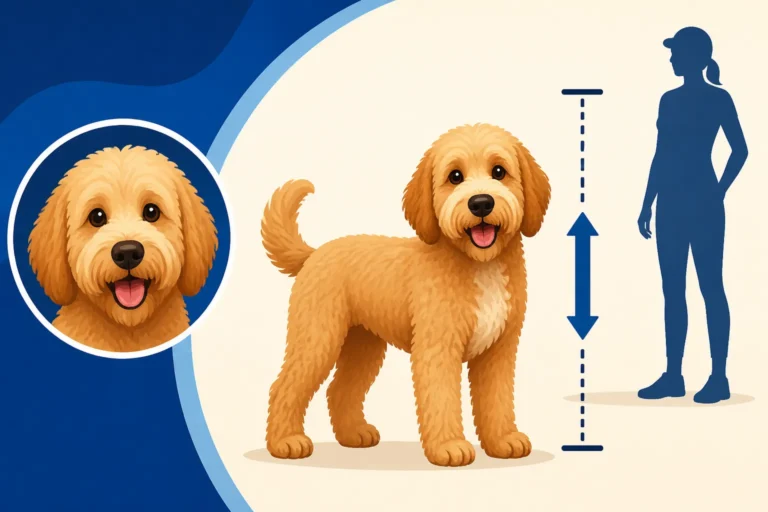
Whether a Toy Labradoodle Exists
A “toy Labradoodle” can be advertised by breeders, but the label does not describe a standardized size with a predictable adult weight. Because Labradors are medium-to-large dogs and Labradoodles are crosses, getting a reliably tiny dog is difficult. This guide explains what the term usually means, what affects a puppy’s adult size, and how to assess a breeder’s claims.
Does a toy Labradoodle really exist
The term is informal, not a guaranteed size category
Labradoodle sizes are often described as miniature, medium, or standard, but those labels are not governed by one universal breed standard. “Toy” is generally used informally to suggest a dog smaller than a miniature Labradoodle. It may appear in advertisements, but it doesn’t tell you exactly how big the dog will become or establish that it belongs to a formally recognized size category.
That matters because people often see “toy” and picture a dog that will stay very small. A breeder may use the word to describe a puppy’s expected size, a particular line, or a cross involving a smaller Poodle. Those meanings are not interchangeable. Ask what the breeder means by “toy” and what adult size their own mature dogs have reached.
For a broader look at how Labradoodle size labels are commonly used, see The Three Labradoodle Sizes and How They Are Set. If your main goal is a dog below the usual miniature range, The Miniature Labradoodle Under Thirty Pounds offers a useful comparison.
A Labrador parent makes tiny size harder to predict
The Labrador side is a major reason a genuinely toy-sized Labradoodle is difficult to produce consistently. A puppy inherits a mix of traits from both parents, and not just height: bone structure, body length, paws, and general build all play a part. Even when one parent is a small Poodle, that alone cannot guarantee that every puppy in a litter will stay tiny.
Breeding a small Poodle to a Labrador also involves a substantial size difference. Responsible breeders need to consider the health and welfare of both dogs, as well as whether the proposed pairing is physically and genetically appropriate. A breeder should be ready to explain how the pairing is carried out safely and how they make decisions about the parents—not brush off reasonable questions with a promise that the puppies will be “teacup” sized.
There is also no dependable shortcut where a particular generation automatically means a smaller dog. “F1,” “F1b,” and “multigen” describe ancestry or breeding history, not a precise adult-size outcome. If you’re sorting out those labels, What F1b Means on a Labradoodle explains one common term.
Why an advertised toy puppy may grow larger than expected
Puppy size and parent size tell only part of the story
A puppy can look notably small beside its littermates and still grow into a larger dog. Growth depends on inherited traits from both sides of the family, and littermates can differ in adult size. A puppy’s current weight is one piece of information, not a reliable promise about its final frame.
Ask to meet or see records for the puppy’s parents and, if possible, older relatives from previous litters. Look for a consistent history of adult sizes rather than relying on a single unusually small dog. If the breeder has produced several litters, ask how large those dogs became once fully grown and whether the puppies’ early estimates matched their adult size.
Even thoughtful estimates are just estimates. Feeding, health, and individual development can affect growth, but a breeder cannot precisely control the genetic combination each puppy inherits. For more on setting realistic expectations, see Whether a Labradoodle Breeder's Size Estimate Holds and Whether a Miniature Labradoodle Grows Bigger Than Promised.
Be cautious of “teacup” promises and pressure to choose the smallest puppy
Words such as “teacup” and “micro” can be marketing terms rather than meaningful, consistent size descriptions. If an ad promises an extremely small adult dog but offers little information about the parents, health testing, or how the estimate was reached, treat that as a reason to ask more questions—not a reason to pay extra or rush into a deposit.
Also ask how the breeder defines “smallest.” A breeder who selects only the tiniest puppies, or repeatedly breeds very small dogs without discussing health and soundness, may be prioritizing appearance over the whole dog. A puppy being small is not itself evidence of a problem, but deliberate miniaturization deserves a clear, responsible explanation.
A practical check is to ask for the expected adult height and weight range in writing, then ask what that estimate is based on. If you’re told that size is guaranteed, ask what happens if the dog grows beyond the promise. A careful answer should acknowledge variation rather than suggesting that genetics can be controlled with certainty.
How to assess a toy Labradoodle breeder
Ask about health, temperament, and breeding decisions
A good breeder should be able to explain the parents’ health screening and why those particular dogs were paired. Ask which tests were completed, who performed or interpreted them, and how to view the results. Depending on the dogs’ ancestry, relevant screening may include evaluations for joint, eye, and inherited conditions. A DNA panel alone does not replace all other health checks.
Ask about temperament, too. Small size does not automatically make a dog calmer, easier to train, or better suited to a busy household. Labradoodles can be energetic and people-focused, and the individual puppy’s temperament and upbringing matter. A breeder should talk about the parents’ behavior and how puppies are socialized, rather than promising that every puppy will have an ideal personality.
Use The Health Tests a Labradoodle Breeder Should Show as a starting point for questions, and remember that membership in a breeder organization is not a substitute for reviewing actual records. Whether a Labradoodle Breeder Must Belong to a Club can help clarify what membership can and cannot tell you.
Look for clear records and a willingness to answer questions
Ask for the puppy’s age, veterinary records, vaccination and deworming history, and details about the contract and return policy. Find out when the puppy can leave its mother and litter, and whether the breeder will remain available to answer questions after the puppy comes home. A responsible breeder should also ask about your household and what kind of dog you can realistically manage.
Take care with listings that rely on appealing photos, vague descriptions, or a quick handoff without a conversation. If you cannot meet the puppy in person, ask for a live video call and clear information about where the litter is being raised. Be wary of pressure to send money before you have verified who you’re dealing with and understood the terms.
The Labradoodle is a cross rather than a standardized purebred with one universally enforced size chart. That makes transparent breeding records especially useful. For context on what a generation label can and cannot prove, read Whether a Labradoodle Is a Breed or a Cross.
Choosing a small dog that fits your household
Focus on the adult dog you can care for
If your housing, travel plans, or physical needs require a dog below a particular size, don’t base the decision on a “toy” label alone. Decide what adult height and weight you can comfortably accommodate, then ask breeders whether their mature dogs reliably fall within that range. If the answer is uncertain, plan for the puppy to grow larger than the estimate.
Consider everyday logistics too. A small dog may still need regular exercise, training, grooming, and veterinary care. Coat maintenance can be a significant commitment regardless of body size, and no Labradoodle size or coat type guarantees a low-allergen dog. For a closer look at the smallest commonly discussed category, Whether a Miniature Labradoodle Grows Bigger Than Promised can help frame the size uncertainty.
When preparing for a puppy, choose equipment by its measurements and adjustability rather than by the word “toy” on a listing. For example, compare crate dimensions and harness fit carefully; a retailer such as Chewy can be one place to review product measurements, but the puppy’s actual fit and comfort matter more than the label. If you’re making a shopping list, check that items can accommodate growth or be exchanged as the puppy develops.
Compare realistic alternatives before committing
If a reliably very small adult dog is essential, consider whether a breed with a well-established small size range would better meet your needs. A small Poodle, for instance, may offer more predictable size expectations than a Labrador-Poodle cross, though individual dogs still vary and breed choice should involve temperament, health, and care needs—not size alone.
If what you want is a Labradoodle personality and appearance in a smaller package, talk with breeders about mature dogs in their lines and ask what range they actually see. Be open to a small miniature rather than insisting on a toy label. A realistic conversation about likely size is more useful than a sales promise of a puppy that will remain tiny.
You can also make a written checklist before contacting breeders: acceptable adult size range, parent health documentation, temperament information, contract terms, and willingness to take the dog back if circumstances change. If you’re comparing puppy supplies for a small dog, Chewy’s listings may help you check dimensions, but confirm fit with the specific puppy rather than assuming a product marked “small” will suit every dog. As the dog grows, reassess items such as harnesses and crates instead of leaving equipment that no longer fits.
| What a listing says | What it may mean | What to ask |
|---|---|---|
| Toy Labradoodle | An informal label for a smaller Labradoodle | How does the breeder define “toy,” and what are the mature dogs’ sizes? |
| Miniature Labradoodle | A smaller size category used by many breeders, without one universal standard | What size range do adult dogs from this line reach? |
| Teacup or micro Labradoodle | A marketing phrase that may not have a consistent definition | How were the parents selected, and what health screening was done? |
| Small puppy | The puppy is small at its current age | What are the puppy’s parents and older relatives like as adults? |
Chewy is also a practical place to compare basic supplies by dimensions if you are planning ahead, but no retailer or product label can tell you how large a particular puppy will become. The most useful guide is an honest breeder, documented family history, and a willingness to plan for variation.
Disclaimer
This article is for general informational purposes only and does not constitute professional advice. Laws, prices and regulations vary by location and change over time. Consult a qualified professional for guidance on your specific situation.