Whether a Labradoodle Settles in a Hospital Corridor
Labradoodle temperament traits and early socialization strategies determine whether a dog can settle quietly in hospital corridors.
Work with the temperament you have.
House-training and crate work, recall, leash manners, separation anxiety, and the behaviors this breed is wired for.

Labradoodle temperament traits and early socialization strategies determine whether a dog can settle quietly in hospital corridors.
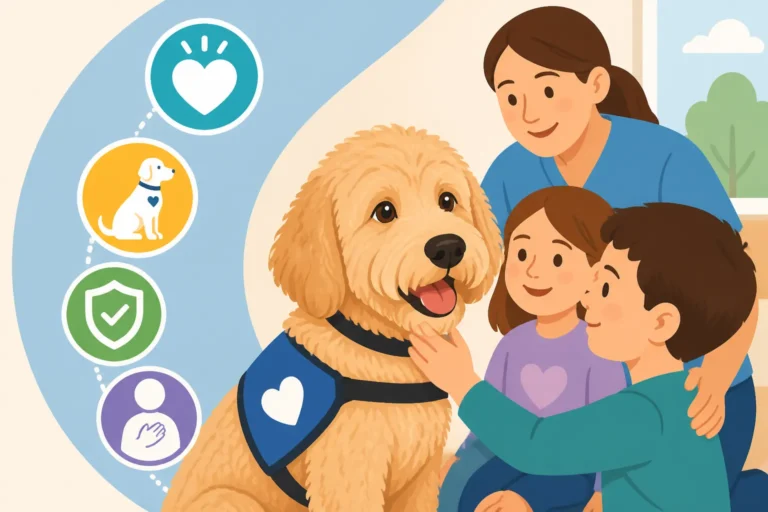
Therapy dog visits require stable temperaments and specific skills from Labradoodles volunteering in hospitals, nursing homes, and schools.

The AKC Canine Good Citizen test evaluates ten obedience exercises to determine if your Labradoodle passes public manners.

Owner-training a service Labradoodle requires rigorous task training, specific temperament qualities, and adherence to Americans with Disabilities Act rules.

Labradoodle suitability for autism assistance work, covering required temperament, training needs, safety tasks, and realistic family expectations.

Temperament testing a Labradoodle puppy identifies the specific emotional and intellectual traits required for service work.

Labradoodle temperament issues and environmental stress factors explain why promising puppies fail intensive service dog training programs.
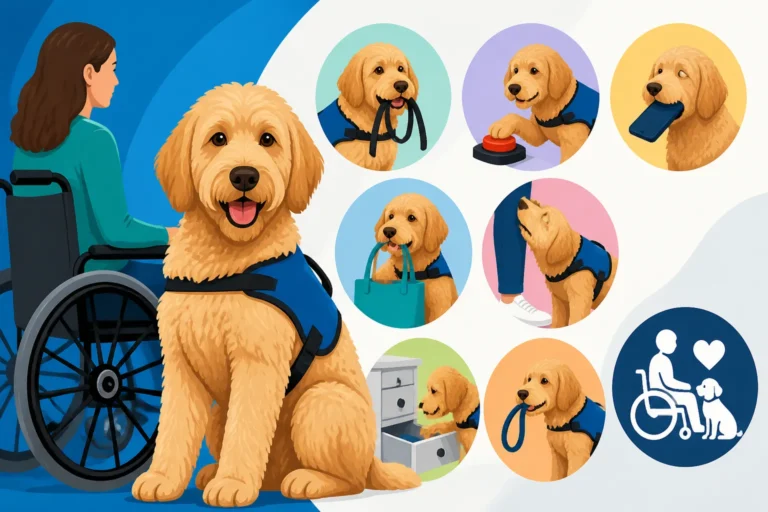
Labradoodle disability work tasks include mobility support, item retrieval, and scent detection for fifty to sixty-five pound dogs.
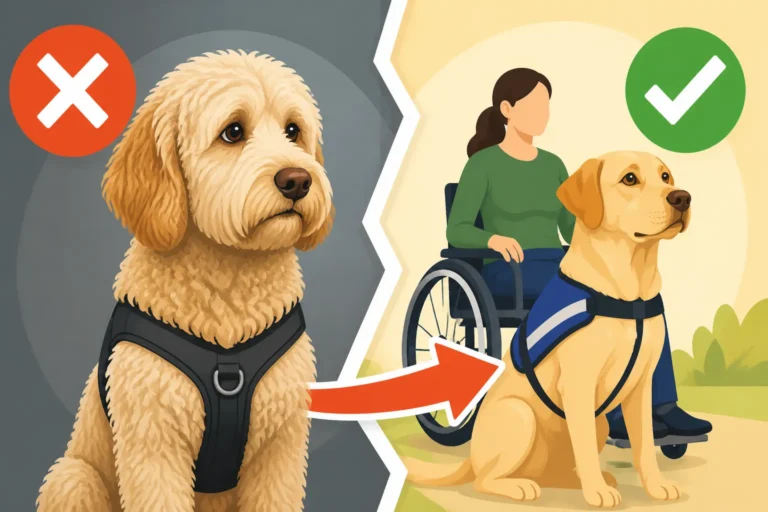
Assistance dog organizations stopped using Labradoodles because the mixed breed proved unreliable for rigorous work requirements.

Labradoodle traits for guide work include Labrador biddability and Poodle intelligence to help visually impaired handlers.