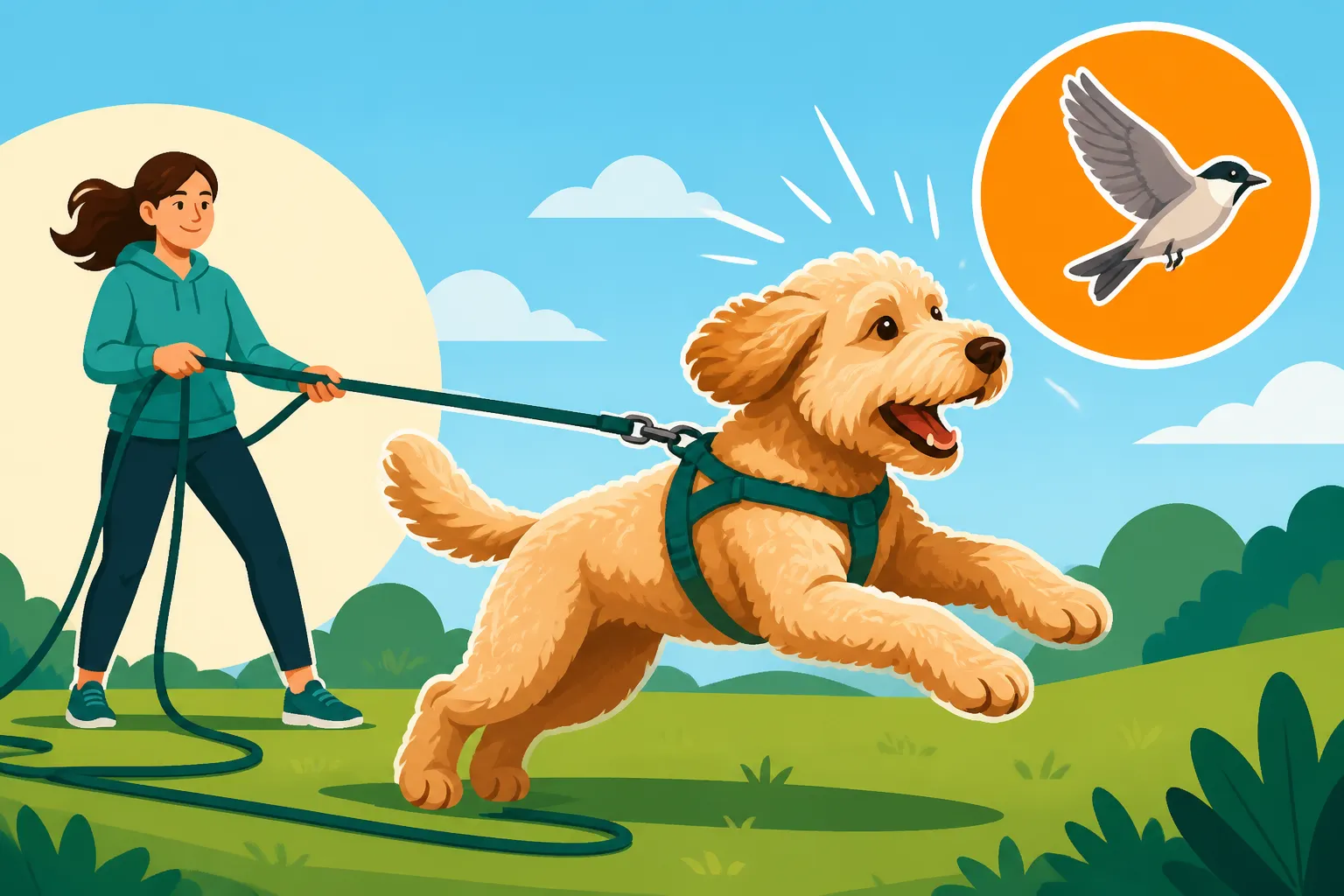
Long Line Work for a Labradoodle That Bolts After Birds
It’s a scenario many Labradoodle owners know all too well: you’re enjoying a lovely walk, your beautiful, energetic Labradoodle is happily sniffing about, and then bam! – a bird flutters, a squirrel darts, and your dog is off like a shot, deaf to your frantic calls. That heart-stopping moment when they bolt, seemingly forgetting every ounce of training, is not only frustrating but genuinely terrifying. This guide is all about equipping you with the tools and techniques of long line work to safely and effectively teach your Labradoodle a rock-solid recall, even when nature calls to their instincts.
Understanding Your Labradoodle's Bird-Chasing Instinct
It’s easy to feel personally offended when your beloved Labradoodle, who normally hangs on your every word, suddenly develops selective hearing the moment a flock of pigeons takes flight. But understanding why they do this is the first step toward compassion and effective training. This isn't usually about defiance; it's about deeply ingrained instincts that are incredibly powerful.
The Labrador and Poodle's Natural Drives
When you look at the genetic makeup of a Labradoodle, you're essentially combining two breeds with very distinct, yet potent, histories that contribute to that irresistible urge to chase. The Labrador Retriever, true to its name, was bred for retrieving game, often birds, both on land and in water. They have a strong prey drive that manifests as an intense desire to find, pursue, and bring things back. This instinct is a huge part of what makes them such fantastic companions for active families, but it also means that a sudden movement from a bird can switch on that drive in an instant.
Then you have the Poodle, often underestimated in its working dog heritage. Standard Poodles, in particular, were originally water retrievers, used by hunters to fetch waterfowl. They are highly intelligent, agile, and possess a keen eye for movement. This background means they are not just pretty faces; they have a strong innate desire to chase and retrieve, often with remarkable speed and focus. So, when your Labradoodle sees a bird, it's not just a casual interest; it's a powerful genetic echo from both sides of their family tree urging them to engage. It's a primal calling that can feel impossible for your voice alone to overcome.
Why a Strong Recall is Crucial and Often Lacking
The moment your Labradoodle sees a bird and decides to pursue it, a cascade of events unfolds in their brain. The thrill of the chase, the rush of adrenaline, and the pure joy of the hunt become incredibly self-reinforcing. In that heightened state, your voice, even if it's usually the most exciting thing in their world, simply cannot compete with the immediate, visceral reward of the chase. This is why, despite all your diligent training in the backyard or a quiet park, a real-world distraction like a flapping pigeon can seemingly erase months of work.
The dangers of a dog bolting after a bird are manifold and genuinely terrifying for any owner. There's the immediate risk of them running into a road, disappearing into dense foliage, or disturbing local wildlife and other people. A Labradoodle, especially a standard size, can cover ground incredibly quickly, and once they're focused, their awareness of their surroundings diminishes dramatically. What's more, for some individuals, there can be health concerns to consider. If your Labradoodle happens to carry a gene for something like Exercise Induced Collapse and the Labradoodle's Labrador Half, an intense, sudden burst of sustained activity could potentially trigger an episode. Even without specific health predispositions, the sheer physical exertion of a full-speed chase can lead to injuries or overheating, particularly on a warm day. It's often during the adolescent phase, around The Ten Month Old Labradoodle That Forgets Everything, that owners find their previously reliable recall goes completely out the window, precisely when their dog is also gaining speed and independence.
Essential Gear for Successful Long Line Training
Long line training is all about creating a safe, controlled environment where your Labradoodle can experience the freedom of distance while you maintain a physical connection. This isn't just about grabbing any old rope; the right gear makes all the difference in effectiveness and safety.
Choosing the Right Long Line
When you're ready to start long line training, the first and most critical piece of equipment is, naturally, the long line itself. Forget the flimsy leash you use for walks; this needs to be robust and appropriate for the task. You'll typically find lines ranging from 15 feet to 50 feet. For beginners, or in more confined spaces, a 15 or 20-foot line is a great starting point, allowing you to get a feel for managing the length. As your Labradoodle progresses and you move to more open areas, a 30 or 50-foot line can offer a truly enriching experience of perceived freedom.
The material is also key. Nylon lines are common and affordable, but they can be prone to tangling, absorb water (making them heavy and muddy), and can cause rope burn if they slide through your hands too quickly. Biothane, on the other hand, is a fantastic upgrade. It’s waterproof, easy to clean, doesn’t tangle as much, and offers a better grip, though it can be a bit pricier. Whichever you choose, ensure the snap hook that attaches to your dog's harness is sturdy and reliable – you don't want it breaking mid-chase. Many owners find a good selection of durable, well-made long lines on retailers like Amazon, often available in various lengths and materials to suit different needs. Always check reviews for durability and clip strength, especially if you have a larger, stronger Labradoodle.
Harness vs. Collar for Safety and Control
This is non-negotiable: for long line work, your Labradoodle must be attached to a well-fitting harness, not just a collar. The reason is pure safety. When your dog reaches the end of a long line at a full sprint, the sudden jolt on their neck from a collar can cause serious injury. This could range from tracheal damage to spinal issues, and even pull out of the collar entirely, defeating the purpose of the line. A harness distributes that pressure across their chest and shoulders, significantly reducing the risk of injury.
Look for a Y-shaped harness that allows for full range of shoulder motion, avoiding restrictive straps across the chest or armpits. Some prefer front-clip harnesses, which can provide an added measure of control by redirecting your dog's momentum when they pull. Make sure it fits snugly enough that they can't back out of it, but not so tight that it chafes. Double-check all buckles and straps before each training session. Investing in a quality, comfortable harness is investing in your Labradoodle's safety and your peace of mind during these critical training sessions.
High-Value Treats and Training Environment
Successfully competing with the thrill of a bird chase requires more than just your average kibble. You need truly high-value treats – something so incredibly delicious and irresistible that your Labradoodle will think twice about that bird in favor of what you're offering. Think small pieces of cooked chicken, cheese, hot dogs, or specially made soft training treats. These treats need to be small enough to be eaten quickly without distracting too much from the training flow, yet potent enough to grab and hold their attention.
Alongside the right treats, selecting the appropriate training environment is crucial. Don't start long line training in a busy park teeming with birds, squirrels, and other distractions. Begin in a quiet, securely fenced area, like your backyard or a secluded tennis court, where distractions are minimal. The goal is to build a strong foundation for recall before adding the challenges of real-world scenarios. As your Labradoodle's recall improves in these controlled settings, you can gradually introduce more distractions. This methodical approach helps your dog understand what's expected of them without being overwhelmed by temptation. Programs like BAXTER & Bella often emphasize this gradual progression, teaching owners how to build a dog's confidence and reliability in steps, using positive reinforcement methods that translate well to long line work.
Step-by-Step Guide to Long Line Recall Training
Now that you have your gear and understand the 'why,' let's dive into the 'how.' Long line training is a process that builds trust and responsiveness, giving your Labradoodle the joy of exploration within safe boundaries. Patience and consistency are your best friends here.
Introducing the Long Line and Building Positive Associations
Before you even think about calling your Labradoodle back from a bird, you need to make the long line a fun and neutral, if not positive, experience. Start by simply letting your Labradoodle drag the line in a securely fenced area. Don't hold it, just let them get used to the feel of it trailing behind them. This prevents them from associating the line with being restricted or corrected. Supervise closely to ensure it doesn't get tangled or snagged. After a few sessions of just dragging it, pick up the end and simply walk around with them, letting them explore the full length of the line.
While they're on the long line, engage them in play, offer treats, and praise them freely. Make sure every interaction with the line is positive. You want them to think, "Oh, the long line means fun and good things happen!" This foundational work is vital. If they start to bolt or ignore you, avoid yanking or punishing them. Instead, gently reel them in, perhaps changing direction or making an exciting noise to get their attention, then reward them heavily when they re-engage with you. This sets the stage for building a truly reliable Building a Recall a Labradoodle Answers Off Leash.
Practicing Recall in Controlled Environments
Once your Labradoodle is comfortable with the long line, it's time to start actively practicing recall. Begin in a low-distraction environment, like your backyard. With your dog at the end of the line, call their name excitedly and use your recall cue (e.g., "Come!" or "Here!"). The moment they turn towards you, even slightly, gently reel in the line while continuing to encourage them verbally. When they reach you, make it a party! Shower them with praise, offer a jackpot of those high-value treats, and engage in a quick game or belly rub. The goal is to make coming back to you the most rewarding thing imaginable.
Gradually increase the distance and introduce very mild distractions. Maybe a family member walks by, or a soft toy is tossed a short distance away. Always set your Labradoodle up for success by not asking for recall when you know they're too focused on a major distraction. Practice these recalls frequently throughout your sessions, varying the location to help generalize the command. Remember, the long line is your safety net, allowing your dog to learn that even when they have distance, returning to you is always the best choice.
Managing Distractions: The Bird Scenario
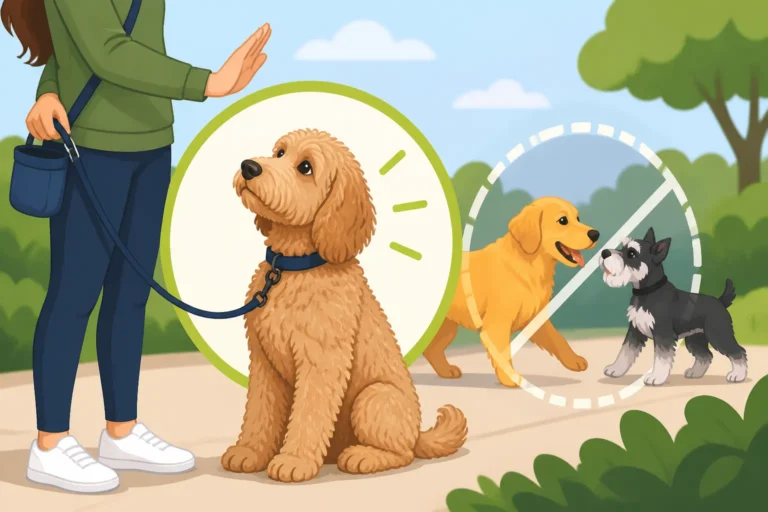
This is where the rubber meets the road. Your Labradoodle is on the long line, you're in a moderately distracting park, and then it happens – a bird lands, or flies past. This is your moment to intervene before the bolt, not after. The instant you see your Labradoodle's body language change – ears perk, head lifts, eyes lock onto the bird, or they start to crouch – that's your cue. Don't wait for them to sprint.
At that exact moment, make an exciting noise, change direction, or even run a few steps in the opposite direction, reeling in the long line as you go. Call your dog with your recall cue in a happy, enthusiastic tone. The goal is to interrupt their focus on the bird and redirect it to you. If they respond and come even a few steps, reward them immediately and profusely with those amazing treats. The long line allows you to prevent the full-blown chase, thereby preventing them from experiencing the self-rewarding thrill of the bolt. Over time, your Labradoodle will learn that while birds are interesting, responding to your cue and coming back leads to an even better, more immediate reward from you. It’s about building a pattern of choosing you over the distraction, slowly but surely.
Common Pitfalls and Troubleshooting
Even with the best intentions and the right gear, training a Labradoodle with a strong prey drive can present challenges. It's important to anticipate these hurdles and know how to navigate them with patience and persistence.
The Long Line as a Crutch vs. a Training Tool
One of the most common mistakes owners make is to view the long line as a permanent solution or a substitute for a reliable recall, rather than a training tool to achieve it. It's easy to fall into the habit of always having your dog on the long line, feeling safe, but never truly transferring that reliability to an off-leash situation. The long line is there to give your dog the feeling of freedom while giving you the safety and control to teach them that coming back is always the right answer.
The ultimate goal is to fade the long line entirely. This is a gradual process. Once your Labradoodle is consistently responding to your recall cue on a full-length long line in various distracting environments, you can start shortening it. Eventually, you might switch to a thinner, lighter line that's barely noticeable, or even just let the end drag behind them for a short period in an incredibly safe, distraction-free space. The principle is that the physical connection disappears only when the mental connection – their reliable recall – is firmly established. Think of it as a scaffold you remove once the building is strong enough to stand on its own. It's also important not to inadvertently reinforce bad habits, like letting them pull repeatedly on the line. Ensure that your recall is consistent so your dog doesn't learn that ignoring you for a few seconds is an option. What a lot of owners What Labradoodle Owners Say They Underestimated is the sheer commitment to this kind of consistent, long-term training.
Frustration and How to Stay Patient
Let's be real: training a Labradoodle that loves to bolt after birds can be incredibly frustrating. There will be days when you feel like you've made no progress, days when they seem to regress, and days when you're sure they're doing it just to test your patience. It's disheartening when you've put in the work, only to have a single fluttering leaf or distant bird send them into a full-on chase. It's normal to feel angry or discouraged. However, it's vital to remember that dogs don't act out of spite; they act on instinct and learned associations. Your Labradoodle isn't trying to upset you; they're simply being a dog.
Maintaining a positive, upbeat attitude is crucial for both your sanity and your dog's progress. Yelling or punishing your dog when they finally get to you after a long chase will only teach them that coming back to you is a negative experience, making them less likely to return next time. Instead, focus on rewarding the intent to return. Celebrate every small success. Take breaks if you're feeling overwhelmed, and don't be afraid to revert to easier training environments if things are going backwards. Remember that consistency over time, rather than perfection in every session, is what truly builds a reliable recall. It's a marathon, not a sprint, and sometimes it feels like Whether a Labradoodle Is Too Smart for a Novice when they manage to outwit your best efforts.
When to Seek Professional Guidance
While long line training is a powerful tool, there are certainly times when bringing in a professional can make a huge difference. If you're consistently struggling, feel overwhelmed, or are seeing little to no progress despite your best efforts, a certified professional dog trainer or a veterinary behaviorist can provide invaluable insight and tailored strategies. They can observe your interactions, spot nuances you might be missing, and help you refine your technique. Sometimes, just having an objective third party confirm that you're on the right track can be a huge confidence booster.
A professional can also help rule out any underlying issues, such as anxiety that might be contributing to their bolting behavior, or simply offer alternative training approaches you hadn't considered. They might introduce advanced exercises or specific counter-conditioning techniques to help your Labradoodle learn to disengage from high-value distractions. If you're dealing with a particularly strong prey drive, or if your Labradoodle's bolting puts them in serious danger, a good trainer is not a sign of failure, but a smart investment in your dog's safety and your peace of mind. Many trainers offer specialized classes or individual sessions for recall challenges, which can be exactly what you need. Whether a Labradoodle Needs a Trainer or a Class is a question many owners ask, and for persistent issues like bird-bolting, the answer is often a resounding yes.
| Long Line Material | Pros | Cons | Best Use Cases |
|---|---|---|---|
| Nylon | Affordable, widely available, comes in many colors. | Absorbs water, prone to tangling, can cause rope burn, can get heavy and dirty. | Occasional use, dry conditions, for owners on a budget. |
| Biothane | Waterproof, easy to clean, doesn't tangle as easily, good grip, durable. | More expensive than nylon, can be stiff in cold weather, less color variety. | Frequent use, all weather conditions, serious trainers, for optimal safety. |
Disclaimer
This article is for general informational purposes only and does not constitute professional advice. Laws, prices and regulations vary by location and change over time. Consult a qualified professional for guidance on your specific situation.