Whether a Labradoodle Tolerates Handling by Strangers
It's a familiar scene: you're out for a walk with your beloved Labradoodle, and suddenly, a friendly stranger approaches, ready to lavish affection on your furry companion. While some Labradoodles greet everyone with a wagging tail and sloppy kisses, others might be more reserved, anxious, or even reactive. This guide aims to thoroughly explore the nuances of Labradoodle temperament regarding handling by strangers, offering insights into why they react the way they do and practical strategies to foster positive interactions.
The Labradoodle's Natural Inclination Towards Strangers
Understanding your Labradoodle's inherent predispositions is the first step in managing how they interact with unfamiliar people. Their genetic makeup and early life experiences play a huge role in shaping their responses.
Inherited Traits from Parent Breeds
Labradoodles are a mix of two wonderful breeds: the Labrador Retriever and the Poodle. Both bring distinct characteristics to the table, which can influence how a Labradoodle approaches strangers. Labradors are famously friendly, often eager to please and known for their outgoing nature. They're typically quite accepting of new people and situations, a trait that many Labradoodle owners hope their dog inherits. This often manifests as a dog that is happy to be petted, even by someone they've just met.
On the other hand, the Poodle, while intelligent and often very personable with their own family, can sometimes be a bit more reserved or even wary of strangers. They might observe new people from a distance before deciding whether to engage. This isn't necessarily a negative trait; it's often a sign of their keen observational skills and discernment. Therefore, a Labradoodle might inherit a blend of these tendencies, leading to a spectrum of behaviors from immediate friendliness to cautious observation. The Temperament a Labradoodle Gets From Each Parent will dive deeper into these genetic influences.
It's also worth noting that some Labradoodles, especially those from less carefully bred lines, might exhibit shyness or fearfulness due to genetic predispositions, rather than just a Poodle's natural reserve. A Labradoodle's early experiences with people, even before they come home with you, can also heavily impact their default setting when it comes to meeting strangers. A puppy raised in a quiet, isolated environment might naturally be more apprehensive than one exposed to a rich tapestry of sights, sounds, and people.
The Importance of Early Socialization
Regardless of genetic predispositions, early socialization is absolutely crucial for shaping a Labradoodle's comfort level with strangers. From the moment you bring your puppy home, providing positive and varied experiences with different types of people is paramount. This means not just meeting your friends and family, but also introducing them to people of different ages, sizes, ethnicities, and even people wearing hats, glasses, or carrying unusual items like umbrellas or backpacks.
The "socialization window," roughly between 3 to 16 weeks of age, is a critical time when puppies are most receptive to new experiences without developing fear. During this period, every positive interaction helps build a foundation of confidence. If a puppy misses out on this vital exposure, they are far more likely to develop anxieties or react negatively to novel situations and people later in life. It's not about forcing interactions but about creating positive associations in a controlled and safe manner.
A lack of proper socialization can lead to a Labradoodle that is fearful or anxious around strangers, which might manifest as barking, lunging, hiding, or even nipping if they feel cornered or threatened. Owners often struggle when their dog, who is perfectly loving at home, becomes a different animal when confronted with someone new. This isn't an overnight fix; it requires consistent, patient work to help your dog overcome those initial fears.
Deciphering Your Dog's Signals
Your Labradoodle is constantly communicating with you through their body language, especially when encountering strangers. Learning to read these signals is vital for advocating for your dog and ensuring their comfort and safety. A happy, comfortable Labradoodle will likely have a loose body, a gently wagging tail (not stiff or tucked), soft eyes, and possibly a relaxed mouth. They might lean into a pet or even solicit attention.
However, signs of discomfort or stress can be subtle. These might include lip licking, yawning (when not tired), turning their head away, stiffening their body, freezing in place, a tucked tail, whale eye (showing the whites of their eyes), or persistent panting. More obvious signs could be growling, barking, lunging, or attempting to hide. It’s important to distinguish between excitement (which can lead to jumping) and anxiety. A Labradoodle That Jumps on Every Visitor is often excited, but some dogs jump to relieve nervous energy.
If you observe any signs of discomfort, it's your responsibility to intervene. This might mean politely asking the stranger to give your dog space, redirecting your dog's attention, or simply moving away from the situation. Understanding these signals allows you to prevent escalation and build trust with your Labradoodle, showing them that you will protect them from situations they find overwhelming. This constant communication strengthens your bond and helps them feel more secure in new situations.
Building a Foundation for Positive Interactions
Once you understand your Labradoodle's baseline, you can proactively work on fostering positive interactions with strangers through systematic training and consistent effort.
Systematic Desensitization and Counter-Conditioning
For Labradoodles who are fearful or anxious around strangers, systematic desensitization and counter-conditioning are powerful tools. Desensitization involves gradually exposing your dog to strangers at a distance or intensity level where they remain comfortable. For example, starting with a stranger across a park, then slowly decreasing the distance over many sessions, only moving closer when your dog shows no signs of stress. This isn't about rushing; it's about slow, steady progress.
Counter-conditioning pairs this gradual exposure with something highly positive, like high-value treats or a favorite toy. The goal is to change your dog's emotional response from fear or anxiety to a positive expectation. So, every time a stranger appears (at a safe distance), your dog gets a delicious treat. Over time, your Labradoodle starts to associate strangers not with discomfort, but with good things happening. This process can be slow, but it's incredibly effective when done correctly and patiently.
The key is to never push your dog beyond their comfort zone. If they start showing signs of stress, you've gone too far, too fast. Retreat to a distance where they are calm and try again later. Consistency is also vital; short, frequent sessions are often more effective than infrequent, long ones. This approach takes dedication, but it’s how many sensitive dogs learn to cope and even enjoy the presence of strangers.
Practical Training for Calm Greetings
Beyond just tolerating strangers, we want our Labradoodles to offer polite and calm greetings. A common frustration for many Labradoodle owners is a dog that jumps up on people out of excitement. Teaching a "four on the floor" command is essential. This involves rewarding your dog lavishly when all four paws remain on the ground as a stranger approaches or interacts. Start with people your dog knows, then introduce strangers. Teaching a Labradoodle to Greet With Four Feet Down is a critical skill for any owner.
You can also teach a "go to mat" or "place" command, which gives your dog a designated spot to go to when someone comes to the door. This helps manage the initial excitement and prevents jumping. Practicing this with various people coming and going will generalize the behavior. Remember to always reward heavily for success. This isn't about punishment; it's about guiding your dog to the desired behavior.
Another useful behavior is a solid "sit" or "stay" when people approach. You can enlist friends or family to practice approaching your dog while you cue the sit, rewarding them for holding it. Slowly add in gentle petting from the helper, still rewarding the calm behavior. Gradually, your dog will learn that calm behavior earns them attention and rewards, making interactions much more pleasant for everyone involved.
Tools and Techniques for Success
Having the right tools can make a significant difference in managing interactions with strangers. A well-fitting harness, particularly a front-clip harness, can help reduce pulling and give you more control during greetings, especially if your Labradoodle is an enthusiastic greeter. Using a sturdy leash is also non-negotiable for safety. You might find a longer leash, perhaps 6 feet, helpful for giving your dog a bit more space to settle while still under your control.
For training sessions, having a variety of high-value treats on hand is crucial. Think small, soft, and smelly treats that your Labradoodle finds irresistible. You can find excellent options on Amazon, ranging from freeze-dried liver to training-specific soft chews. These aren't just snacks; they're powerful motivators that communicate to your dog that good things happen when strangers are near.
Enrichment toys, like puzzle feeders or chew toys, can also be used as a distraction when you need your Labradoodle to be calm in the presence of a stranger, such as when visitors first arrive at your home. Online training programs, like those offered by BAXTER & Bella, can provide structured lessons and support for teaching polite manners around guests and in public, breaking down complex behaviors into manageable steps for both you and your dog. These resources can be invaluable for consistent learning.
| Signs of Comfort/Relaxation | Signs of Stress/Anxiety |
|---|---|
| Loose, relaxed body posture | Stiff or frozen body |
| Soft, blinking eyes | Whale eye (whites visible) |
| Gentle, relaxed tail wag | Stiff, tucked, or low tail |
| Open mouth, soft pant | Tight mouth, lip licking, yawning |
| Leaning in, soliciting pets | Turning head/body away, backing up |
| Smooth fur | Raised hackles (piloerection) |
| Even weight distribution | Shifting weight, trembling |
Navigating Public Encounters and Specific Situations
Life with a Labradoodle means encounters with strangers are inevitable. Learning how to manage these interactions, whether they're planned or spontaneous, is a crucial aspect of responsible dog ownership.
Managing Enthusiastic Children and Adults
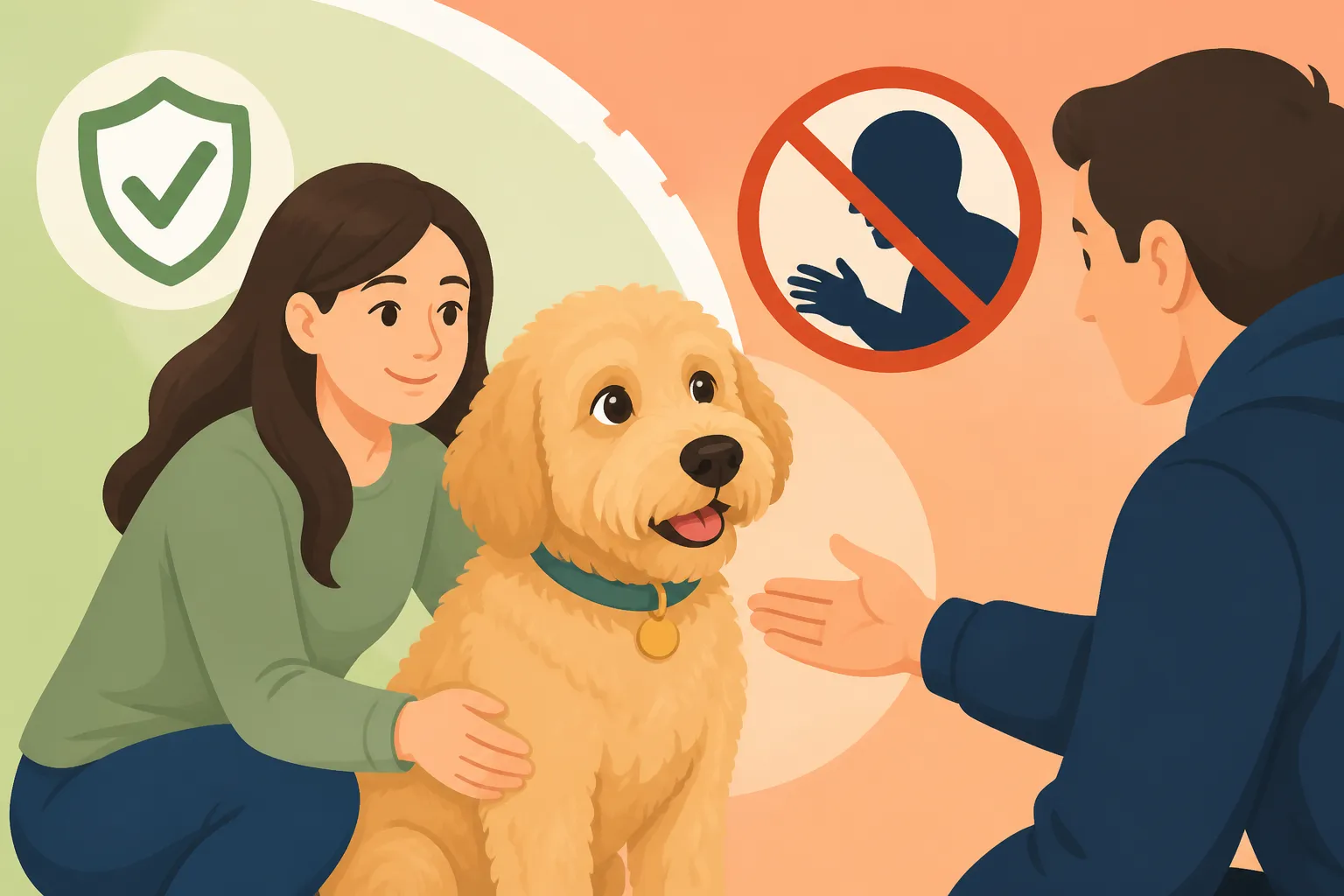
Children, with their unpredictable movements and high-pitched voices, can be particularly challenging for some dogs, even otherwise friendly ones. They often rush up to dogs, want to hug them, or don't understand canine body language. It's imperative that you, as the owner, manage these interactions closely. Never leave a Labradoodle unsupervised with young children, especially those unfamiliar to the dog. Teach children to approach dogs calmly, extend a closed fist for sniffing, and pet gently on the chest or shoulder, rather than reaching over the head.
For overly enthusiastic adults who just can't resist a "doodle," you need to be ready to advocate for your dog. It's perfectly okay to say, "Please give us some space, we're working on polite greetings," or "He's a little shy, so no direct petting right now." Many people mean well but don't understand canine boundaries. You are your dog's voice and protector. If your Labradoodle is still a puppy, What a Labradoodle Should Know by Six Months includes basic manners that are essential for these situations.
Even if your Labradoodle is generally friendly, remember that prolonged or intense handling by strangers, especially children, can become overwhelming. Teach your dog a "break" cue, allowing them to disengage and move away for a moment of peace. This empowers your dog and helps prevent them from feeling trapped or resorting to less desirable behaviors. It's about quality over quantity when it comes to stranger interactions.
Preparing for Vet Visits and Professional Grooming
Vet visits and grooming appointments involve a lot of unavoidable handling by strangers, often in sensitive areas and sometimes when your dog is already feeling vulnerable. This can be a huge source of stress for many Labradoodles. Start preparing your puppy early by doing mock exams at home: gently touching their paws, ears, mouth, and tail, rewarding them for calm acceptance. Starting Grooming Handling on a Labradoodle Puppy is a great resource to begin with.
When it comes to professional grooming, communicate openly with your groomer about your dog's temperament and any areas of sensitivity. A good groomer will use positive reinforcement and take breaks as needed. Many groomers now prioritize fear-free techniques. Consider bringing your dog in for "happy visits" to the vet or groomer's office just for treats and praise, without any procedures, to build positive associations. This can reduce anxiety significantly.
For grooming, if your Labradoodle has a wool or fleece coat, they will spend a lot of time with a professional. Building a Labradoodle Up to a Long Grooming Session outlines steps to make this less stressful. If your dog is particularly anxious about vet visits or grooming, your vet may be able to prescribe a mild sedative to help ease their stress, making the experience safer and less traumatic for everyone involved. It's always better to discuss these options with your vet rather than forcing your dog through a terrifying experience.
Everyday Scenarios: Walks and Public Spaces
Daily walks are perhaps the most common scenario for stranger interactions. Whether it's passing someone on the sidewalk, encountering other dog walkers, or navigating a busy farmers' market, your Labradoodle will meet many people. Continue practicing the polite greeting skills you've taught, reinforcing calm behavior with treats and praise. If your dog is prone to pulling when excited, invest in appropriate gear and continue loose-leash walking training.
When you're in a public space, be mindful of your surroundings. If you see a group of children, a person using a wheelchair, or someone with an unusual gait, prepare your dog for the encounter. This might mean shortening the leash, asking for a "sit," or simply creating more distance. Whether a Labradoodle Copes With Wheelchairs and Walkers can offer specific tips for these situations. The goal is to set your dog up for success, not to push them into uncomfortable situations.
Remember that not every stranger needs to interact with your dog. It's okay to keep moving, especially if your dog is showing signs of being overwhelmed or if you're in a hurry. You don't owe anyone an interaction with your dog. Your primary responsibility is to your Labradoodle's comfort and safety, and to ensure they are not a nuisance to others. A quick "Sorry, we're in training!" is often all you need.
Addressing Challenges and Seeking Expert Guidance
Sometimes, despite your best efforts, a Labradoodle may develop severe anxiety or aggression towards strangers. In these cases, it's crucial to recognize the signs and seek professional help.
Identifying When Help is Needed
It’s one thing for a Labradoodle to be a bit reserved; it’s another for them to react with fear-based aggression or extreme anxiety towards strangers. If your dog is consistently barking, lunging, growling, snapping, or attempting to bite strangers, it's a clear sign that you need professional help. These behaviors are not just inconvenient; they pose a risk to both your dog and the public. Whether Grooming Stress Shows as Aggression in a Labradoodle and Whether a Nervous Labradoodle Can Be Therapy Certified both touch on the importance of addressing anxiety.
Other red flags include extreme shyness to the point of panic, excessive drooling or panting when strangers are near, or uncontrollable urination/defecation. These are all indicators of significant stress. Don't fall into the trap of thinking your dog will "grow out of it" or that you just need to be tougher. Fear-based behaviors often escalate without proper intervention, and they rarely resolve on their own.
It's also important to consider if your dog's behavior is impacting their quality of life. If you find yourself avoiding walks, guests, or vet visits because of your dog's reactions, then it's time to get help. Living in a constant state of anxiety is not healthy for your dog, and it's certainly not enjoyable for you.
Finding the Right Professional Support
When dealing with significant behavioral challenges, simply taking your dog to an obedience class might not be enough. You'll want to seek out a certified professional dog trainer (CPDT) or, for more severe cases, a certified dog behaviorist (CDBC) or a veterinary behaviorist (DACVB). These professionals have specialized knowledge in canine behavior and can help identify the root cause of the issue and develop a tailored modification plan.
Look for professionals who use positive reinforcement and force-free methods. Avoid anyone who suggests punitive techniques, such as alpha rolls, choke chains, or shock collars, as these can actually increase fear and aggression, especially in already anxious dogs. A good professional will involve you deeply in the training process, teaching you the skills to help your Labradoodle. They should be able to provide references and explain their methodology clearly.
Online resources like the Certification Council for Professional Dog Trainers (CCPDT) or the International Association of Animal Behavior Consultants (IAABC) can help you find qualified professionals in your area. Don't be afraid to interview a few different trainers or behaviorists to find someone whose approach resonates with you and your dog. Investing in professional help is an investment in your Labradoodle's well-being and your peace of mind.
Living with a Sensitive Labradoodle
Even with the best training and professional help, some Labradoodles may always be more sensitive to strangers than others. The goal isn't necessarily to make every dog a social butterfly, but to help them feel safe, comfortable, and confident enough to navigate the world without undue stress or reactivity. This might mean adjusting your expectations and lifestyle to accommodate your dog's needs.
This could involve choosing quieter walking routes, avoiding dog parks, hosting fewer guests, or always having a clear plan for managing interactions when they do occur. It might also mean teaching your Labradoodle a solid "leave it" or "watch me" command to redirect their focus when a stranger approaches. It's about setting them up for success and minimizing situations that trigger their anxiety.
Remember that progress isn't always linear; there will be good days and bad days. Celebrate the small victories and don't get discouraged by setbacks. Your consistent love, patience, and understanding are the most powerful tools you have. With time, effort, and possibly professional guidance, even a sensitive Labradoodle can learn to tolerate handling by strangers and live a fulfilling, less anxious life.
Disclaimer
This article is for general informational purposes only and does not constitute professional advice. Laws, prices and regulations vary by location and change over time. Consult a qualified professional for guidance on your specific situation.