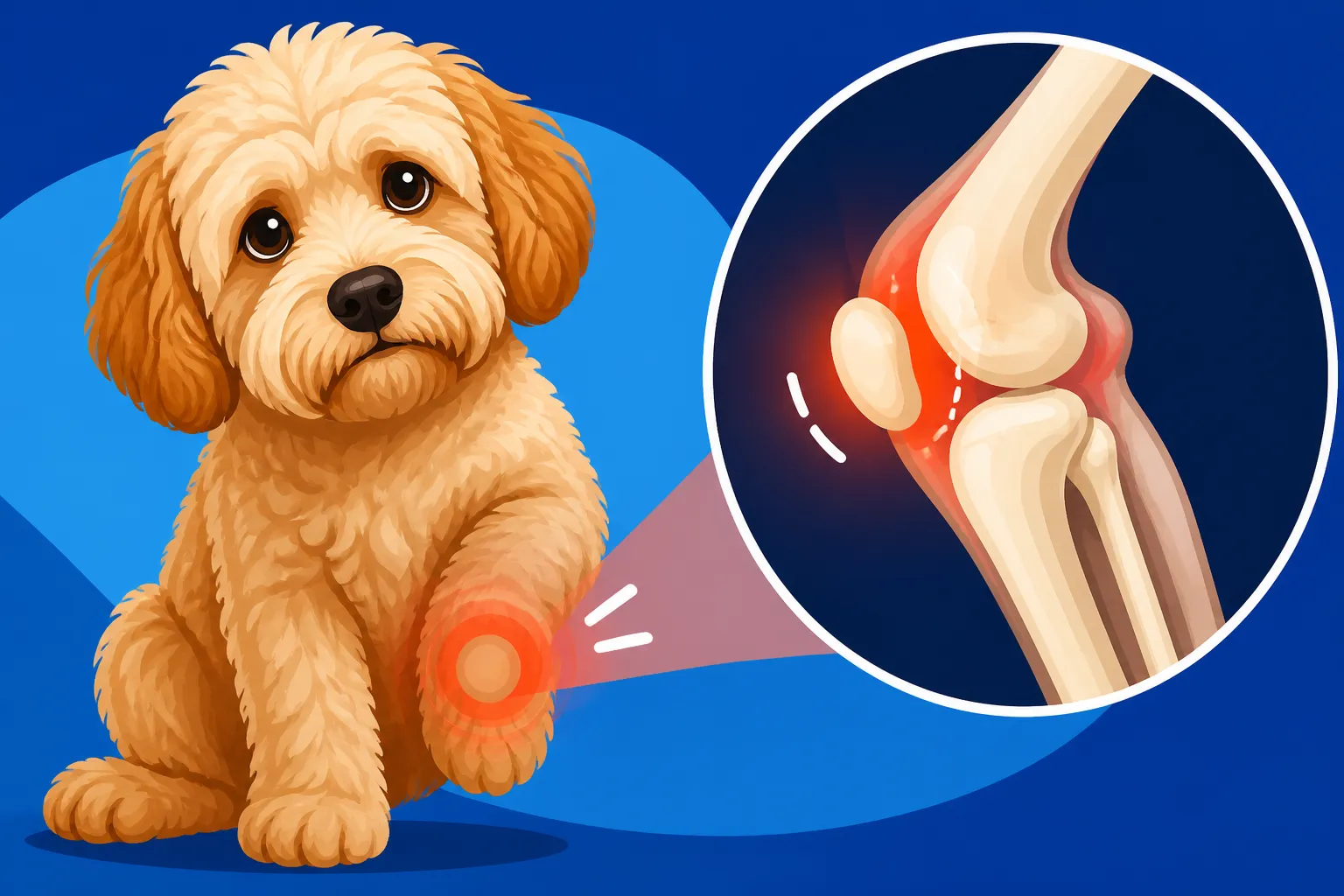
Slipping Kneecaps in a Small Labradoodle
It's incredibly frustrating when you notice your sweet, energetic small Labradoodle suddenly holding up a back leg, taking a funny hop, or even yelping in pain when they move a certain way. You might initially think it's just a stumble, or maybe they just landed awkwardly, but if it happens repeatedly, it often points to something more serious lurking in their joints. This common issue, especially in our smaller Doodles, is often due to something called patellar luxation, or what we lovingly refer to as slipping kneecaps. This guide will walk you through what patellar luxation is, why it's so prevalent in our smaller Labradoodles, how to spot the signs, and what steps you can take to help your furry friend live a comfortable, active life.
Understanding Patellar Luxation in Miniature Labradoodles
When we talk about joint issues in dogs, many people immediately think of hips and elbows, especially in breeds with a Labrador lineage. But for our adorable, smaller Labradoodles, there’s another joint that often causes trouble: the kneecap. This little bone, the patella, is supposed to glide smoothly in a groove at the end of the thigh bone (femur). When it doesn't, that's where the trouble begins.
What Exactly is a Slipping Kneecap?
Imagine a train running on a track. The kneecap, or patella, is like the train, and the groove on the femur, called the trochlear groove, is its track. In a healthy knee, this train stays perfectly on its rails as the leg bends and straightens. However, with patellar luxation, the kneecap "jumps the track," moving either to the inside (medial luxation) or, less commonly, to the outside (lateral luxation) of that groove. This can happen intermittently or become a permanent displacement.
This condition is graded from 1 to 4, with Grade 1 being the mildest (the kneecap can be manually luxated but pops back into place easily) and Grade 4 being the most severe (the kneecap is permanently luxated and cannot be put back into the groove). The symptoms your dog shows will often correlate with the grade of their luxation. Sometimes, a dog with a low-grade luxation might not even show many signs until later in life, making it a bit of a sneaky problem.
Why Small Labradoodles Are More Prone to This Condition
It’s a tough truth, but smaller breeds, including our miniature and medium Labradoodles, are inherently more susceptible to patellar luxation. This predisposition often comes from the Poodle side of their family tree. Poodles, particularly miniature and toy varieties, are known carriers of this genetic weakness. This means that even if a Labrador parent has perfect knees, the Poodle influence can still bring this issue to the forefront in their Labradoodle offspring.
The physical conformation of smaller dogs also plays a huge role. Their bones might not develop perfectly straight, or the trochlear groove in their femur might be too shallow. When this groove isn't deep enough, or if the attachment point of the patellar ligament on the shin bone (tibia) is misaligned, the kneecap simply doesn't have a secure channel to stay in. This anatomical deviation, combined with the genetic factor, makes patellar luxation a relatively common concern for anyone owning or considering a smaller Labradoodle. It’s a bit like building a bridge with a design flaw – eventually, it's bound to have issues if not addressed. You might also notice issues with your Labradoodle's hips and elbows in a sixty pound Labradoodle, indicating a broader need to understand joint health.
Recognizing the Signs and Getting a Diagnosis
It’s easy to dismiss a subtle skip or a momentary limp as just a minor mishap, especially if your Labradoodle is usually a bundle of boundless energy. However, paying close attention to these small cues can make a world of difference in catching patellar luxation early and ensuring your dog gets the care they need.
Early Warning Signs and Symptoms
One of the most classic signs of a slipping kneecap is the "skip." You might be walking your Labradoodle, and suddenly they'll pick up one back leg, take a few hops on three legs, and then put the leg back down as if nothing happened. This is often their way of trying to "pop" the kneecap back into place. Other signs can be a general reluctance to put weight on a hind leg, especially after a period of rest or intense activity. They might bunny hop when running, using both hind legs simultaneously, which is an attempt to stabilize the knee.
For more severe cases, you might notice consistent lameness, a noticeable bow-legged appearance, or even a yelp of pain if the kneecap suddenly slips out during movement. Your dog might become hesitant to jump on furniture, go up or down stairs, or even play as vigorously as they once did. If you see any of these signs, even if they're intermittent, it's really important to take them seriously. These aren't just quirks; they're signals from your dog that something isn't quite right.
The Diagnostic Process at the Vet
If you've noticed any of these concerning signs, the very first step is a visit to your trusted veterinarian. They will perform a thorough physical examination, which is often surprisingly revealing. During this exam, your vet will carefully palpate your Labradoodle's knees, gently flexing and extending the leg, and applying slight pressure to try and manually move the kneecap. This is how they determine if the patella can be luxated and whether it returns to its normal position easily. This hands-on assessment helps them assign a grade to the luxation.
Beyond the physical exam, X-rays are usually a crucial part of the diagnostic process. While X-rays don't directly show the kneecap slipping, they provide invaluable information about the underlying bone structure. They can reveal how shallow the trochlear groove is, the alignment of the tibia and femur, and whether there are any other concurrent joint issues, such as arthritis, which can develop over time due to chronic instability. Sometimes, other conditions like a torn cruciate ligament can mimic symptoms of patellar luxation, so imaging helps rule those out as well. Getting a proper diagnosis is the cornerstone of developing an effective treatment plan, and your vet will be able to tell you whether a Labradoodle's knee needs operating based on these findings.
Management and Treatment Options for Patellar Luxation
Once your Labradoodle has been diagnosed with patellar luxation, it's natural to feel overwhelmed. However, there are several effective strategies, ranging from conservative approaches for milder cases to surgical interventions for more severe ones, all aimed at improving your dog's comfort and mobility.
Conservative Management for Mild Cases
For Labradoodles diagnosed with Grade 1 or even some Grade 2 patellar luxation where symptoms are mild and infrequent, a conservative management plan can often be very successful. The cornerstone of this approach is maintaining a healthy weight. Excess weight puts immense strain on already compromised joints, exacerbating the problem. Working with your vet to achieve and maintain an ideal body condition is absolutely paramount. It's important to keep an eye on the weight a Labradoodle should hold throughout their life.
Nutritional supplements, such as glucosamine, chondroitin, and omega-3 fatty acids, can also play a supportive role. These supplements are believed to support joint cartilage health and reduce inflammation, offering some relief and potentially slowing the progression of arthritis. While they aren't a cure, many owners report noticeable improvements in their dog's comfort levels. Controlled exercise is another key component; think regular, short leash walks on even surfaces, swimming (which is low-impact and great for building muscle), and avoiding high-impact activities like jumping or sudden stops and starts. Physiotherapy or rehabilitation exercises, guided by a professional, can also help strengthen the muscles surrounding the knee, providing natural support. For occasional flare-ups of pain, your vet might prescribe non-steroidal anti-inflammatory drugs (NSAIDs) to manage discomfort.
Surgical Intervention for More Severe Luxation
When conservative methods aren't enough, or for higher grades of luxation (typically Grade 2 with persistent symptoms, Grade 3, or Grade 4), surgical correction often becomes the best option to restore proper knee function and prevent further damage. The goal of surgery is to realign the kneecap and deepen its groove so it can track correctly. There are several surgical techniques your veterinary orthopedic specialist might employ.
One common procedure is trochlear sulcoplasty, where the trochlear groove is deepened to provide a more secure channel for the patella. Another is tibial crest transposition, which involves moving the attachment point of the patellar ligament on the tibia to a more aligned position. Sometimes, soft tissue release procedures are performed to loosen tissues that are pulling the kneecap out of alignment. Recovery from surgery involves a period of restricted activity, pain management, and often a structured physical rehabilitation program to rebuild strength and range of motion. While surgery is a significant undertaking, it offers an excellent prognosis for many Labradoodles, allowing them to return to a more active and pain-free life. These procedures can be quite costly, which is where having comprehensive pet insurance, like a policy from Healthy Paws, can be an absolute lifesaver, helping to cover a substantial portion of the expenses.
Preventing and Living with Patellar Luxation
While some aspects of patellar luxation are inherited, there are proactive steps both breeders and owners can take to minimize risk and manage the condition effectively throughout a Labradoodle's life. Prevention, or at least early detection, is truly the best medicine.
Breeder Responsibility and Genetic Screening
For prospective Labradoodle owners, choosing a responsible breeder is perhaps the most impactful preventative measure. Reputable breeders will prioritize the health of their breeding dogs by performing genetic screenings for various inheritable conditions, including patellar luxation. The Orthopedic Foundation for Animals (OFA) offers patellar certification, where veterinarians examine the knees of breeding dogs and grade them based on the presence and severity of luxation. A good breeder will be transparent about these health clearances, providing documentation for both parent dogs.
Never hesitate to ask a breeder for proof of OFA patella certifications for both parents. If a breeder cannot provide this, or dismisses the importance of such testing, it should be a significant red flag. While no test can guarantee a puppy will never develop an issue, choosing puppies from health-tested lines significantly reduces the risk of inheriting conditions like slipping kneecaps. Understanding the health tests a Labradoodle breeder should show is critical to making an informed decision about your future companion.
Lifestyle Adjustments and Long-Term Care
Even if your Labradoodle has a genetic predisposition or a mild case of patellar luxation, thoughtful lifestyle adjustments can go a long way in managing the condition and ensuring their long-term comfort. Keeping their weight in check, as discussed earlier, is non-negotiable. Regular, moderate exercise that focuses on strengthening muscles without excessive impact is also key. Think gentle walks, swimming, or even canine fitness classes designed for joint health, avoiding activities that involve quick turns or high jumps that could strain the knee.
Creating a joint-friendly home environment can also make a huge difference. Consider using ramps for beds or furniture your Labradoodle loves to access, and place non-slip rugs on slick floors to prevent slips and falls that could cause the kneecap to luxate. Continued use of joint supplements, as recommended by your vet, can also be beneficial for ongoing cartilage support. Regular veterinary check-ups are important not just for monitoring the patellar luxation itself, but also for addressing any secondary issues like arthritis that might develop over time. A comprehensive pet insurance plan, such as those offered by Healthy Paws, can be invaluable for these ongoing vet visits, potential medications, and future therapeutic interventions, allowing you to focus on your Labradoodle's well-being without constant financial worry. With proper care and attention, many Labradoodles with patellar luxation can still enjoy a fantastic quality of life.
Here's a quick overview of treatment considerations:
| Treatment Type | Description | Ideal for | Pros | Cons |
|---|---|---|---|---|
| Conservative | Weight management, supplements (glucosamine, omega-3), controlled exercise, anti-inflammatory medication. | Mild luxation (Grade 1-2), intermittent symptoms, young dogs, or those with other health issues. | Non-invasive, lower initial cost, can improve comfort and slow progression. | Doesn't fix anatomical defect, may not prevent arthritis, requires consistent owner compliance. |
| Surgical | Procedures like trochlear sulcoplasty, tibial crest transposition to correct anatomical defects. | Moderate to severe luxation (Grade 2-4), persistent lameness, pain, or instability. | Corrects underlying cause, provides long-term stability, significantly improves quality of life. | Invasive, higher cost, requires significant recovery time and post-op rehabilitation. |
Remember, the goal is always to provide your Labradoodle with the best possible quality of life. Understanding these options, and working closely with your vet, will empower you to make informed decisions for your cherished companion.
Disclaimer
This article is intended for informational purposes only and does not constitute veterinary advice. Always consult with a qualified veterinarian for any health concerns or before making any decisions about your pet's medical care or treatment plan.