Torn Cruciates After a Labradoodle Skids
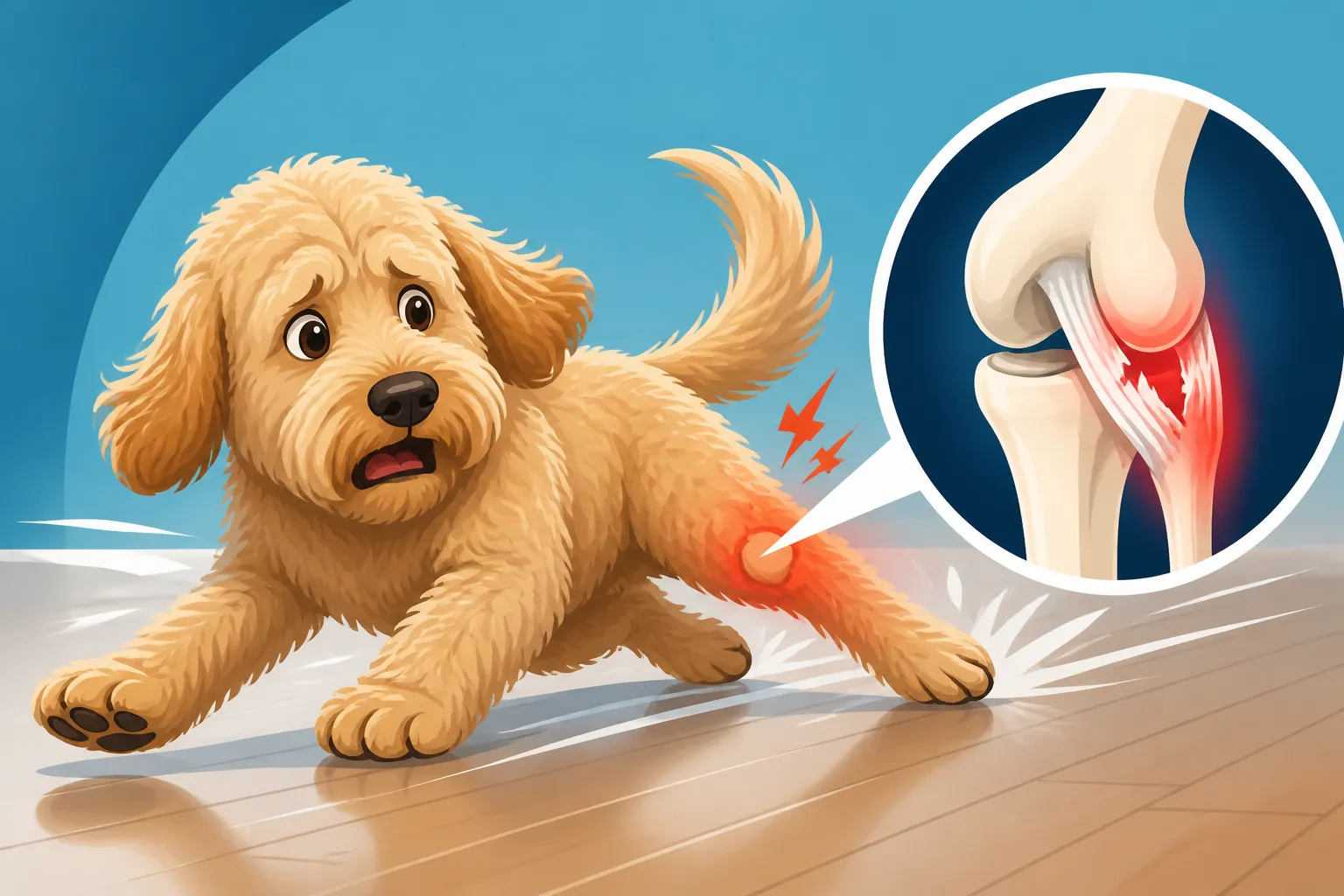
It's every Labradoodle owner's nightmare: that sudden yelp, the awkward skid on a slick floor, or a misstep during an energetic game of fetch, followed by your beloved companion holding up a leg. Your heart sinks because you know something's wrong, and often, that "something" can be a torn cranial cruciate ligament (CCL) – a painful and often debilitating injury that requires careful attention and often extensive treatment. This guide is here to walk you through understanding this common injury in Labradoodles, how to recognize the signs, the diagnostic process, and the various treatment and recovery paths available to get your furry friend back on their paws.
Understanding Cruciate Ligament Injuries in Labradoodles
A torn cruciate ligament is more than just a sprain; it's a significant injury to one of the most critical stabilizing structures in your dog's knee. Knowing what it is and why Labradoodles might be predisposed can help you be more vigilant.
What Exactly is a Torn Cranial Cruciate Ligament CCL?
Think of your dog's knee joint, also known as the stifle, as a complex hinge. Inside this hinge are two crucial ligaments that cross over each other – the cranial cruciate ligament (CCL) and the caudal cruciate ligament. The CCL is the equivalent of the anterior cruciate ligament (ACL) in humans, and it's the one most commonly injured in dogs. Its main job is to prevent the tibia (shin bone) from sliding forward excessively relative to the femur (thigh bone) and to prevent the knee from over-rotating. Without a healthy CCL, the knee joint becomes unstable, leading to pain, inflammation, and progressive arthritis.
When a Labradoodle skids, jumps, or twists awkwardly, the forces on this ligament can be immense. It can either partially tear, causing intermittent lameness, or completely rupture, leading to immediate and severe lameness. Unlike acute human ACL tears often seen in sports injuries, many canine CCL tears are degenerative, meaning the ligament weakens over time before a seemingly minor event, like a skid, causes the final rupture. This chronic weakening makes the ligament more susceptible to tears, even during normal activity.
Why Labradoodles Are Prone to Cruciate Issues
While any dog can tear a CCL, some breeds are more predisposed, and unfortunately, Labradoodles often fall into this category due to their genetic lineage. Both the Labrador Retriever and Poodle, the parent breeds, are known to have a higher incidence of orthopedic issues, including cruciate disease. Large and medium-sized breeds, in general, carry more weight and put more stress on their joints, making them more vulnerable.
Genetics play a significant role. If a Labradoodle's parents or grandparents had cruciate issues, there's a higher chance they might too. Beyond genetics, their conformation – the way their bones and joints are structured – can also increase risk. Some dogs have a steeper tibial plateau angle, which naturally puts more strain on the CCL. Combine this with the Labradoodle's typically high energy levels and eagerness to run, jump, and make sudden turns, and you have a recipe for potential injury. A quick pivot or a playful skid on a slippery kitchen floor can easily push an already compromised ligament past its breaking point. Maintaining a healthy weight is also paramount. Excess pounds dramatically increase the stress on joints, and as we’ve discussed in "The Weight a Labradoodle Puts On Without Anyone Noticing", Labradors, and by extension Labradoodles, can be prone to weight gain, making this an even more critical factor.
Recognizing the Signs of a Torn Cruciate
Spotting a cruciate tear early can be tough, especially if it's a partial tear that isn't immediately obvious. However, understanding what to look for can help you seek veterinary care promptly.
Immediate Symptoms After a Skid or Injury
If your Labradoodle has just had a sudden mishap, like a spectacular skid across the hardwood or a dramatic jump and land, the signs of a complete CCL tear can be quite alarming. You might see:
- Sudden, Non-Weight Bearing Lameness: Your dog might immediately hold the injured leg up, refusing to put any weight on it at all, or only "toe-touch" the ground with it. This is usually accompanied by obvious pain.
- Vocalization of Pain: A sharp yelp or cry when the injury occurs, and continued whining or whimpering as they try to move.
- Difficulty Rising or Sitting: They might struggle to get up from a lying position, or adopt an unusual "sit" where they keep the injured leg extended out to the side rather than tucked under.
- Swelling Around the Knee: The affected knee might appear visibly swollen due to inflammation and fluid accumulation.
It's natural to panic in these moments, but remaining calm and getting your dog to a veterinarian as soon as possible is crucial. Even if the lameness seems to improve slightly after a few minutes, don't dismiss it – underlying damage could still be present.
Chronic or Gradual Onset Signs
Sometimes, the CCL doesn't tear all at once. Instead, it might partially tear or slowly degenerate over weeks or months, leading to more subtle and intermittent signs that can be easily mistaken for other issues.
- Intermittent Lameness: Your Labradoodle might limp after exercise or first thing in the morning, but then seem fine later in the day. This lameness often worsens with increased activity and improves with rest. You might notice they are "favoring" the leg more and more over time.
- "Toe-Touching" Gait: Instead of holding the leg up completely, they might just lightly touch their toes to the ground while walking, avoiding putting full weight on the joint.
- Muscle Atrophy: Over time, if the leg isn't being used properly, the muscles in the affected thigh will begin to waste away, making the injured leg look thinner than the healthy one.
- Reluctance to Perform Normal Activities: You might notice your once-enthusiastic Labradoodle avoiding stairs, struggling to jump into the car or onto the sofa, or simply not engaging in their usual playful antics. This could be a sign of a more chronic issue, as detailed further in "Torn Cruciates in an Active Labradoodle." Many owners initially assume their dog is just getting older or being lazy, missing the subtle clues of an underlying knee problem. It's easy to overlook these gradual changes, but they are often the earliest indicators of cruciate disease.
Diagnosis and Initial Management
Once you suspect a cruciate injury, a trip to the vet is the critical next step. Early and accurate diagnosis is key to a successful recovery.
The Vet Visit: What to Expect
When you bring your Labradoodle in, your veterinarian will start with a thorough physical examination. They will carefully manipulate the affected leg to check for instability in the knee joint. The two most common tests for a torn CCL are:
- Cranial Drawer Test: The vet attempts to manually slide the tibia forward relative to the femur. If the CCL is torn, there will be an abnormal "drawer" motion, similar to pulling open a drawer.
- Tibial Compression Test: The vet holds the femur steady and flexes the ankle joint, causing the tibia to naturally move forward. If the CCL is torn, this movement will be exaggerated.
Sometimes, especially with larger or tense dogs, these tests can be difficult to perform accurately without muscle guarding. In such cases, your vet may recommend light sedation to get a more reliable result. Beyond these manual tests, radiographs (X-rays) are usually taken. While X-rays don't directly show the ligaments, they can reveal secondary signs of a cruciate tear, such as joint effusion (fluid in the joint), early signs of arthritis, or bone spurs. They are also crucial for ruling out other potential causes of lameness, like fractures or other bone diseases. The vet will determine if it's a partial tear, which might have different initial management, or a complete rupture requiring more immediate action.
First Steps at Home and Emergency Care
If your Labradoodle has just injured their knee, immediate action at home can help prevent further damage and manage initial pain before you get to the vet.
- Strict Rest: This is paramount. Confine your dog to a crate or a small, secure room. Only allow short, controlled leash walks for potty breaks. Absolutely no running, jumping, playing, or stairs. Any uncontrolled movement can worsen the tear.
- Pain Management: Your veterinarian will likely prescribe anti-inflammatory medication (NSAIDs) to reduce pain and swelling. Never give human pain medications unless specifically instructed by your vet, as many are toxic to dogs.
- Cold Compresses: Applying a cold pack (wrapped in a towel) to the swollen knee for 15-20 minutes a few times a day during the initial 24-48 hours can help reduce inflammation.
- Monitor: Keep a close eye on your dog's comfort level and any changes in lameness. Follow all veterinary instructions diligently.
Even if the lameness seems minor, always err on the side of caution and consult your vet. A seemingly small issue can quickly escalate, and early intervention can make a significant difference in your Labradoodle's long-term prognosis.
Treatment Options for Torn Cruciates
The approach to treating a torn cruciate ligament largely depends on several factors: the size and activity level of your Labradoodle, the severity of the tear, and your financial situation.
Conservative Management
For some dogs, especially smaller breeds, very elderly dogs, or those with very minor partial tears, conservative (non-surgical) management might be considered. However, for an active Labradoodle, this is often a less successful long-term solution.
The components of conservative management typically include:
- Strict Rest: As mentioned, this is foundational. Weeks or even months of strict confinement to allow the joint to stabilize and scar tissue to form.
- Pain Medication and Anti-inflammatories: To keep your dog comfortable and reduce swelling.
- Physical Therapy: Once the initial pain subsides, gentle exercises to maintain muscle mass and joint mobility.
- Weight Management: Crucial for reducing stress on the joint. If your Labradoodle is overweight, shedding those extra pounds is non-negotiable for any chance of success with conservative treatment.
The challenge with conservative management for a medium to large, active breed like a Labradoodle is that the knee remains unstable without the ligament. This instability often leads to chronic pain, significant arthritis progression, and a high risk of re-injury or even tearing the cruciate in the other knee due to compensatory weight bearing. While it can be an option, it's often viewed as a stop-gap or for cases where surgery isn't feasible.
Surgical Interventions: The Gold Standard
For most Labradoodles with a torn CCL, especially active ones, surgical repair is considered the gold standard. Surgery aims to stabilize the knee joint, reduce pain, slow the progression of arthritis, and allow your dog to return to a good quality of life. There are several surgical techniques, each with its pros and cons. The decision on which surgery is best often comes down to your veterinary surgeon's expertise, your dog's size, and the specifics of the injury.
- TPLO (Tibial Plateau Leveling Osteotomy): This is one of the most common and highly recommended surgeries for larger, active dogs. Instead of trying to repair the torn ligament, the TPLO procedure changes the biomechanics of the knee. The surgeon cuts and rotates the top part of the tibia (the tibial plateau) and stabilizes it with a bone plate and screws. This rotation essentially levels the slope of the bone, so the forces that caused the tibia to thrust forward without a CCL are neutralized. The knee becomes stable without needing the CCL. TPLO has a very high success rate for returning dogs to full activity and is often the preferred choice for a 60-pound Labradoodle.
- TTA (Tibial Tuberosity Advancement): Similar to TPLO in its goal of changing knee biomechanics, TTA involves advancing the tibial tuberosity (the front part of the shin bone) to neutralize the "tibial thrust." A titanium cage and plate are used to hold the bone in its new position. While also highly effective, some surgeons have preferences based on individual dog anatomy and their experience.
- Lateral Suture (Extracapsular Repair): This is a more traditional technique that involves placing a strong suture material outside the joint to mimic the function of the torn CCL. This artificial ligament temporarily stabilizes the knee while scar tissue forms internally to provide long-term stability. While less invasive and generally less expensive than TPLO or TTA, it's often considered more suitable for smaller, less active dogs, or those with partial tears, as it may not hold up as well to the stresses of a large, energetic Labradoodle over time.
The cost of these surgeries can be significant, ranging from a couple of thousand dollars for a lateral suture to upwards of $6,000 for a TPLO or TTA, especially when considering the full scope of post-operative care and rehabilitation. This is a topic explored in depth in "The Price of Cruciate Surgery on a Labradoodle." Many owners find pet insurance, like a plan from Healthy Paws, invaluable in helping to cover these substantial, unexpected expenses.
Post-Operative Care and Rehabilitation
Surgery is only half the battle; the recovery period is just as crucial for a successful outcome. It's a marathon, not a sprint, and requires dedication from owners.
The Road to Recovery: Immediate Post-Op Period
The first few weeks after cruciate surgery are critical and demand strict adherence to your vet's instructions.
- Pain Management: Your Labradoodle will be on prescribed pain medication and anti-inflammatories to manage discomfort. Administer these exactly as directed.
- Incision Care: You'll need to monitor the incision site daily for any signs of redness, swelling, discharge, or opening. Keep it clean and dry. An Elizabethan collar (cone) will be essential to prevent your dog from licking or chewing at the stitches.
- Strict Activity Restriction: This cannot be stressed enough. For several weeks, your Labradoodle will need absolute rest. This means crate confinement or a small, confined space. Leash walks are only for potty breaks, and they must be slow, controlled, and brief. This prevents excessive stress on the healing surgical site. Rushing this stage can lead to severe complications, including implant failure. The goal is controlled healing, building up gradually, much like understanding the proper "The Exercise Limit for a Growing Labradoodle" for puppies.
Expect the full recovery timeline to be several months – typically 4-6 months before your dog can return to near-normal activity. Patience is key.
Physical Therapy and Long-Term Support
Once the initial healing phase is complete, physical therapy becomes incredibly important. Just like human athletes, dogs benefit immensely from structured rehabilitation to regain strength, flexibility, and proper gait.
- Structured Rehabilitation: This can involve a certified canine rehabilitation therapist who will guide you through exercises like passive range of motion, therapeutic exercises to strengthen muscles (quads, hamstrings), balance exercises, and controlled leash walks on varied surfaces.
- Hydrotherapy: Underwater treadmill therapy or swimming can be particularly beneficial as it allows your Labradoodle to exercise muscles without putting full weight on the healing joint, reducing impact and promoting fluid movement.
- Supplements: Many veterinarians recommend joint supplements containing ingredients like glucosamine, chondroitin, and MSM to support cartilage health and reduce inflammation. As explored in "Whether Glucosamine Helps a Labradoodle's Joints," these can be an important part of a long-term joint health strategy. Omega-3 fatty acids are also beneficial for their anti-inflammatory properties.
- Weight Management: This is a lifelong commitment, especially after a cruciate injury. Keeping your Labradoodle lean will significantly reduce future stress on both knees and slow the progression of arthritis in the injured joint. A pet insurance plan from Healthy Paws can often help with the ongoing costs of physical therapy and long-term medication, providing peace of mind during this extensive recovery.
Preventing Future Cruciate Injuries
While some cruciate tears are unavoidable due to genetics or unpredictable accidents, there's a lot you can do as a Labradoodle owner to minimize the risk of future injury, especially in the other knee.
Proactive Measures for Active Labradoodles
The unfortunate reality is that if your Labradoodle tears one CCL, there's a significant chance (around 50-60%) they will tear the other one within 1-2 years. This makes preventative measures incredibly important.
- Maintain a Healthy Weight: This is probably the single most impactful thing you can do. Excess weight places enormous strain on all joints, especially the knees. Work with your vet to ensure your Labradoodle stays at an ideal, lean body condition. "Keeping Weight Off a Labradoodle That Begs" is a good resource for strategies.
- Controlled Exercise, Not Sporadic Bursts: While Labradoodles are active dogs, sudden, intense bursts of activity, especially after periods of inactivity, can be risky. Opt for consistent, moderate exercise like regular walks, controlled fetch sessions, or swimming, rather than weekend warrior antics. Include proper warm-up and cool-down periods.
- Improve Traction at Home: Many cruciate tears happen during everyday activities, like slipping on slick floors. Consider runners, area rugs, or even dog-specific traction socks on hardwood, tile, or laminate surfaces to give your Labradoodle better grip.
- Core Strength and Body Awareness Training: Engaging in exercises that build core strength and body awareness can help stabilize joints. Canine fitness programs, often taught by rehab vets or certified trainers, can teach exercises like weaving poles, balancing on wobble boards, or walking over elevated cavaletti poles. These activities are also beneficial for "Hips and Elbows in a Sixty Pound Labradoodle."
- Regular Vet Check-ups: Ensure your Labradoodle gets regular veterinary check-ups, which include assessing joint health. This is part of "The Yearly Screening a Labradoodle Should Get" that can catch subtle issues early. Pay close attention to any changes in gait or activity as your dog ages, which could indicate the onset of "Arthritis in a Labradoodle at Ten" or other joint issues.
The Role of Nutrition and Supplements
Nutrition plays a vital role in overall health, including joint integrity. A high-quality diet provides the building blocks for healthy tissues.
- High-Quality Diet: Feed a well-balanced, high-quality dog food appropriate for your Labradoodle's age, size, and activity level. Some specialized joint-support diets are available and may be recommended by your vet.
- Joint Supplements: Many owners opt to give their Labradoodles joint supplements proactively, especially as they mature or if there's a history of joint issues. Ingredients like glucosamine, chondroitin, MSM, and green-lipped mussel are popular for their purported cartilage-protecting and anti-inflammatory benefits. Discuss with your vet when to start these and which brands they recommend, particularly regarding "Whether a Labradoodle Needs a Joint Supplement Early."
- Omega-3 Fatty Acids: Fish oil, rich in EPA and DHA, is a powerful natural anti-inflammatory that can benefit joint health and overall well-being. Look for high-quality, vet-approved supplements.
Remember, even with the best preventative care, accidents can happen. Having a robust pet insurance policy, such as one from Healthy Paws, can be an absolute lifesaver when unexpected injuries like a torn cruciate ligament strike, helping you focus on your Labradoodle's recovery rather than the daunting financial burden.
Comparison of Cruciate Surgery Options
To help you visualize the different surgical approaches, here's a brief comparison of the common procedures for CCL tears. This table provides a general overview, and your vet will recommend the best course of action for your individual Labradoodle.
| Surgical Procedure | Description | Ideal Candidate | Typical Full Recovery Time | Estimated Cost (US, without complications) |
|---|---|---|---|---|
| TPLO (Tibial Plateau Leveling Osteotomy) | A bone-modifying procedure where the tibial plateau (top of the shin bone) is cut and rotated to change the angle, thereby neutralizing the "tibial thrust" that occurs in the absence of a CCL. The bone is then stabilized with a plate and screws, making the knee stable without needing the ligament. Considered one of the most effective and durable solutions for long-term stability in active dogs. | Large, active dogs (like many Labradoodles), complete CCL tears, and those with a high tibial plateau angle. | 4-6 months | $3,500 – $6,000+ per knee |
| TTA (Tibial Tuberosity Advancement) | Another bone-modifying procedure that advances the tibial tuberosity (the front part of the shin bone) to alter the forces within the knee joint. A titanium cage and plate are used to hold the bone in its new position, effectively neutralizing the tibial thrust. Similar biomechanical outcome to TPLO but achieves it through a different anatomical modification. | Large, active dogs with certain knee conformations; often chosen by surgeons based on preference and expertise. | 4-6 months | $3,000 – $5,500+ per knee |
| Lateral Suture (Extracapsular Repair) | This traditional technique involves placing a strong suture material outside the joint capsule, from the femur to the tibia, to mimic the function of the torn CCL. This "artificial ligament" provides immediate stability while scar tissue forms around it to provide long-term stability. It does not alter the bone structure. | Smaller, less active dogs (under 30-40 lbs), dogs with partial tears, or as a more economical option. | 3-4 months | $1,500 – $3,000+ per knee |
Navigating a cruciate injury with your Labradoodle can feel overwhelming, but with proper veterinary care, diligent post-operative management, and a commitment to preventive strategies, your furry companion can often make a remarkable recovery and continue to enjoy a full, active life for years to come, especially when considering "What a Labradoodle Owner Should Watch For After Eight."
Disclaimer
The information provided in this article is for general informational purposes only and does not constitute veterinary advice. Always consult with a qualified veterinarian for any health concerns or before making any decisions about your pet's medical care.